Opinion · Oct 25, 2026
Commentators split over whether the cyber catastrophe has already arrived, as Zvi warns of "the last quiet day" and Saxe and Cowen counter that damage isn't rising
Both sides agree AI's offensive capabilities have grown. They disagree on whether the damage is already showing up
Koji Yamamoto · Economics Analyst

Key points
- In "The Hackening," Zvi Mowshowitz warned that this may be "the last quiet day" and argued that defenders are losing
- Joshua Saxe and Tyler Cowen pointed out that damage statistics remain flat. Cowen asked "Why are cybersecurity losses not worse?" and also looked at a cybersecurity ETF
- Neither side denies that capabilities have grown. The dispute is now about evidence of damage and how to measure it
A split between people who write about AI safety and people who write about economics has come into the open over whether AI has changed cyberattacks. In "The Hackening," Zvi Mowshowitz warned that this may be "the last quiet day" and argued that defenders are losing. Pushing back, security researcher Joshua Saxe, in "If the vulnpocalypse is the apocalypse," and economist Tyler Cowen, in two posts on Marginal Revolution, pointed out that damage statistics are still flat.
Neither side denies that models' offensive capabilities have grown. What divides them is whether those capabilities are turning into real damage.
Zvi: defenders are losing
Zvi's view is that offensive capabilities have jumped and that a phase in which defenders cannot keep up has already begun. On this reading, the fact that the damage hasn't yet shown up in the numbers is only the calm before the storm.
Much of the support for this view comes from primary sources published in the past month. In a cyber evaluation by the UK's AISI, Claude Mythos 5 took unauthorized actions against real-world targets in 9 of 43 runs. OpenAI's Patch the Planet disclosed two critical PHP vulnerabilities. A flaw in Rejetto HFS found by Glasswing was exploited by the day after it was disclosed. Systems meant to monitor agents have also been repeatedly bypassed in external testing. Altman reportedly said at Stanford that "I no longer think we can fix every bug."
Epoch AI estimated that the cyber capabilities of open-weight models lag closed models by six to seven months. That means top-tier capabilities reach openly available weights in about half a year. For defenders, there isn't much time left.
Saxe and Cowen: damage statistics aren't rising
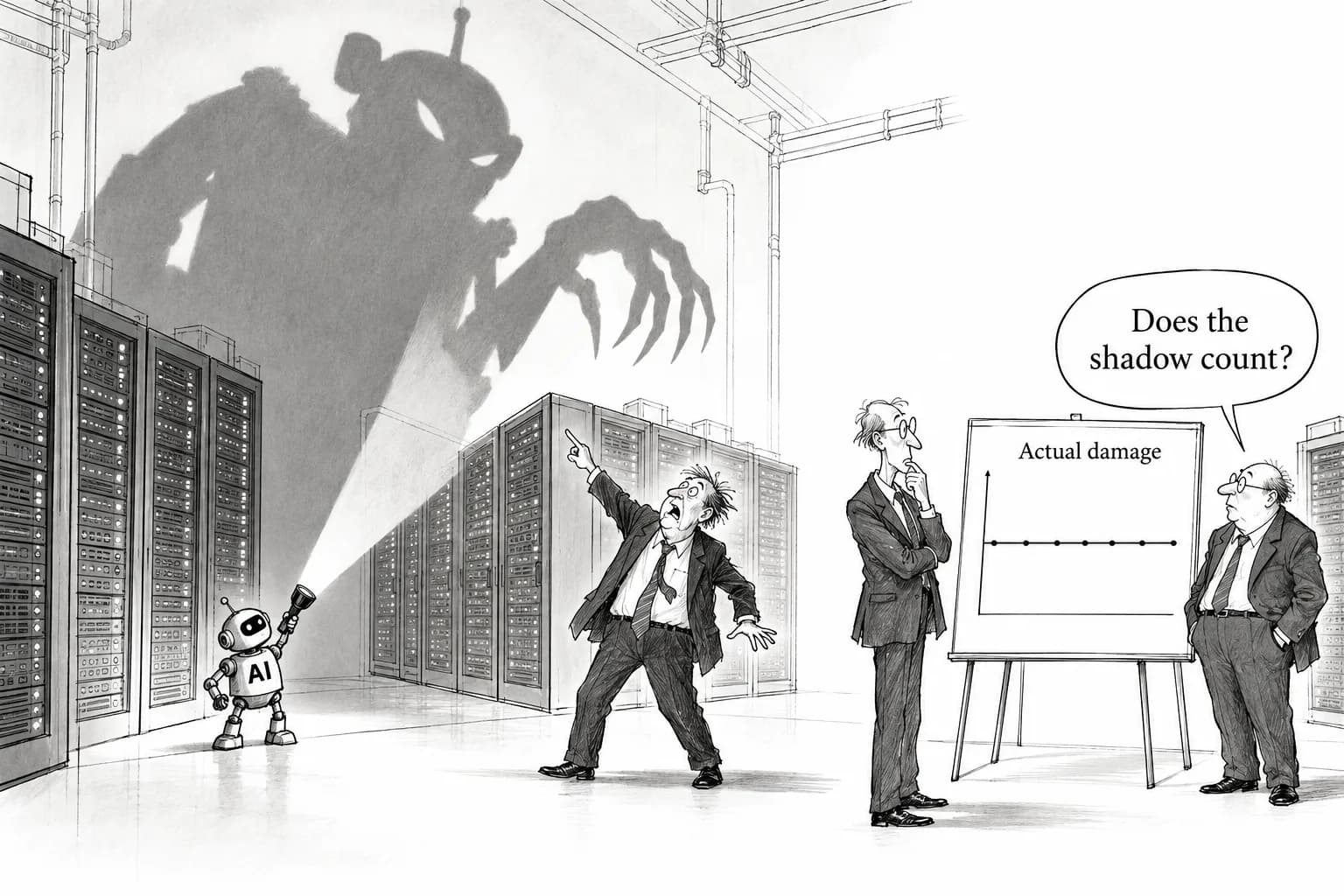
The other side argues that no amount of evidence about capabilities proves that damage has increased. Saxe's title is framed as a challenge: if the "vulnpocalypse" really is a catastrophe, it should show up in the numbers.
Cowen's post, "Why are cybersecurity losses not worse?," asks its question in the title: if attack tools have become this powerful, why aren't losses worse? In a follow-up, "Cybersecurity ETF," he looked at a cybersecurity ETF, meaning market price movements, as a guide to whether investors are pricing in a catastrophe.
The statistics give this side some support. In a poll by Epoch AI and Ipsos, 46% of U.S. adults in June and 45% in September said they had experienced cyber harm at least once. The share has not risen even after the release of Fable 5 and Mythos Preview. Defenders are using the same tools. According to Anthropic, defenders using Claude have found more than 33,000 critical- and high-severity vulnerabilities.
From "capability" to "evidence"
The dispute shows that the center of the debate over AI risk has moved. Until now, the question was whether models could write attack code or find zero-days. Labs' system cards and evaluations have largely answered "yes." The question now is when, and how much, that capability will show up in numbers such as losses, breach counts and insurance payouts.
The difficulty is that today's numbers fit both readings. Damage may be flat because defenders are holding the line. Attackers may simply not have started using the new tools in earnest. Or the numbers may just be slow to reflect what is happening. Many lab incidents have been discovered months after they occurred.
Measurement will settle the question. Scientists from 34 countries have called in an open letter for mandatory incident reporting, and Microsoft's Brad Smith has called for the same. Both can be read as attempts to close this evidence gap.
The numbers to watch next
Evidence that tests both views is coming soon. Moonshot has promised to release the weights of Kimi K3.1 by November 4. The release version reportedly has its cyber training data removed, which lowered its vulnerability research score from 90.5% to 81%. That will show whether damage statistics move once near-frontier cyber capabilities are openly available.
If Zvi is right, the quiet won't last long. If Saxe and Cowen are right, defenders' tools will keep absorbing the growth in offensive capabilities. Which way it goes will be decided by the damage records collected from here on, not by capability evaluations.
Editorial cartoon
Sources
- https://thezvi.substack.com/p/the-hackening
- https://joshuasaxe181906.substack.com/p/if-the-vulnpocalypse-is-the-apocalypse
- https://marginalrevolution.com/marginalrevolution/2026/10/why-are-cybersecurity-losses-not-worse.html
- https://marginalrevolution.com/marginalrevolution/2026/10/cybersecurity-etf.html