AI in the Field · Oct 26, 2026
Unlocking BF16 on RTX 3000 cards: 60–80% faster on paper, 6–8% faster in real work
We followed reports from owners who tried the unofficial gpu-unlock tool on their own cards. Matrix math gets much faster, but chat speed barely moves
Haru Misaki · Field Correspondent
Key points
- Zagitta's gpu-unlock is a Linux kernel module. The firmware holds FP16/BF16 instruction speed at half, and the module raises it to the level of workstation cards. On an RTX 3090 Ti, BF16 went from 87.50 to 157.41 TFLOPS
- Working reports filed as Issues #135 through #148 over just two days, October 25–26. One user reported a 66.7% BF16 gain on an RTX 4070 SUPER, a card the tool doesn't officially support. Other reports had problems: one system froze on one of five boots, and on a laptop the unlock only worked after an extra setting was added
- The gains show up in prefill and image generation. Decode, the speed at which text comes out, is limited by memory bandwidth and barely changes. Hacker News commenters said "the real-world gain is 7–8%" and "training was only 6% faster." There is no independent verification yet
Calling all RTX 3090 owners. On October 18, independent developer Zagitta released a tool called gpu-unlock, billed as a way to "unlock BF16 on the RTX 3000 series." Over roughly the past three days, owners have flooded GitHub with reports from testing it on their own cards. We have not run the tool ourselves. For this story, we read through the Issues, the Hacker News comments and the press coverage.
Here is the bottom line first. Matrix math is the huge mass of multiplications and additions that AI models run nonstop, and its speed rose 60–80% in benchmark tables. That result repeats across many different cards. But the speed at which an LLM produces text barely changes, and some people who measured their own workloads put the real gain at 6–8%. That gap is the most interesting part of the story, so we'll take it step by step.
How it works: restoring instructions that were held to half speed
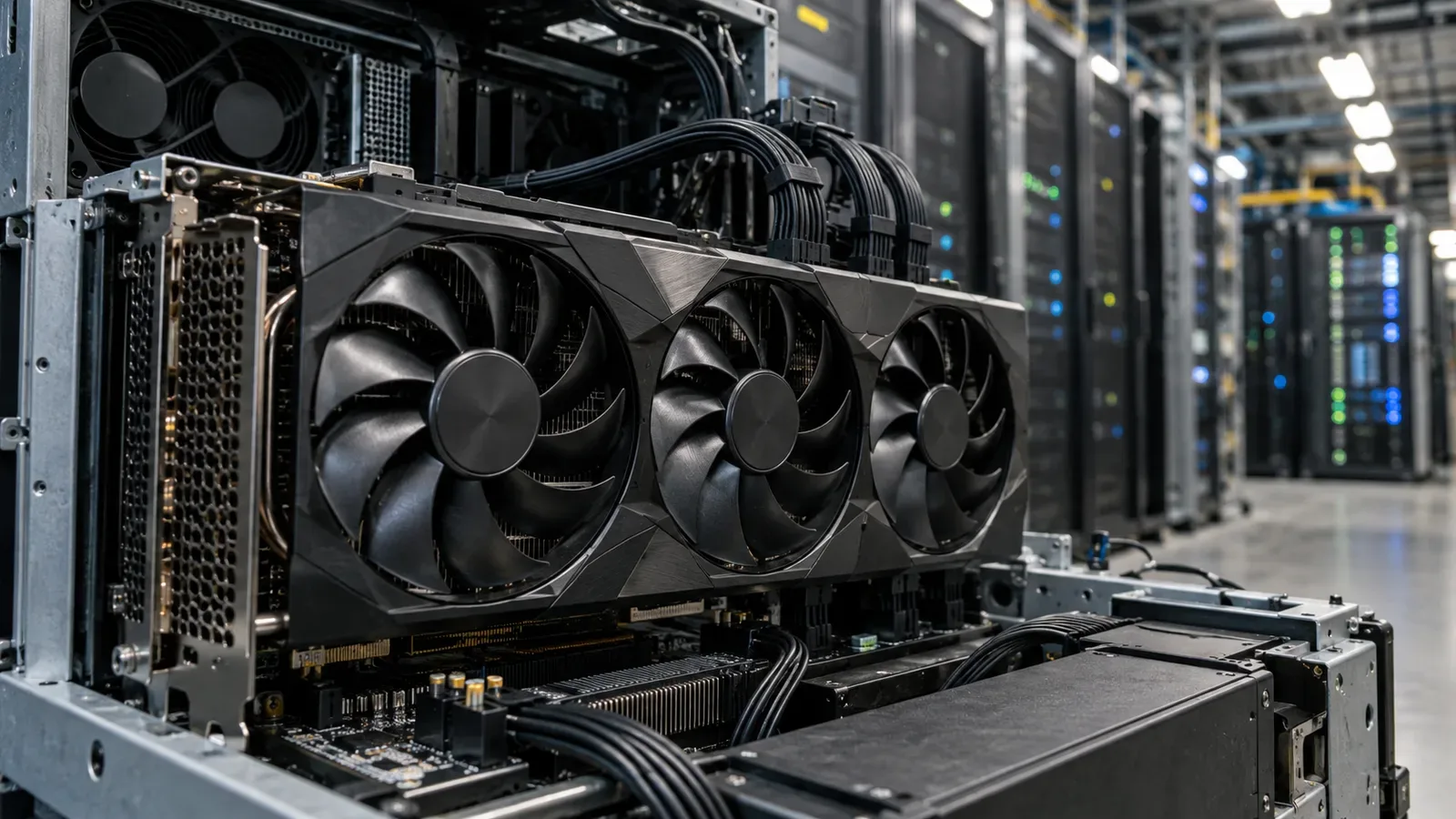
First, what BF16 is. AI workloads often store numbers at lower precision, which makes them lighter to handle. The two main formats for this are FP16 and BF16, and both are 16-bit formats. RTX 3000 series cards use essentially the same chips as their workstation counterparts. Even so, the firmware limits how fast these kinds of instructions can be issued to half the workstation rate. According to the project's README, gpu-unlock raises that rate to the workstation level.
The method is unusual. The tool runs as a Linux kernel module and steps in before the NVIDIA driver loads to rewrite the configuration. It does not modify the driver or the VBIOS. On Hacker News, the author explained that it overflows a DMA buffer to overwrite the stack at boot time, a technique known as ROP (return-oriented programming). Put simply, it doesn't come in through the front door. It slips in through a gap and flips the switch.
The figures in the author's README come from an RTX 3090 Ti running at 450W on an 8192×8192×8192 dense matrix operation. FP16 rose from 87.46 to 118.39 TFLOPS, about 35%. BF16 rose from 87.50 to 157.41 TFLOPS, about 80%. TF32 rose from 42.58 to 82.61 TFLOPS, nearly double. The author also states plainly that LLM prefill improves by 14–36%, while decode and INT8 are essentially unchanged. That point becomes important later.
The project's popularity shows in the numbers too. The HN post drew 337 points and 80 comments. Press reports counted 5,619 GitHub stars as of October 25, and the GitHub API showed 6,744 on the 26th. The repository has 703 forks and 122 open issues. Updates continued through October 24, so the project is still active.
Owner reports: Issues #135 to #148 in two days
This is where it gets interesting. Over the two days of October 25–26, working reports were filed as Issues #135 through #148. The Issues list covers a wide mix of cards. The main numbers:
- EVGA RTX 3090 connected as an external GPU over OCuLink: FP16 +74.4%, BF16 +73.9%
- EVGA RTX 3070 XC3 LHR: FP16 +89%, BF16 +85%
- MSI RTX 3090 Suprim X: BF16 +64%, FP16 +77%
- Gigabyte RTX 3070 LHR (#137): BF16 +77–84%, though the system froze completely on one of five boots
Other reports cover the RTX 3060 (the GA104 version) and a setup with two RTX 3080 20GB cards. The reporters include mminkus, Krutonium, Kulbuntu and geoffmyers. It is somewhat surprising that matrix math gets faster even on external setups and on LHR models, which carry a cryptocurrency-mining limiter. Still, a freeze on one boot out of five is not minor. If the system locks up in the middle of a job, you lose that work.
The most adventurous report came from cinnyamon in Issue #136. The README covers only the RTX 3000 series. cinnyamon applied PR #24, which has not been merged, and added the AD104 device ID (0x2783) to the support table by hand. They reported that this unlocked an RTX 4070 SUPER (MSI Ventus 3X 12GB). A PyTorch 8192×8192 matrix multiplication showed BF16 rising from 75.3 to 125.5 TFLOPS, or +66.7%. The setup used kernel 7.2.11 and nvidia-open 615.78.08, with Secure Boot (which blocks unsigned code at startup) turned off. This card is not officially supported.
Laptop users should note one detail. In Issue #135, andreas715 tested a Lenovo RTX 3060 Laptop. With default settings the unlock did not take effect, and performance stayed the same. After adding the driver option NVreg_GpuInitOnProbe=1, it worked: FP16 rose 55% and BF16 rose 56%. Laptop users who installed the tool and saw no speedup should check this setting first.
Yet chat barely gets faster
This is the key point of the story. LLM work has two main stages. The first is prefill, where the model reads in the full prompt at once. That stage is almost all matrix math, so faster compute makes it faster directly. The second is decode, where the model outputs its answer one token at a time. Each step requires pulling the entire model from memory, so speed is limited by memory bandwidth, not compute. That is why the author's README says decode is "essentially unchanged." The speed at which text streams out in a chat window will feel about the same.
Press coverage reached the same conclusion. Notebookcheck reported that RTX 3090 BF16 performance rose from 77.5 to 129.6 TFLOPS and TF32 from 40.2 to 69.8 TFLOPS. According to the report, image generation, which relies mostly on BF16, gained 47–59%. LLM processing of long contexts gained 16%, and token generation did not change. In other words, image generation and reading long inputs get faster. Conversation speed does not.
So what about people who tested their own workloads? On the HN thread, results were sharply split. jacquesm wrote that processing time fell by 30% on a modified 48GB 4090 running at 450W. blagui was much more measured: "The gains aren't as big as advertised. Capped at 200W, the gain is 25%. And almost all of it is in prefill. Decode doesn't improve much, so the real-world gain is 7–8%." chromaton ran nanochat training on an RTX 3060 and saw a speedup of only about 6%.
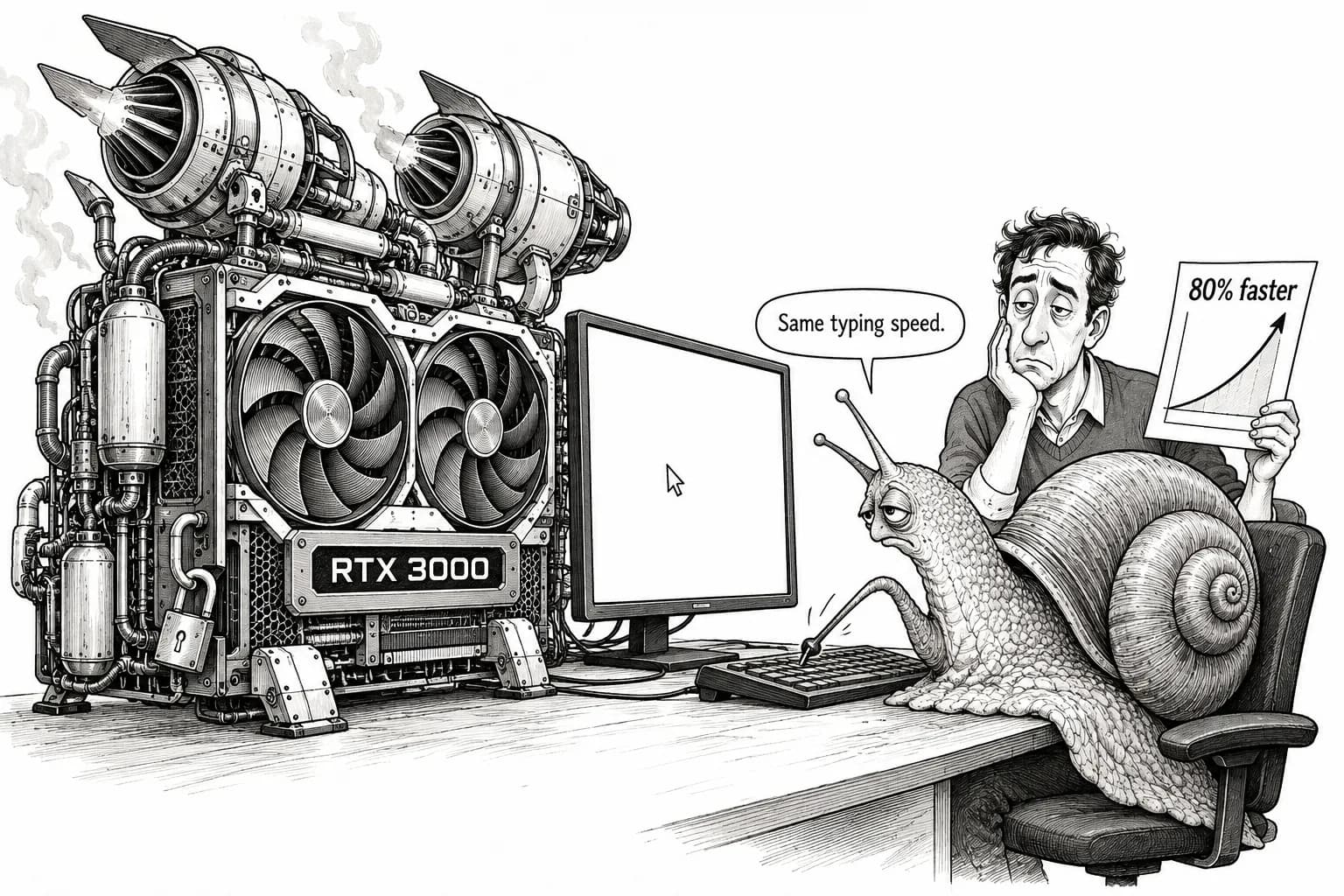
aunty_helen reported 133 tok/s on a 27B model, about 3.2 times faster, but gave no details on how it was measured. The figure also conflicts with the author's explanation that decode should not change, so we are setting it aside. A benchmark table can show +80% while your own workload improves by single digits. That gap is worth remembering, and not just for GPU mods.
Pitfalls to know before you try it
For anyone tempted to try it, here is what to watch for. First, it runs only on Linux and is still experimental. According to an explainer by Pasquale Pillitteri, there is no Windows package. A port to UEFI (the firmware that handles PC startup) has been reported working on only a handful of cards. Support for the RTX 40 series and for laptops is reportedly still at the experimental-PR stage. There are also reports of the screen going black after a reset and of hibernation not working. The mod voids your warranty, and no one has yet verified any increase in gaming fps.
It may not work on every card. According to the README, on the OEM RTX 3080 Ti (GA102-250), BF16 stayed at half speed even after the unlock completed. On HN, superkuh pointed out that "the headline says 3000 series, but only the 3090 and 3090 Ti have really been verified." More reports keep arriving in the Issues, but you should not assume the tool works the same way on every card.
Pillitteri also notes that the headline figures come from synthetic benchmarks, tests built only to measure performance, and that all the reports are user posts to the repository. No media outlet or research institution has independently verified them yet. Pillitteri estimates real-world prefill gains at 10–36%. As for what comes next, HN user londons_explore expects NVIDIA to close the hole with signed firmware. According to RandyOrion, the RTX 50 series uses a different design and cannot be unlocked for now.
Our take: we like seeing individuals pull dormant performance out of older cards they already own, and seeing more than a dozen people test it on their own cards within two days. Someone even added one line to the support table and got it running on a 4070 SUPER, which shows real playfulness. But the numbers need careful reading. If your work is mainly image generation or reading long documents, you are looking at +16–59%. If you want faster chat, the gain is close to zero. The smartest approach is to know which kind of user you are before you install it.
Editorial cartoon
Sources
- https://github.com/Zagitta/gpu-unlock
- https://github.com/Zagitta/gpu-unlock/issues/136
- https://github.com/Zagitta/gpu-unlock/issues/135
- https://github.com/Zagitta/gpu-unlock/issues
- https://news.ycombinator.com/item?id=50219700
- https://www.notebookcheck.net/Nvidia-RTX-3090-performance-nearly-doubles-with-free-GPU-unlock-but-there-s-a-catch.1432805.0.html
- https://pasqualepillitteri.it/en/news/27132/gpu-unlock-launches-unlocking-fp16-bf16-rtx-30-local-ai