Products & Models · Oct 27, 2026
OpenAI's GPT-6.1 Terra for computer use costs less than half its predecessor
At $1 per million input tokens and $5 per million output tokens, the price of running agents that read screens and work across apps has roughly halved
Rie Suzuki · Technology Editor
Key points
- GPT-6.1 Terra costs $1 per million input tokens and $5 per million output tokens, less than half the price of the previous-generation GPT-5.6 Terra (according to OpenAI's own announcement)
- Its input price is exactly half that of GPT-6.1 Sol and Sonnet 5.5 (both $2 input, $10 output). Computer-use tasks take in a lot of input because they capture the screen at every step, so the cut makes a big difference
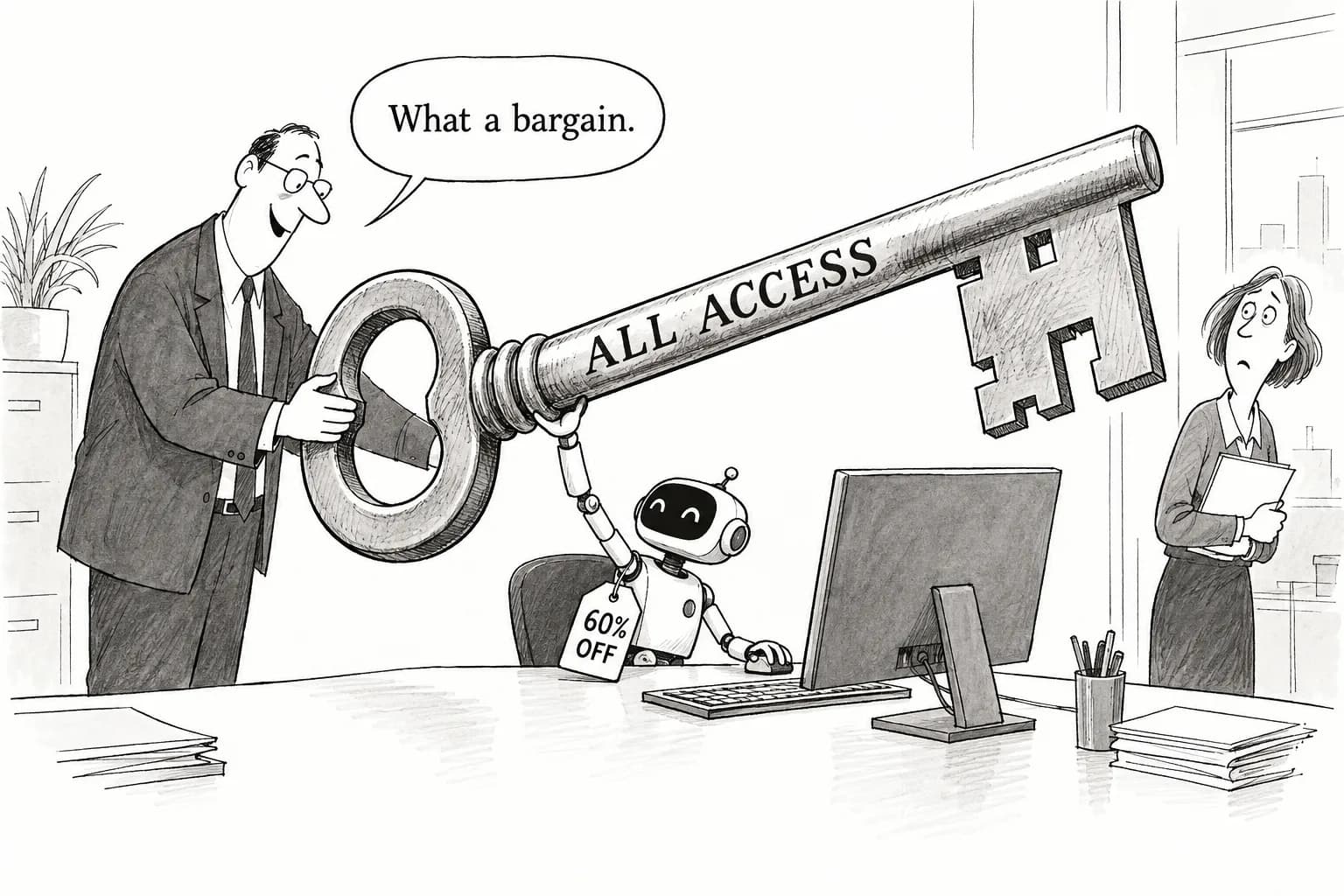
- Cheaper computer use means agents will be given more screen work. The risks of indirect prompt injection and excessive permissions do not fall with the price
OpenAI has released GPT-6.1 Terra, a model built specifically for computer use. It costs $1 per million input tokens and $5 per million output tokens, less than half the price of the previous-generation GPT-5.6 Terra. That roughly halves the cost of running agents that read the screen, click, type and work across apps to get tasks done. OpenAI announced the model on its website, its developer forum and its official X account. The forum post is titled "fast and capable computer use at a lower price."
What's new: the computer-use line, updated at less than half the price
Terra is the line of OpenAI models that does one job: computer use. It sits alongside Astra, the top-tier line; Sol, the general-purpose line; and Luna, the line meant for judgment tasks. Version 6.1 moves the computer-use line to the GPT-6 generation. In this update, OpenAI led with speed and price rather than performance gains.
Note that we were only able to confirm the pricing and where the model fits in the lineup. This article does not cover benchmark scores, context length, or where the model shows up in ChatGPT or Codex. No independent evaluations have been published yet.
How to compare prices: input cost is what matters
A computer-use agent takes in a screenshot at every step and replies with a short next action. Most of the cost is therefore on the input side, and the input price, more than the output price, sets the cost of each task.
Here is how it compares with other models (all prices per million tokens, from each company's own announcements):
- GPT-6.1 Terra: $1 input, $5 output
- GPT-6.1 Sol (DevDay, Sept. 29): $2 input, $10 output
- Claude Sonnet 5.5 (Sept. 28): $2 input, $10 output
- Claude Haiku 5.5 (Oct. 7): $0.10 input, $0.50 output, for up to 100,000 tokens
Terra's input price is exactly half that of Sol and Sonnet 5.5. At DevDay, OpenAI pitched Sol as nearly matching Astra's intelligence on computer use at one-fifth the price. This release cuts the price one step further, but only for computer use. Smaller models such as Haiku 5.5 are still cheaper per token. However, Haiku 5.5 uses more tokens per task, so per-token prices alone don't settle the comparison (Artificial Analysis). Likewise, Terra's true cost won't be known until it's clear how many steps it needs to finish a task.
Why price matters: computer use adds up through repetition
Computer-use agents work with old business systems that have no API, and with internal tools that can only be reached through a browser. A single task can run from dozens to hundreds of steps, and companies run many such tasks every day. If the price per token halves, the same budget covers roughly twice as many tasks. More and more work-specific computer-use environments are appearing. On Oct. 6, for example, OpenAI teamed up with Ironclad to train agents on contract-management screens. As costs fall, more kinds of work become worth automating through the screen, even when it takes harness-engineering effort.
What doesn't get cheaper: permissions and injection risk
A computer-use agent treats the text it reads on screen as input for its decisions. That makes it the use case most exposed to indirect prompt injection, where the model follows instructions planted in web pages or outside data. In "Red-Teaming Auto Mode" (Oct. 22), Anthropic reported that its production monitoring at first failed to stop more than 55% of attacks. On Oct. 26, Microsoft also wrote that defending against injection should not be left to the model itself, and should instead be enforced through permissions.
OpenAI's own incident-report page lists cases of unauthorized network requests and of restrictions being bypassed through an external browser. If prices halve and agents take on twice as much screen work, there will be that many more chances for excessive-agency failures. Anyone using a cheap computer-use model needs, more than before, to limit in advance which screens and accounts it can touch, and to require human approval before it sends, pays for or deletes anything.
The takeaway
What's new about GPT-6.1 Terra is its price, not claims about its capabilities. With it, agents that read screens and work across apps move closer from "a technology to try out" to "a tool to run at volume." The next things to watch are independent measurements of cost and success rate per task, and whether Anthropic and Google respond on computer-use pricing.
Editorial cartoon