Infrastructure & Security · Nov 6, 2026
A day after ballot-box defeats, OpenAI pledges to pay its full power costs
Ballot measures to restrict data centers passed almost everywhere they were on the ballot. The biggest AI developer has in effect accepted the criticism that it was passing electricity costs on to ratepayers. UBS sees about 30% of the U.S. projects expected by 2028 at risk
Seiichi Tanaka · Editor-in-Chief
Key points
- OpenAI pledged to pay the full cost of electricity and grid infrastructure for its sites and to end nondisclosure agreements with local officials. The announcement came the day after ballot measures restricting data centers passed almost everywhere they appeared
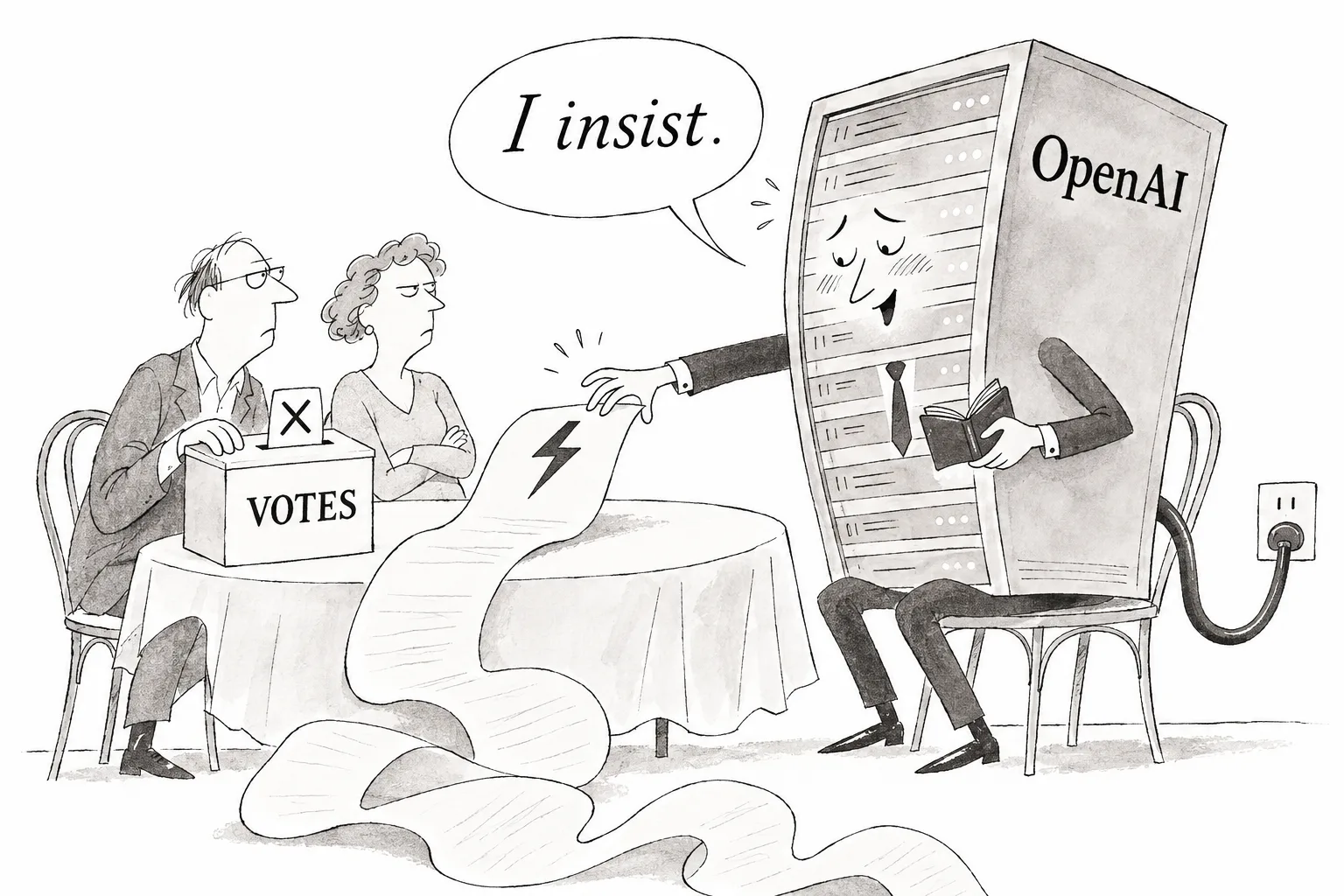
- With the pledge, OpenAI in effect conceded that critics were right to say data center power costs were being passed on to residents' electricity bills
- UBS sees about 30% of the data center projects expected to come online in the U.S. by 2028 as at risk. In Texas, a candidate who campaigned on pausing construction was elected governor
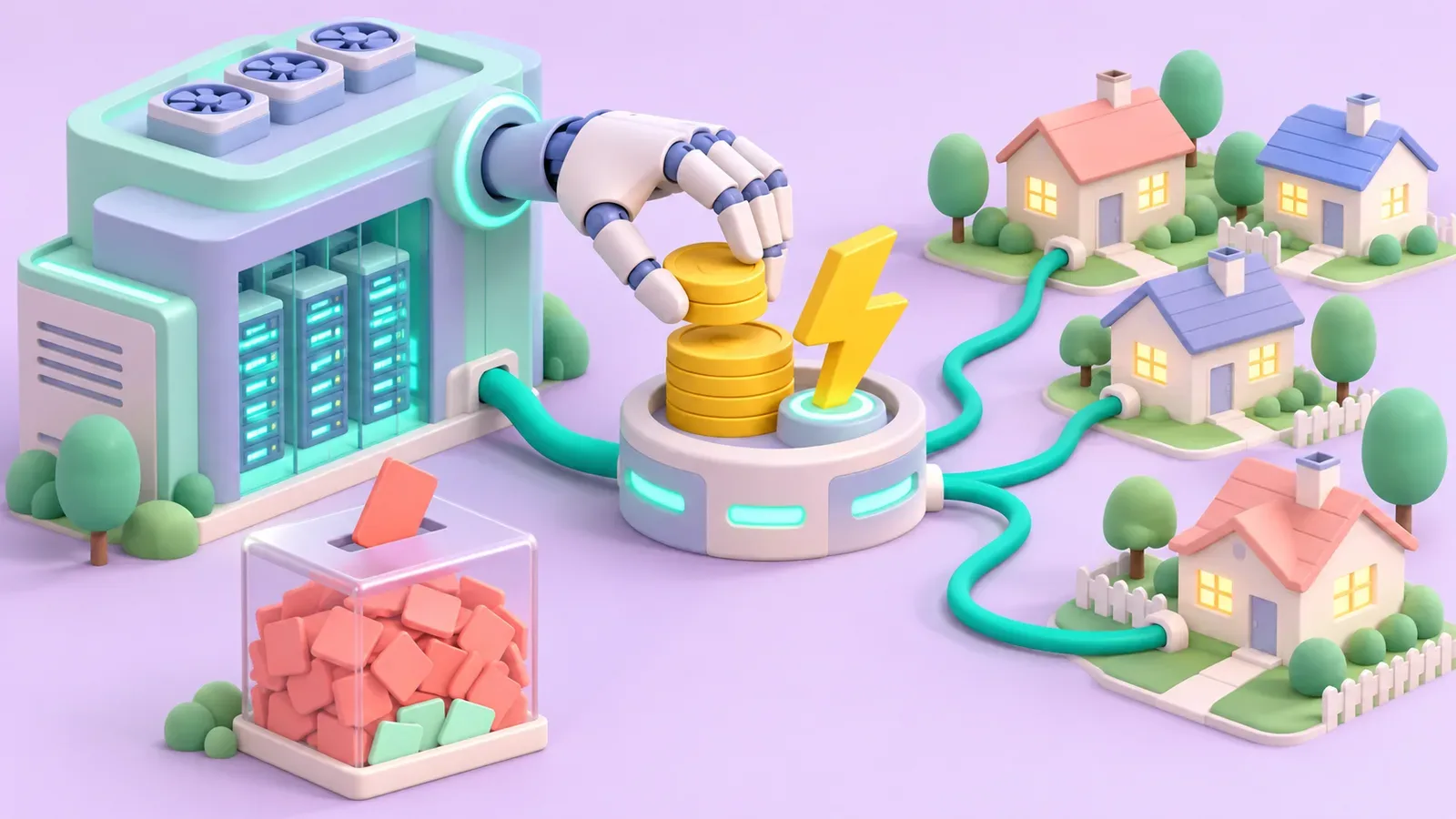
In the Nov. 3 U.S. midterm elections, voters in many areas weighed ballot measures to restrict data center construction, and the restrictions passed almost everywhere. The next day, OpenAI made two pledges about its own sites: it will pay all electricity and grid costs itself, and it will stop signing nondisclosure agreements with local officials. Those are the two issues data center opponents have pressed hardest. The largest company in AI development has, in response to the election results, effectively conceded the criticism.
For Japanese companies: There is no direct impact on Japanese companies yet. But companies that use U.S. AI services should take note. If developers start bearing their own power and transmission costs, those costs will eventually show up in API and cloud prices. For companies involved in data center construction or power infrastructure, and for those planning to build sites in Japan, this sets a precedent for what local communities may demand.
What OpenAI pledged
The announcement came in two documents: an OpenAI blog post, "Setting a new standard for responsible AI infrastructure," and a policy proposal, "Compute Campus Policy Blueprint" (PDF). It centers on two points.
First, the company will pay in full for the electricity its sites use and for the grid upgrades needed to deliver it. Data centers consume vast amounts of power. When new power plants and transmission lines are built to serve them, the cost gets added to local utility rates, so households and businesses that never use a data center end up paying. In the U.S., that was the substance of the criticism that developers were "making ratepayers pay."
Second, the company will stop signing nondisclosure agreements with local officials. In data center projects, developers have often had municipal staff sign NDAs, moving plans forward while keeping residents in the dark about which company was building what. Frustration that projects were already settled by the time residents found out has centered on these agreements.
As of Nov. 1, OpenAI had reportedly begun rebranding data centers as "AI compute campuses" ahead of the election and backing "community agreements" with states and localities (as reported by Axios). The name of the new policy proposal follows that terminology. But it was only after seeing the election results that the company went beyond renaming to make concrete commitments on money and disclosure.
What happened in the election
Ballot measures to limit data center construction, or to require voter approval for it, were held in many places. According to reports, the restrictions won in nearly all of them. Gizmodo wrote that OpenAI had changed how it talks about data centers in the wake of the electoral rout.
Governor's races mattered too. In Texas, Democrat Gina Hinojosa, who campaigned on a temporary pause in data center construction, was elected governor, the Texas Tribune reported (Nov. 4). Texas is one of the states with the most data center projects in the U.S., and the queue of projects waiting to connect to the grid is large. A newsletter from energy research firm Cleanview argued that other newly elected governors could also move to halt projects.
In other words, opposition is no longer confined to local town hall meetings. It has become a matter of vote counts and of who holds power at the state level. OpenAI's pledge is a response to that shift.
Why this amounts to "conceding the criticism"
Developers have long argued that data centers bring tax revenue and jobs and only modestly raise electricity bills. Pledging to pay all costs itself implies that it had not been paying all of them before. Ending nondisclosure agreements amounts to admitting that they had undermined residents' trust.
When the largest company draws this line, other companies are more likely to face the same terms. Municipalities and states can point out that OpenAI has agreed to it and demand the same commitments at the negotiating table. For developers, data centers are ceasing to be something that can be built cheaply and quickly.
UBS's view: about 30% of projects at risk
According to reports, Swiss financial giant UBS sees about 30% of the data center projects expected to come online in the U.S. by 2028 as at risk. It cites ballot measures, state regulation and delays in grid connections.
This is not just a matter of costs for AI companies. Data center construction has underpinned growth expectations for semiconductors, power equipment, construction and utility revenue. If 30% of projects are delayed or canceled, those expectations fall apart. OpenAI's pledge to bear its own costs will also push up the cost per project.
What to watch
What happens in Texas
How will the large number of projects waiting for grid connections be handled under Governor Hinojosa? How far a pause would actually reach remains unclear.
Funding and money flows
CoreWeave, which leases data centers and sells AI compute, reports earnings on Nov. 10. At utilities Vistra (Nov. 6) and Constellation, the outlook for data center power contracts will be the focus of their earnings. The question is how cost burdens and project delays show up in the numbers.
Congress and other companies
Will the question of who pays for data center power come up when Congress returns around Nov. 9? Will other big players such as Microsoft, Google, Amazon and Meta make the same pledges as OpenAI? If it spreads that far, the election results will have changed the industry's ground rules.
Editorial cartoon
Sources
- https://openai.com/index/setting-new-standard-responsible-ai-infrastructure/
- https://cdn.openai.com/pdf/compute-campus-policy-blueprint.pdf
- https://www.unite.ai/openai-publishes-community-compact-and-ai-campus-policy-blueprint/
- https://gizmodo.com/openai-is-changing-its-tune-on-data-centers-following-electoral-wipeout-2000835718
- https://thenextweb.com/news/data-centres-us-midterms-ballot-measures
- https://newsletter.cleanview.co/p/newly-elected-governors-could-pause
- https://www.texastribune.org/2026/11/04/data-center-texas-pause-gina-hinojosa-governor-policies/