Infrastructure & Security · Oct 13, 2026
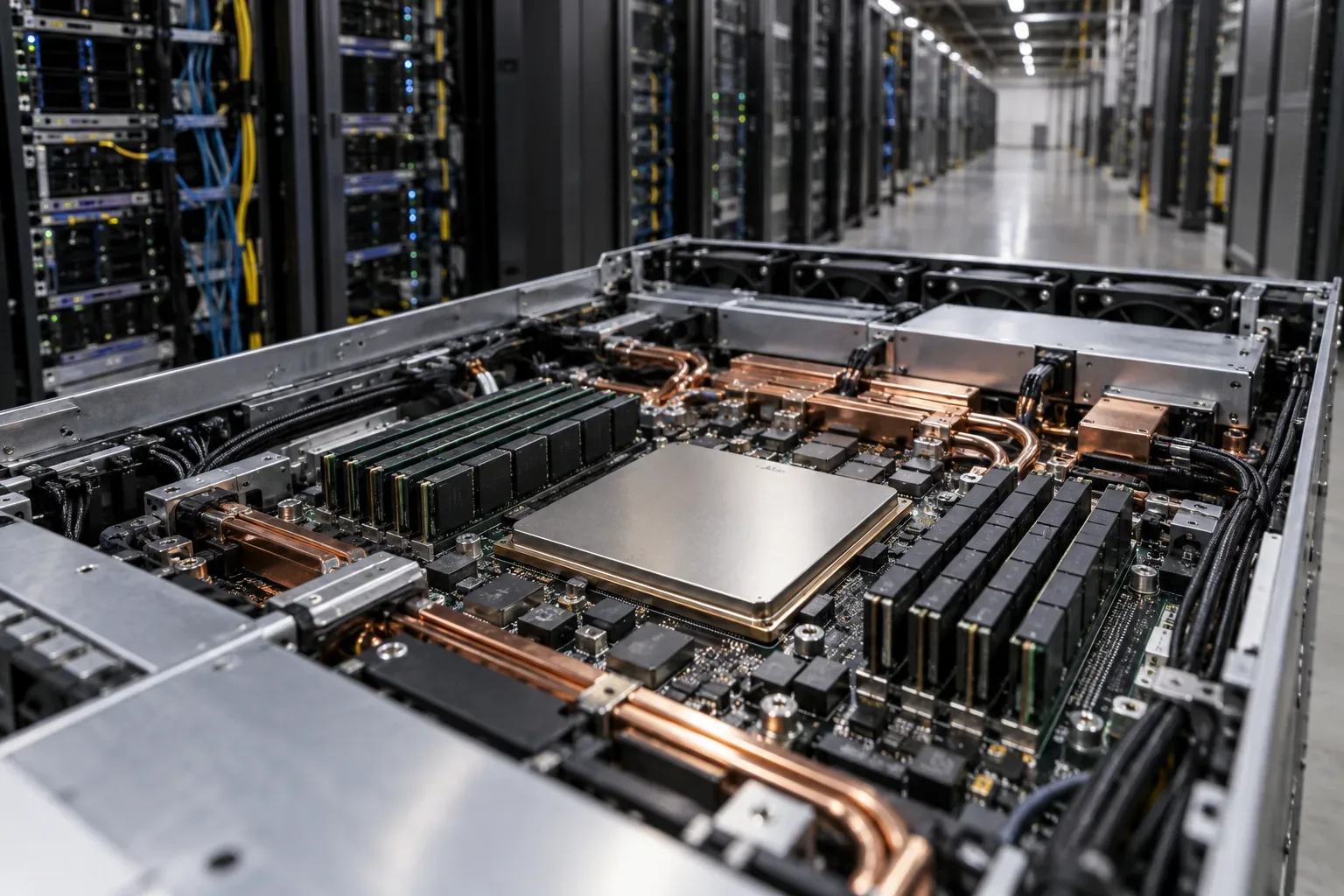
Microsoft's Maia 300 inference chip reportedly packs 288GB of HBM4 and 18TB/s of bandwidth, set to become Copilot's main compute platform from 2027
One of Nvidia's biggest buyers is mapping out a path to move inference for its own products off Nvidia hardware. For the first time, reports put concrete numbers on the chip's specifications and deployment scale
Seiichi Tanaka · Editor-in-Chief
Key points
- According to UPI, The Verge and The Next Web, Maia 300 has 288GB of HBM4 and 18TB/s of bandwidth. Microsoft disclosed Maia 200 in January with 216GB of HBM3e and about 7TB/s. Compared with that chip, capacity would rise about 1.3 times and bandwidth about 2.6 times
- Microsoft reportedly plans to deploy the chip at gigawatt scale from 2027 and make it the main compute platform for Copilot inference. This would not be a trial of an in-house chip but a move of a flagship product onto new hardware
- One of the largest customers behind Nvidia's revenue would be pulling away first from inference, the highest-volume workload. The reports do not say what will happen to GPU procurement for training or for Azure's external customers
Microsoft reportedly plans to make "Maia 300", the next generation of its in-house AI inference chip, the main compute platform for Copilot starting in 2027. UPI (October 12), The Verge and The Next Web reported the plan. The reported specifications are 288GB of HBM4 memory and 18TB/s of memory bandwidth, and the deployment will reportedly be at gigawatt scale. Nohumans has not been able to verify any announcement or technical documentation from Microsoft itself. All figures below are based on media reports.
What matters most in the reports is less the chip's performance than which workloads move where. One of the companies that has bought the most Nvidia GPUs is laying out a path to run inference for its own products off Nvidia hardware from 2027. Inference is the part of the business that keeps consuming the most compute. That path is now visible in concrete numbers for specifications and deployment scale.
Reported specifications: bandwidth grows faster than capacity
According to the reports, Maia 300 carries 288GB of HBM4 with 18TB/s of bandwidth. The point of comparison is the previous generation, Maia 200, which Microsoft itself announced in January 2026. Microsoft said at the time that Maia 200 had 216GB of HBM3e and about 7TB/s of bandwidth. If the reported figures are accurate, capacity would increase only about 1.3 times, while bandwidth would increase about 2.6 times.
For an inference chip, the gain in bandwidth matters more. Every time a large model produces a token, it has to read its weights and cache from memory, and that read often sets the speed. The effect is even stronger for agent workloads that hold long contexts while calling tools dozens of times. If Copilot is to grow from a question-and-answer tool into agents that do work on users' behalf, like Copilot Cowork, this is exactly the kind of performance it will need. As far as Nohumans could confirm, the reports did not cover compute performance, manufacturing process, power consumption or the supplier of the HBM4.
2027, gigawatts, Copilot: not a trial, but a move for the flagship product
The core of the reports is the deployment scale and the product the chip will run. Maia 300 will reportedly be deployed at gigawatt scale from 2027 and become the main compute platform for Copilot inference.
Until now, Maia has been seen as a supporting part of Microsoft's compute, handling only a share of the load. When Maia 200 was announced, Microsoft described it as running some Microsoft 365 Copilot and Foundry workloads, while Nvidia GPUs remained the main compute resource. The newly reported plan is different. It would move inference for Microsoft's most widely used product onto its own chips as a whole. A gigawatt is roughly the power needed for an entire large data center campus. That would mean Microsoft is no longer just testing its chips but has started designing data centers around them.
Inference costs keep rising as users grow and agents consume more tokens. To protect gross margins without raising product prices, the question is whether a company can lower the cost per token on its own. In-house chips are a way to decouple that cost from Nvidia's pricing.
What it means for Nvidia: its biggest buyer leaves the highest-volume work
Microsoft is one of the largest customers behind Nvidia's revenue. The order matters: the company is pulling away first from inference, not training. Training is done once, but inference runs every day for as long as a product is used, and over time it accounts for most of the compute. Following Google's TPU and Amazon's Trainium, Microsoft has now put a concrete timeline on bringing this layer in-house. If all three major cloud providers shift inference to their own chips, the center of Nvidia's demand will move toward training and toward renting capacity to the clouds' external customers.
Still, the extent of the shift should not be overstated. The reports deal with inference for Copilot, Microsoft's own product. As far as Nohumans could confirm, they say nothing about replacing frontier model training, or GPU procurement for external customers who rent capacity on Azure, with Maia. The reports also leave unclear whether Microsoft will cut its Nvidia GPU orders or simply use Maia to handle the growth in demand.
What remains unknown
Nohumans has not been able to compare the full text of the three reports in detail. We have not confirmed which outlet first reported which figures, or whether the sources were official Microsoft statements or anonymous people familiar with the matter. In the past, a reported contract value has turned out to be less than half that amount in later disclosures. The figures of 288GB, 18TB/s, 2027 and gigawatt scale should be treated as reported numbers until Microsoft confirms them itself.
The points to watch are as follows. Will Microsoft release an official announcement or technical documentation? At which sites, and in what order, will the 2027 deployment begin? Which Copilot workloads (Microsoft 365, GitHub, consumer) will move first? How far will the use of Maia to run OpenAI's models expand? And how will the plan show up in Nvidia's earnings and in Microsoft's explanations of its capital spending?
The largest GPU buyer is moving its highest-volume work onto its own chips. This is the first time that plan has been reported with specifications and a deployment scale. If it stays on schedule, 2027 will be the year part of Nvidia's inference demand clearly starts to change shape.
Editorial cartoon