Infrastructure & Security · Nov 7, 2026
Microsoft pulls back from neoclouds as IREN delays targets over delivery setbacks
Microsoft is the biggest buyer of AI computing capacity, and Bloomberg reported that it has started tightening its commitments to neoclouds, the newer cloud companies that rent out GPUs. The same day, IREN reportedly pushed its revenue targets back to January or later because Microsoft asked it to change its designs, which delayed deliveries. Microsoft's turn toward its own capacity and away from rented capacity is starting to show up in its suppliers' earnings
Seiichi Tanaka · Editor-in-Chief

Key points
- Bloomberg report: Microsoft, the largest buyer of AI computing capacity, has started tightening its commitments to neoclouds. It reportedly will not expand its Texas contract with Nscale
- IREN disclosure (as reported): a design change Microsoft requested delayed deliveries, so IREN pushed its revenue targets back to January or later. It also reportedly laid out a spending plan of about $15 billion
- Background: in October, Microsoft announced that it would deploy its own AI chip, Maia 300, at gigawatt (GW) scale. As Microsoft shifts from rented capacity to its own, neoclouds that depend on one large customer are looking more exposed
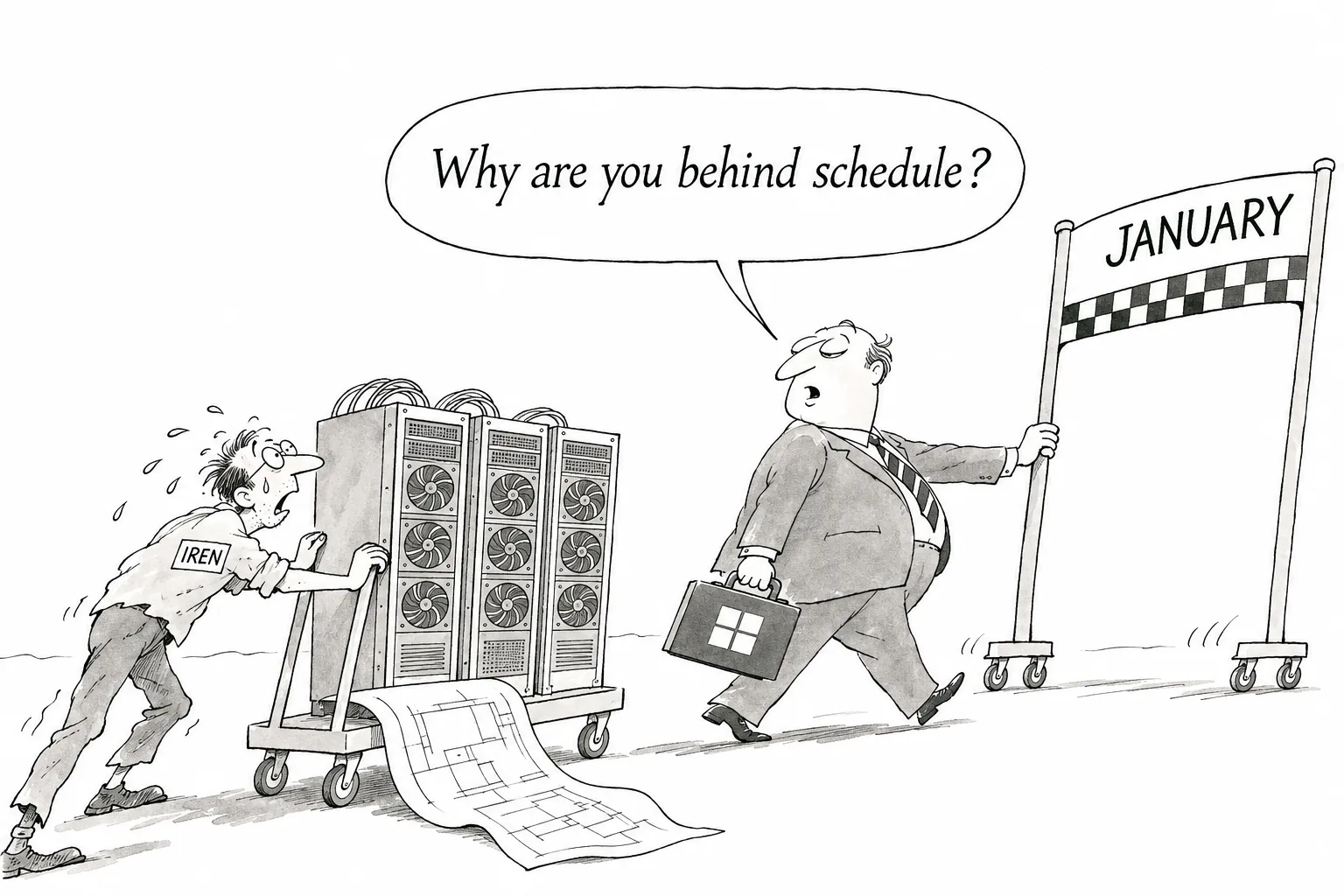
Microsoft, the largest buyer of AI computing capacity, has started tightening its commitments to neoclouds, Bloomberg reported on November 5. Neoclouds are newer cloud companies that build up stocks of NVIDIA GPUs and rent them to AI companies. The same day, IREN, one of the neoclouds, reported earnings. According to reports, Microsoft asked IREN to change its designs, which delayed deliveries and led IREN to push its revenue targets back to January or later. The two stories point the same way. Microsoft appears to be favoring its own data centers over capacity it rents from others.
What it means for Japanese companies: Companies that use Azure or Copilot face no immediate impact. Microsoft is not giving up capacity; it is only changing where that capacity sits. The companies most exposed are Japanese data center and GPU cloud operators that build GPU facilities for a single large customer, the firms that supply them with parts and power, and investors who hold AI infrastructure stocks. When a customer changes its order, even a finished facility may not bring in revenue right away. This case is worth watching as an example.
Note: This article is based on news reports. IREN's earnings release, filed with the US Securities and Exchange Commission (SEC), is a primary source, but we have not checked its contents directly. Treat the figures and wording here as reported.
What Bloomberg reported: the biggest buyer tightens its grip
According to Bloomberg, Microsoft has cooled on neoclouds. Tradingpedia, a US financial site, also reported on November 5 that Microsoft will not expand its Texas data center contract with Nscale, a British GPU cloud company.
For about the past two years, Microsoft has rented capacity from neoclouds to cover what its own data centers could not deliver in time. For the neoclouds, Microsoft was the largest and most creditworthy customer. If Microsoft cuts back on new commitments, the basis of the neoclouds' growth outlook is in doubt. Reports we could verify do not say which contracts will be cut, by how much, or what dollar amounts or power capacity are involved.
IREN's disclosure: a design change pushes revenue back
IREN is an Australian company that moved from bitcoin mining into renting GPUs for AI. In 2025, it signed a large contract to rent GPU capacity to Microsoft.
According to reports, IREN disclosed the following in its results for the July–September 2026 quarter (the first quarter of its fiscal 2027):
• Microsoft asked it to change the design of its facilities. As a result, deliveries to Microsoft are delayed.
• Because of this, it pushed back the timing for reaching its revenue targets to January or later.
• It also laid out a spending plan of about $15 billion, according to the headline of an Investing.com article.
The key point is that the delay reportedly comes from a change in the customer's order, not from problems with IREN's own construction. Even when the buildings and GPUs are ready, a customer's change to the specifications pushes back the day they start producing revenue. Meanwhile, interest on debt and facility costs keep piling up. The figures show how exposed a neocloud is when most of its business comes from one customer.
Separately, The Information, a US outlet, reported in October that IREN had signed a cloud contract with Anthropic (neither company has confirmed it). The next question is whether IREN can reduce its dependence on Microsoft by adding other customers.
Why Microsoft is building its own: in-house chips at GW scale
Microsoft's own announcements also point to its growing focus on in-house capacity. On October 12, Scott Guthrie, the executive who leads Microsoft's cloud and AI division, wrote that the company would deploy Maia 300, its in-house AI chip for inference, at GW scale (primary source).
• According to Microsoft, Maia 300 produces 40% more tokens (the units of text an AI model generates) per MW than the most advanced GPU systems.
• Mass production starts in 2027. Models from OpenAI and from Microsoft itself are already running on the previous generation, Maia 200, according to the company.
Neoclouds mainly rent out NVIDIA GPUs. If Microsoft runs its own chips in its own buildings, it decides for itself what to build, when, and to what design. It has not been reported what Microsoft asked IREN to change. But the request appears to fit a wider pattern of Microsoft revising specifications to match its in-house plans.
Open questions for neoclouds: what to watch in upcoming earnings
AI data center stocks have been selling off since the start of November. Bloomberg had reported that $500 million of data center loans were being put up for sale. The reports of Microsoft pulling back could add to those worries. Upcoming dates:
• November 10: earnings from CoreWeave, the largest neocloud. Watch its bond prices as well.
• November 12: earnings from Nebius, a neocloud headquartered in the Netherlands.
• November 17: NVIDIA earnings, which will show whether its sales to neoclouds are slowing.
There are three things to watch. First, whether Microsoft also cuts back contracts with other neoclouds. Second, whether IREN can meet its new timeline of January or later. Third, whether Anthropic and other AI companies take up the capacity Microsoft leaves behind. The more capacity Microsoft keeps in-house, the more neoclouds will need to find customers so they no longer depend on a single large buyer.
Sources: Yahoo Finance (Bloomberg), Tradingpedia, IREN earnings release (SEC), Investing.com
Editorial cartoon
Sources
- https://finance.yahoo.com/technology/articles/microsoft-sours-neoclouds-amid-data-160016061.html
- https://www.tradingpedia.com/2026/11/05/microsoft-wont-expand-texas-data-center-nscale-pact/
- https://www.sec.gov/Archives/edgar/data/0001878848/000187884826000065/irenreportsq1-fy27result.htm
- https://www.investing.com/news/stock-market-news/ai-data-center-firm-iren-delays-microsoft-ai-deliveries-plans-15-billion-spending-push-5006291