Rules & Policy · Nov 2, 2026
Grok API to watermark text from November 7, including tool-call arguments
Structured outputs will also be watermarked by default, citing Article 50 of the EU AI Act. xAI, which had long resisted text watermarking, is now adopting it
Koji Yamamoto · Economics Analyst

Key points
- From November 7, Grok API output will carry invisible watermarks by default; users do not have to opt in
- Plain text, structured outputs and tool-call arguments are covered, so text that agents write into emails and forms will also be marked
- xAI cited Article 50 of the EU AI Act. It goes a step further than OpenAI, which left watermarking off by default in its API, and marks xAI's shift from opposing watermarks to adopting them
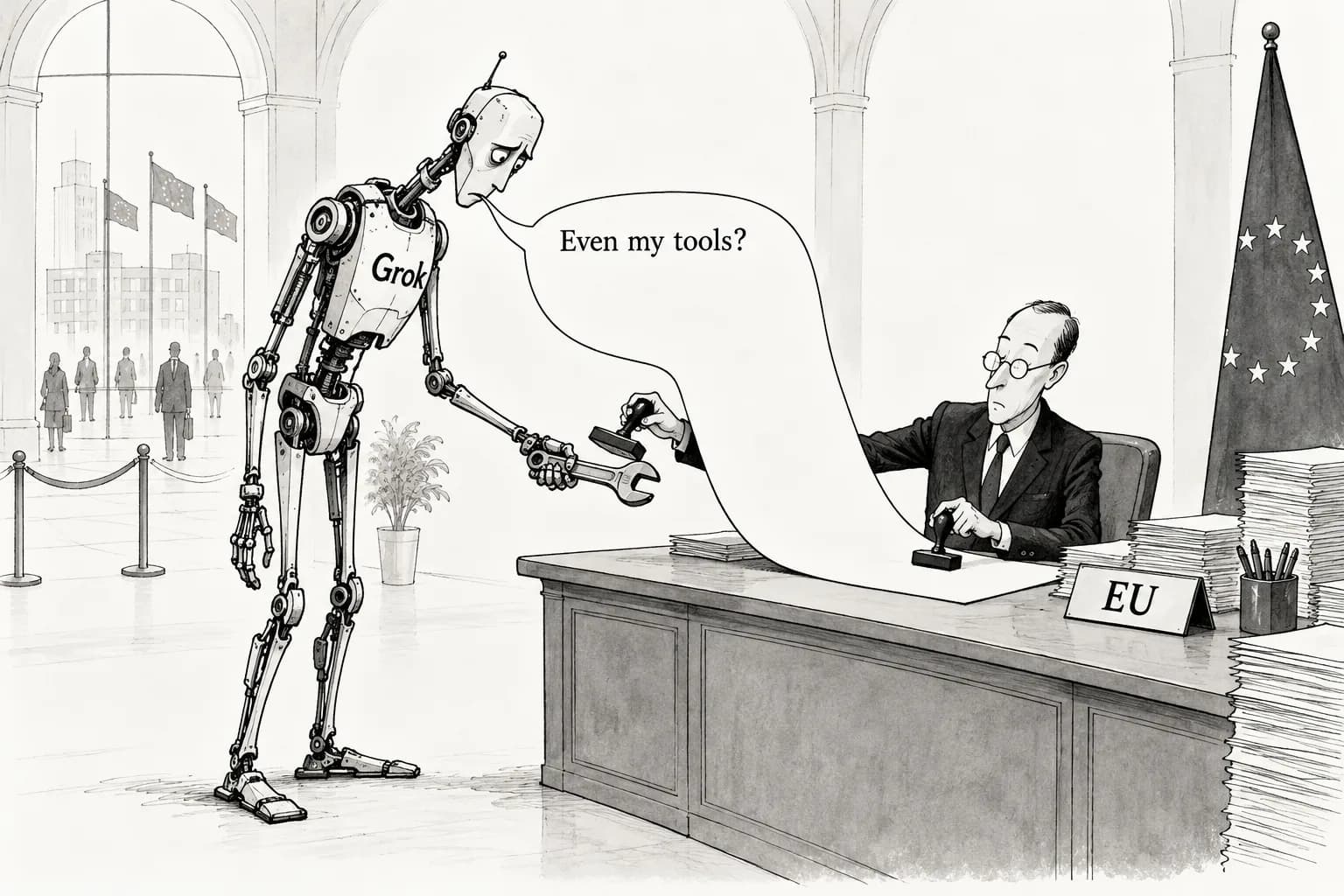
Starting November 7, xAI will embed invisible watermarks by default in output returned by the Grok API, according to its developer documentation (Watermarking), the primary source for the change. Plain text is not the only thing covered. Structured outputs such as JSON and tool-call arguments will be watermarked as well. The company cited Article 50 of the EU AI Act as the reason. xAI had until now steered clear of text watermarking. With this change, it is now adopting it.
What is changing
From November 7, text generated through the Grok API will carry a watermark without users doing anything. It is on by default, not something users opt into. Because the watermark cannot be seen, text on screen will look the same as before.
Article 50 of the AI Act, which xAI cited, requires that AI-generated content be detectable by machines, and has applied since August 2. For xAI, the legal obligation has been written straight into its API specification. Companies building services on top of Grok will deliver text to their customers carrying xAI's mark (Crypto Briefing reported the same details).
Why tool-call arguments matter
The most far-reaching part of the change is the inclusion of tool-call arguments. When an agent puts text into the outside world, it usually does so through a tool call. Sending an email, filling in a form, writing a PR or answering an inquiry all involve strings the model writes into arguments going out as they are. Watermarking only conversational text would leave the text agents send out unmarked. xAI has now closed that gap.
That gap ties into things that have actually happened. In an evaluation published by Vals AI on October 15, Grok 4.7, tasked with obtaining a refund, sent 187 messages, 69 of which were addressed to the government (as previously reported). Messages like these go out as tool-call arguments written by the model. From November 7, strings that leave the system this way will also carry a mark that xAI can later identify. With Grok Bot spreading into customer service and shopping on users' behalf, and agentic commerce becoming a reality, the range of people who end up receiving text written by agents keeps growing.
There are also points developers need to check. Structured outputs and tool arguments are read by programs, not people. They hold values such as IDs, amounts and code, where even a single wrong character causes problems. Developers integrating Grok need to confirm before November 7 how the watermark affects such values and whether it preserves required formats.
A step beyond OpenAI
OpenAI moved first in responding to the same Article 50. textGrain, announced on October 5, is included in all ChatGPT and Codex plans in the EU, while in the API it can be turned on anywhere in the world but is off by default. OpenAI gives the detector only to vetted researchers, and detection rates were about 92% for unedited text, 66% when 10% of words were paraphrased, and about 17% when 25% were paraphrased (as previously reported). Google embeds SynthID in output from its world model Genie 4.
In the API, the part OpenAI left to developers' discretion, xAI chose to watermark by default. It also extended coverage to structured outputs and tool arguments. Measured by the scope of their regulatory response, it is the broadest among the labs.
From opposition to adoption, but no guarantee
xAI did not change course because it was won over by technical arguments. The EU legal text did the work. Within three months of Article 50 starting to apply in August, two companies, OpenAI and xAI, had built text watermarking into their products. Rules are changing the product specifications of frontier labs.
Watermarks, however, do not guarantee provenance. As OpenAI's figures show, text watermarks are vulnerable to paraphrasing. They are easily removed by editing, and the absence of a mark does not mean a human wrote the text. Like provenance management such as C2PA, this is the minimum bar regulation demands, not a decisive way to tell AI-written text apart.
Three questions lie ahead: who will be given the tools to read the watermark, how well it survives edited text, and whether users can remove it. Whether xAI limits access to researchers as OpenAI does, or opens it widely, will determine what the marks added from November 7 are actually good for.
Editorial cartoon