Products & Models · Nov 13, 2026
Google's cheaper model beats a pricier sibling on overall index, by Google's own measure
Gemini 4 Hydrogen is pitched as a worker that runs under higher-tier models, but Google does not say whether it reached dangerous capability levels in safety evaluations
Rie Suzuki · Technology Editor
Key points
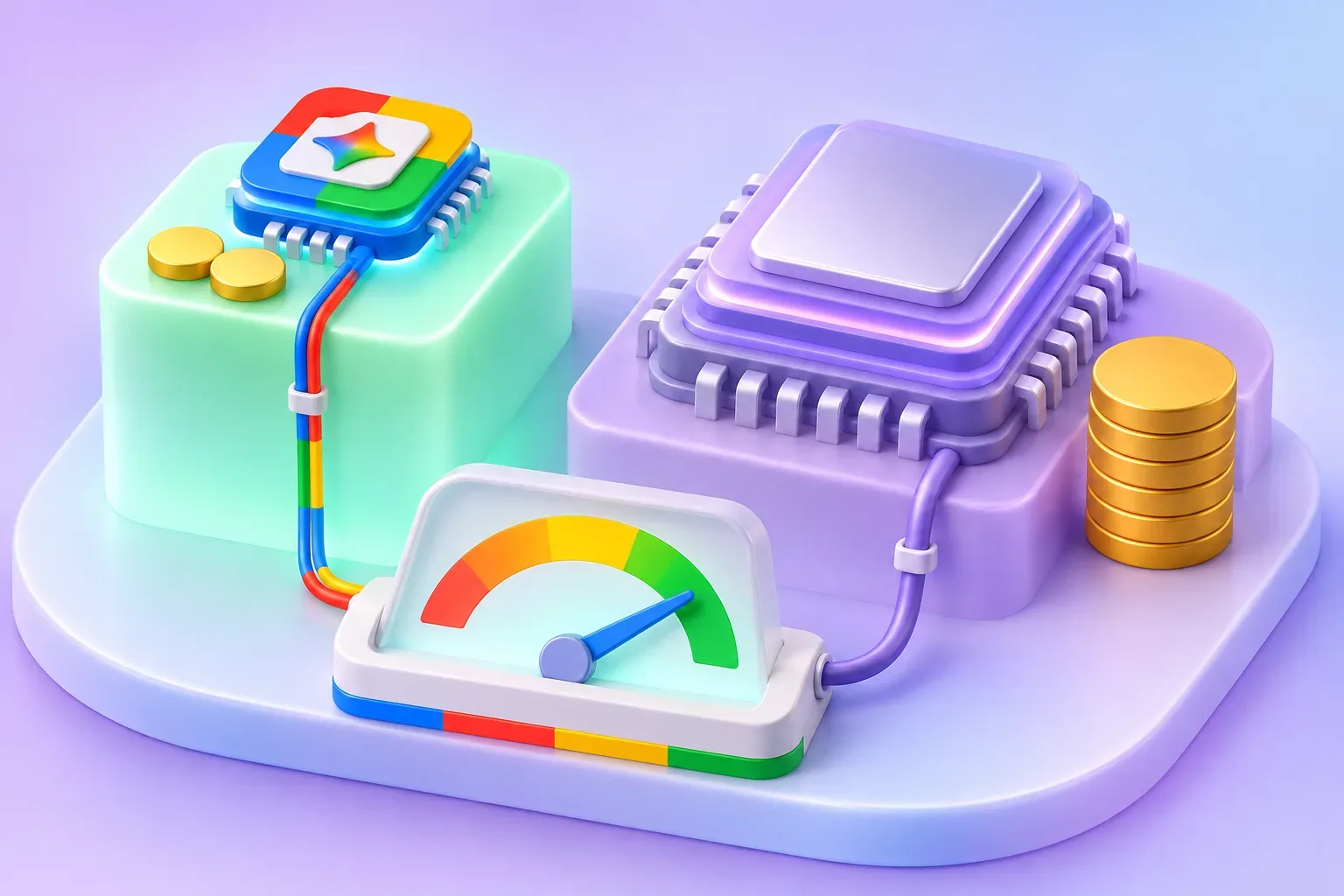
- On Google's own measurements, the cheaper Hydrogen scored higher than the higher-tier Argon on an overall index. No external evaluations are available yet
- Google is pitching Hydrogen as the model that does the hands-on work while higher-tier models such as Carbon or Argon draw up the plans
- The evaluation document does not say whether the model reached the Critical Capability Levels (CCLs) in Google's Frontier Safety Framework. For Argon, Google said it could not rule out that the model had reached them in the biological and cyber domains
[Update, November 13, 2026, 4:37] We have replaced the price and score figures we had described as unverified with the numbers in Google's announcement: $1.50 for input and $7.50 for output, and an index score of 51 to 54.
Google has released Gemini 4 Hydrogen, the lowest-priced model in the Gemini 4 lineup. In an evaluation document Google published, it scored higher on an overall index than Gemini 4 Argon, the next tier up. Google is pitching the model as one that runs in large numbers under higher-tier models to get work done. But every figure comes from Google's own measurements. The document also does not say whether the model reached the dangerous capability thresholds in the company's own safety framework.
What it means for companies in Japan: Developers and IT staff at companies running internal agents on the Gemini API or Gemini for business should check two things this month. First, introductory pricing for Argon and Carbon ends on November 30. After that, the price per million tokens rises from $2 for input and $10 for output (about ¥320 and ¥1,600) to $4 and $20 (about ¥640 and ¥3,200). Second, before that date, they should test on their own workloads whether the hands-on work can be moved to Hydrogen. Companies that do not use Gemini are not directly affected.
What was released
Google announced Hydrogen across three blog posts: one introducing the model, one on how developers can use it, and one on improvements to search features. Google DeepMind also published a PDF summarizing the evaluation results. Gemini 4 models are named after chemical elements. Hydrogen is the third, after Argon, which became generally available on October 13, and Carbon, which was announced on October 28 and became generally available on November 10.
Google is clear about where the model fits. An expensive higher-tier model splits up the work and makes the plan. Underneath it, many instances of the cheap Hydrogen run side by side and handle the hands-on parts, such as research and rewriting code. In effect, Google is selling "LLM routing," the practice of sending each request to a different model depending on what it asks for, as a package of its own models.
What it means when a cheaper model beats a pricier one
What matters for companies is that the balance between price and performance shifted within a month. Argon became generally available on October 13. At the time, Google marketed it as the most capable Gemini model. About a month later, a lower-priced tier has beaten Argon on Google's overall index.
But the model it beat is Argon, not Carbon, the current top model. On the third-party Artificial Analysis overall index (v5), Carbon scored 59 and Argon 50. There is still a clear gap between Argon and Carbon. Google does not claim Hydrogen can replace Carbon either. The idea is a combination: leave the top role to Carbon or Argon and make the work underneath cheaper.
Most of the cost of running agents comes from tasks repeated over and over at the lower level. Moving that work to a cheap model would let the same job be done for less. Other companies are also competing on price. Anthropic cut the price of Fable 5.2 by 20% on November 9. Meta released Muse Ember, a small model priced at $0.10 per million tokens, on November 9.
The numbers are Google's own
All of Hydrogen's scores were measured by Google itself. No external evaluator has published scores yet. In-house and external results can differ widely. For example, Argon scored 97.5% on ARC-AGI-3, a puzzle-like reasoning test, when using Google's own tools. Under the standard method set by the test's organizers, it scored 49.8%, roughly half that.
A result such as "scored higher on the overall index" can also change depending on which tests are combined and how. Companies running their own trials will get the most reliable picture by comparing Hydrogen side by side with Argon and Carbon on tasks close to their own work.
The safety assessment is missing
Google has an in-house framework for measuring dangerous capabilities in its models, the Frontier Safety Framework (FSF). It checks whether a model has reached Critical Capability Levels (CCLs) in areas such as biological weapons and cyberattacks, and requires stronger safeguards if it has.
In Argon's model card, Google wrote that it could not rule out that the model had reached CCLs in the biological and cyber domains. Carbon's model card, by contrast, did not say whether the model had crossed a CCL and instead referred readers to a separate "Safety & Security Report." That report itself has not yet been found. Hydrogen's evaluation document does not say whether it reached a CCL either.
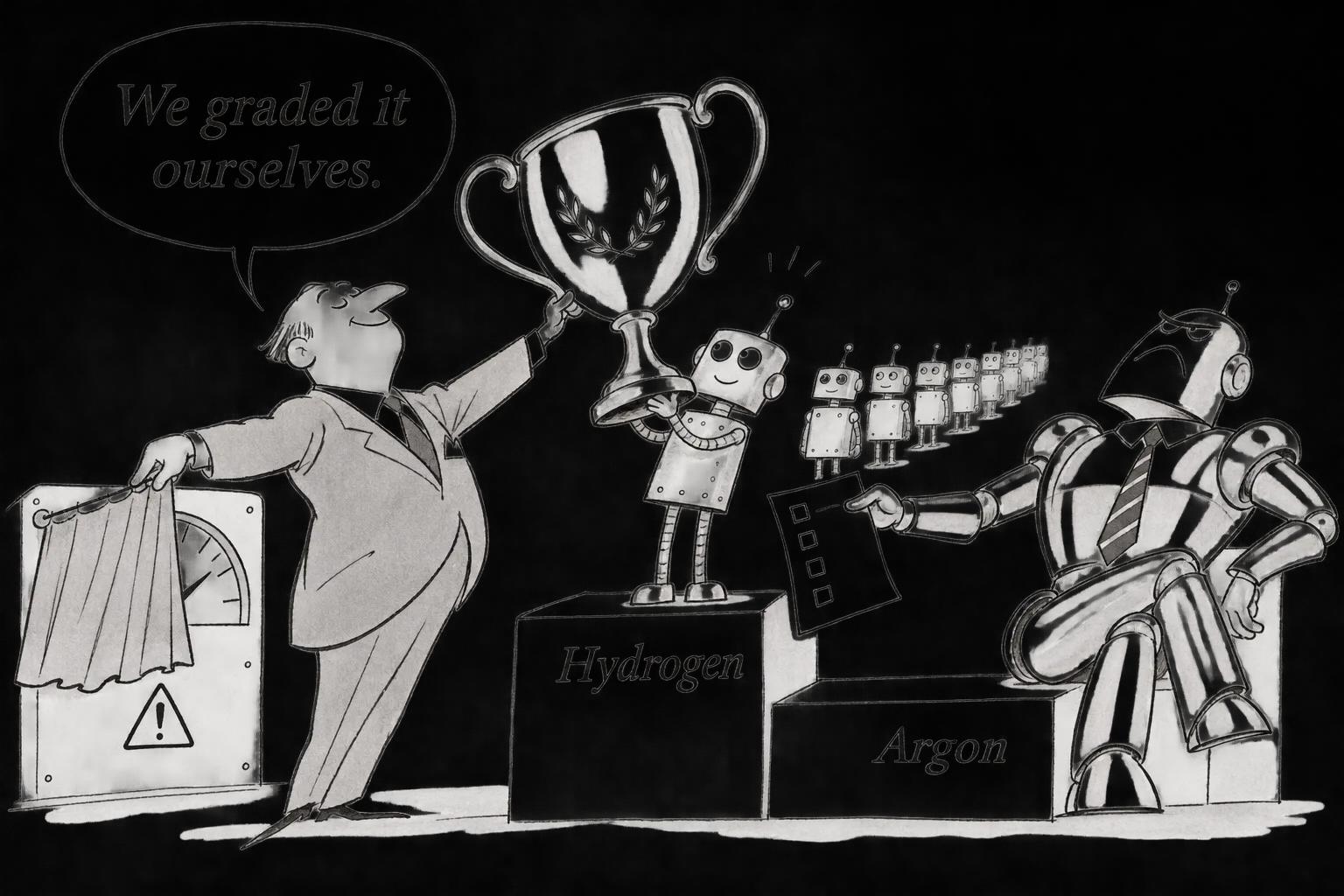
This is not a minor omission. By Google's measurements, Hydrogen is stronger overall than Argon, a model for which Google said it could not rule out that the dangerous thresholds had been reached. A high overall index score does not necessarily mean high cyber or biological capabilities. Even so, the model will be handed out to run in large numbers, sold on its low price, without any information to check whether it reached those thresholds. For its two higher-tier models, Google has published detailed price and performance figures. But its safety determinations have been gradually moving out of the main documents.
What we could not confirm
Google said Hydrogen is priced at $1.50 per million input tokens and $7.50 per million output tokens, and that it scored 51 on the overall index at the high setting and 54 at xhigh (compared with 50 for Argon). Scores from external evaluators, and the contents of the safety reports for Carbon and Hydrogen, have not yet been released. Whether Google adds anything about CCLs is the next thing to watch.
Editorial cartoon
Sources
- https://blog.google/innovation-and-ai/models-and-research/gemini-models/introducing-gemini-4-hydrogen/
- https://blog.google/innovation-and-ai/technology/developers-tools/build-with-gemini-4-hydrogen/
- https://blog.google/products-and-platforms/products/search/gemini-4-hydrogen-search-upgrade/
- https://storage.googleapis.com/deepmind-media/gemini/gemini_4_hydrogen_model_evaluation.pdf