Money · Oct 6, 2026
Flex's AI power unit Axiom raises $2 billion in 10% preferred stock at a $37.5 billion valuation, led by General Catalyst
Investors get equity, but they also get a promised 10% a year. Funding for a business that builds power for AI was priced at a lender's yield, not at a growth-stock valuation
Koji Yamamoto · Economics Analyst
Key points
- In a filing with the SEC, Flex disclosed that Axiom, its AI power unit, will raise $2 billion through convertible preferred stock with a 10% dividend. General Catalyst is leading the deal, which values Axiom at $37.5 billion
- Instead of common stock, the investors chose preferred stock, which pays dividends first and can later be converted into shares. Before betting on the business's growth, they locked in a 10% annual return
- A 10% rate looks less like venture equity and more like direct lending in private credit. Even AI power, the part of the infrastructure in shortest supply, isn't getting cheap capital
Flex, the electronics contract manufacturer, is raising $2 billion in convertible preferred stock for Axiom, its AI power unit. The preferred stock pays an annual dividend of 10%. The deal values Axiom at $37.5 billion and is led by the venture capital firm General Catalyst. Flex disclosed the deal in a filing with the U.S. Securities and Exchange Commission (SEC) (Exhibit 99.1).
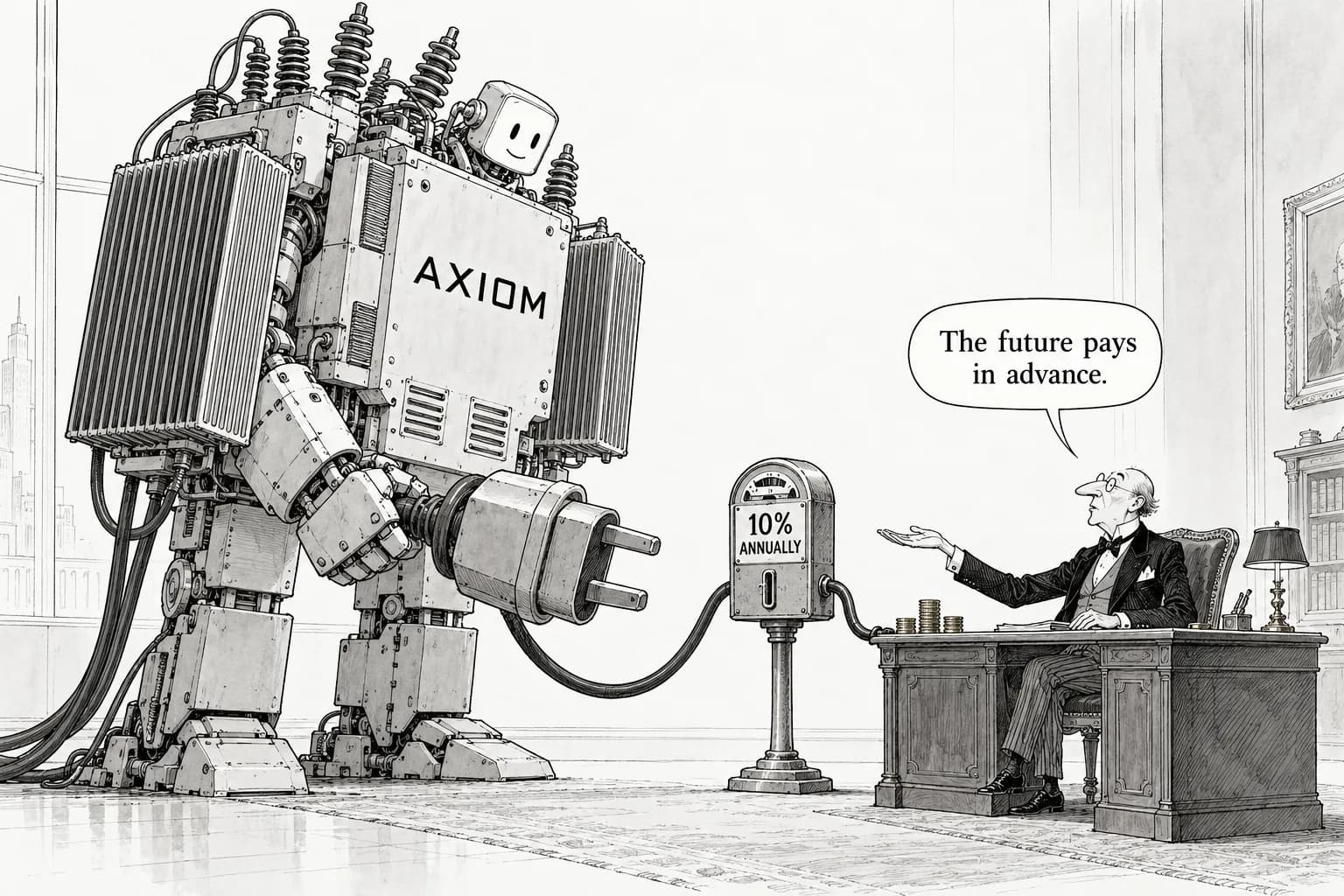
The most important number in this deal isn't the $2 billion raised or the $37.5 billion valuation. It's the 10% annual dividend. Power for AI data centers is widely seen as the scarcest part of today's infrastructure. Yet even for a business that makes that power possible, investors decided that a bet on growth wasn't enough and asked for a fixed return first. Capital for AI power infrastructure is being priced at high, private-credit-like yields.
What was disclosed
The filing confirms four basic terms. The deal raises $2 billion. It takes the form of convertible preferred stock. The dividend is 10% a year. The valuation is $37.5 billion. General Catalyst leads the investor group.
The $2 billion equals about 5.3% of the $37.5 billion valuation. But how much of Axiom the investors will own after conversion depends on the conversion price and terms. Will the dividend be paid in cash or in additional shares? When can the stock be converted, and when can it be redeemed? When will the money be paid in? We have not verified these details and do not plug in numbers for them.
Why 10% preferred stock instead of common stock
Convertible preferred stock sits between equity and debt. Its holders receive dividends before common shareholders do, and they are also repaid first in a liquidation. If the business does well, they can convert into common stock and share in the upside. It protects the downside the way a loan does and captures the upside the way equity does.
A $37.5 billion valuation assumes strong growth. Even so, the investors didn't buy common stock at that valuation. Instead, they chose a structure that pays them 10% a year before anyone else. One reading is that they accepted the high valuation in exchange for a yearly return as insurance.
Flex had its own reasons. Issuing common stock directly at a $37.5 billion valuation would dilute its stake right away. Preferred stock pushes that dilution back to the point of conversion. The cost of doing so is the 10% dividend. In effect, Flex agreed to pay 10% a year to protect its ownership.
10% is a lender's price, not an equity price
Yields of around 10% a year don't belong to the world of venture growth equity. They're typical of private credit, in which asset managers rather than banks lend directly to companies. In AI computing, private credit has become a major funding source for GPU-backed loans and data center construction. This deal carries the same yield-based thinking further, to a business that builds the power equipment inside data centers.
In a deal led by a venture capital firm, investors usually expect most of their return to come from rising value. General Catalyst led this deal but still required a 10% dividend. That suggests that in AI power, a business can't have both strong growth prospects and cheap capital. The demand is clear. Even so, the investors put a price on the time it will take for that demand to turn into equipment and factories, and on how hard the work will be to execute.
What it means for AI power infrastructure
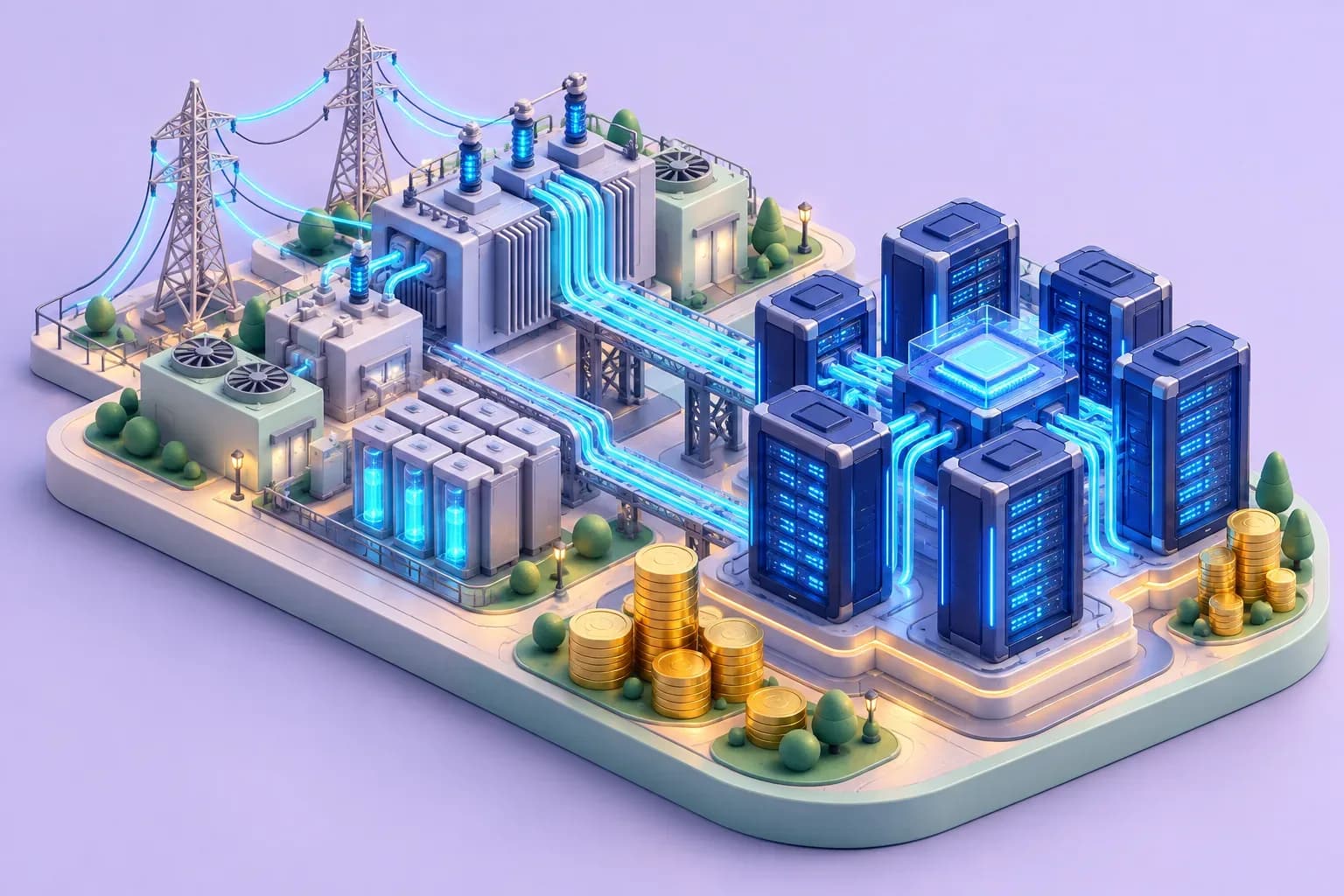
A growing view holds that AI data center construction will hit a power bottleneck before it runs short of chips. The equipment that takes in power, converts it and delivers it to the racks sits at the center of that bottleneck. Axiom handles that part of the chain, and Flex raised money for it separately from its core contract manufacturing business.
The deal shows that even a business at the center of the bottleneck isn't getting cheaper capital. Only a business that can pay 10% every year can raise money in this form. In other words, the capital flowing into AI power infrastructure expects high yields that match the strength of demand. Ultimately, those yields will show up somewhere in data center construction costs and in the prices customers pay to use AI.
What we don't know yet
Several details remain unclear: the conversion price and timing, how the dividend will be paid (cash or additional shares), the redemption terms, any investors besides General Catalyst, when the money will be paid in, and what Flex plans for Axiom's future, including whether it intends a spin-off or a public listing. We will report further after reviewing the full terms of the filing. In particular, if the dividend is paid in additional shares, the 10% would show up as a growing stake for the investors rather than as a cash cost. Confirming this point is essential to understanding what the capital really costs.
Editorial cartoon