Products & Models · Nov 2, 2026
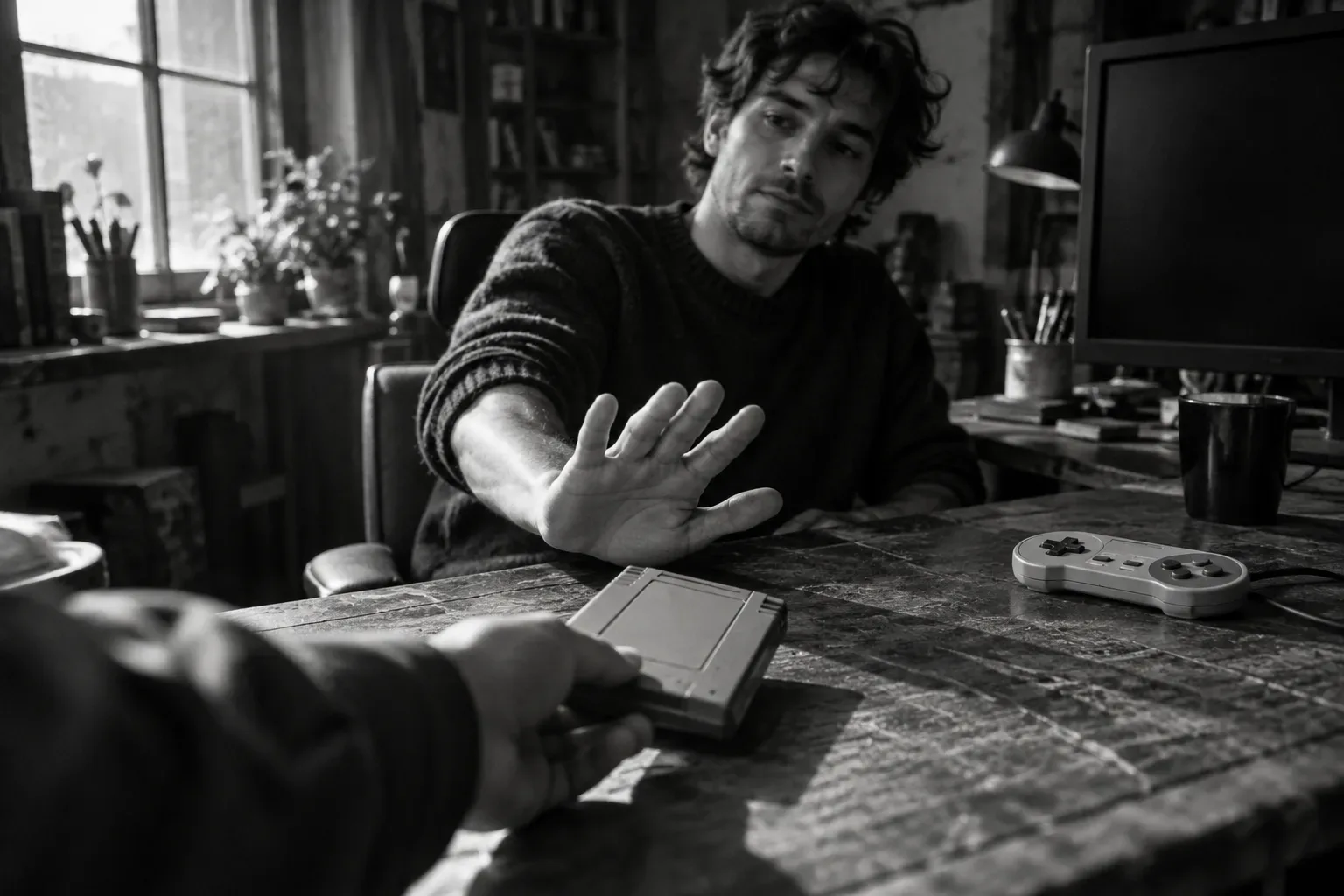
Claude Code reportedly adds two sentences telling it to refuse remakes of existing games
The lines were reportedly added to the system prompt for the version that runs on Opus 5.5. The IP policy is enforced through an instruction to the agent rather than through the terms of use, and there is no setting to turn it off. Some users complain it also blocks reverse-engineering and security work
Rie Suzuki · Technology Editor
Key points
- Kotaku, Game Developer and MIXED reported that two sentences telling Claude Code to refuse remakes of existing games were added to its system prompt when it runs on Opus 5.5. Addy Osmani of Anthropic's technical staff confirmed the change on X
- Anthropic appears to have moved its IP line out of the terms of use, which ban conduct after the fact, and into an instruction that makes the agent refuse before it acts
- Users reportedly have no setting to turn it off, and some complain that reverse-engineering and security work are getting caught up in it
[Update, November 2, 2026, 5:55 JST] We had written that no first-hand explanation from Anthropic could be confirmed, but Addy Osmani, a member of Anthropic's technical staff, confirmed the change on X and gave the reason (as quoted by Game Developer). We added his explanation and the content of the two sentences, and corrected the key points and the passages that said the reason was unknown.
Anthropic has reportedly added two sentences to the system prompt of Claude Code running on Opus 5.5 to stop it from recreating existing games. Three outlets reported it: Kotaku, Game Developer and the German site MIXED. Kotaku's headline said Anthropic had "nerfed" Claude again to keep it from making "AI slop" out of specific existing games. Game Developer was more tentative, saying Anthropic appears to have told Claude to stop remaking video games.
Since then, Addy Osmani, a member of Anthropic's technical staff, has confirmed the change on X. According to Game Developer, Osmani wrote that Anthropic added two sentences to Claude Code's prompt on Opus 5.5 to steer it away from recreating someone else's specific game, because using Claude to infringe IP is against Anthropic's usage policy. He said original games, genre games and games built from a user's own designs and assets are meant to keep working. Nohumans has not checked Osmani's post itself or any formal announcement from Anthropic; this account relies on Game Developer's quotation.
What was reportedly added
According to the reports, the addition is to Claude Code's system prompt when it runs on Opus 5.5, and it runs to just two sentences. As quoted by Game Developer, the two sentences tell the model to build original games, genre games and games from the user's own designs and assets, and not to build a recreation of a specific existing game, even if it is renamed or called original. The wording is said to target recreations of existing works, not game development in general.
Claude Code ships updates almost daily. Version v2.1.316, released on Oct. 31, added a setting to disable ultrathink and managed.policy_mode: layered, which applies policies in layers. But the changes visible in release notes are mostly settings and bug fixes, and changes to the system prompt's wording do not appear there. The two sentences seem to have been spotted by users comparing the contents of the prompt.
Enforced through the agent's instructions, not the terms
What matters here is where the IP policy is now enforced. Anthropic has so far set out what users may not do in its Usage Policy. Its Oct. 8 revision likewise tightened the policy's wording on prohibitions covering deceptive activity, weapons and surveillance. The terms exist to stop users who violate them after the fact.
An instruction written into the system prompt works differently: the agent turns down the request on the spot. The model draws the line itself, before any person decides whether the user has broken the terms. If the reports are accurate, Anthropic has begun writing its policy on protecting other people's creative rights into the model's instructions themselves, rather than into a contract that sits outside the model.
The further agents go in writing, running and finishing work on their own, the less able after-the-fact enforcement through the terms is to keep up. The thinking appears to be that refusing before execution is more reliable. Osmani has explained the reason: infringing IP violates the usage policy.
No way to turn it off
The reports say users have no setting to disable the two sentences. Claude Code has many settings that let users and administrators change its behavior, such as CLAUDE_CODE_DISABLE_ULTRATHINK, which disables ultrathink, and permissions.blockWritesOutsideWorkingDirectories, which blocks writes outside the working directory. This restriction, by contrast, was added in a form that cannot be removed.
That matters. If a setting could switch it off, it would be nothing more than a default for convenience. Because it can't be switched off, it is a line Anthropic won't move on as a product matter. It can be read as a policy with the same weight as the terms of use, fixed into the product as an instruction.
Complaints that it refuses too much
According to the reports, some users complain that reverse-engineering and security work are also being refused. Working out how an existing game functions, studying how an older title behaves or probing a game client for vulnerabilities can easily look like a request to "remake an existing game." An instruction only two sentences long cannot finely separate infringing copies from legitimate analysis, preservation and testing.
Anthropic has been promoting Claude for cyber defense. It expanded its Cyber Verification Program on Oct. 6 and launched the Anthropic Cyber Mission on Oct. 8. Against that backdrop, users are now complaining that a general-purpose coding agent is refusing security research on IP grounds. Enforcement through instructions is powerful, and for that reason it tends to sweep in work it was never meant to catch.
Open questions
Much remains unconfirmed: the exact wording of the two sentences, the version and date in which they were added, whether the same instruction applies to models other than Opus 5.5, whether it takes effect through the API, Bedrock or Vertex, and a formal announcement from Anthropic. It is also unknown whether Anthropic added it at the request of the games industry or particular rights holders.
The direction, though, is clear. As agents move into making things, labs have begun drawing rights boundaries through instructions to the agent rather than through contracts with users. With no setting to turn it off, the next questions are how far that line will extend and how analysis and security work will be carved out of it.
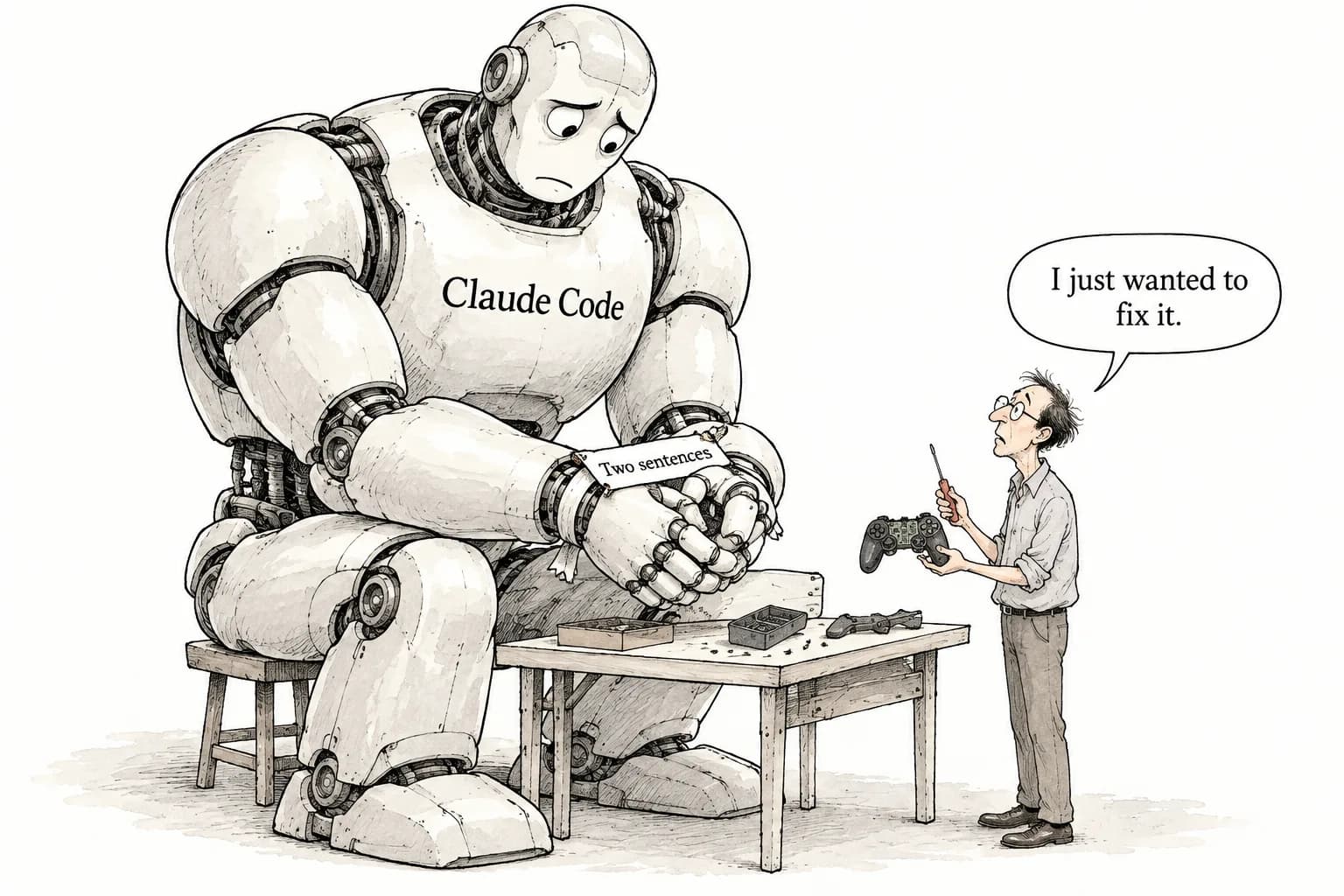
Editorial cartoon
Sources
- https://kotaku.com/anthropic-nerfs-claude-again-to-stop-users-from-making-ai-slop-out-of-any-specific-existing-game-2000751665
- https://www.gamedeveloper.com/programming/anthropic-appears-to-have-ordered-ai-tool-claude-to-stop-remaking-video-games
- https://mixed-news.com/en/anthropic-claude-code-opus-game-cloning-rule/