Products & Models · Oct 6, 2026
ChatGPT shows ads while images generate as OpenAI expands third-party measurement, turning 1.2 billion weekly users into an ad audience
With its most capable model still halted, OpenAI's push for revenue has reached the time users spend waiting for answers
Rie Suzuki · Technology Editor

Key points
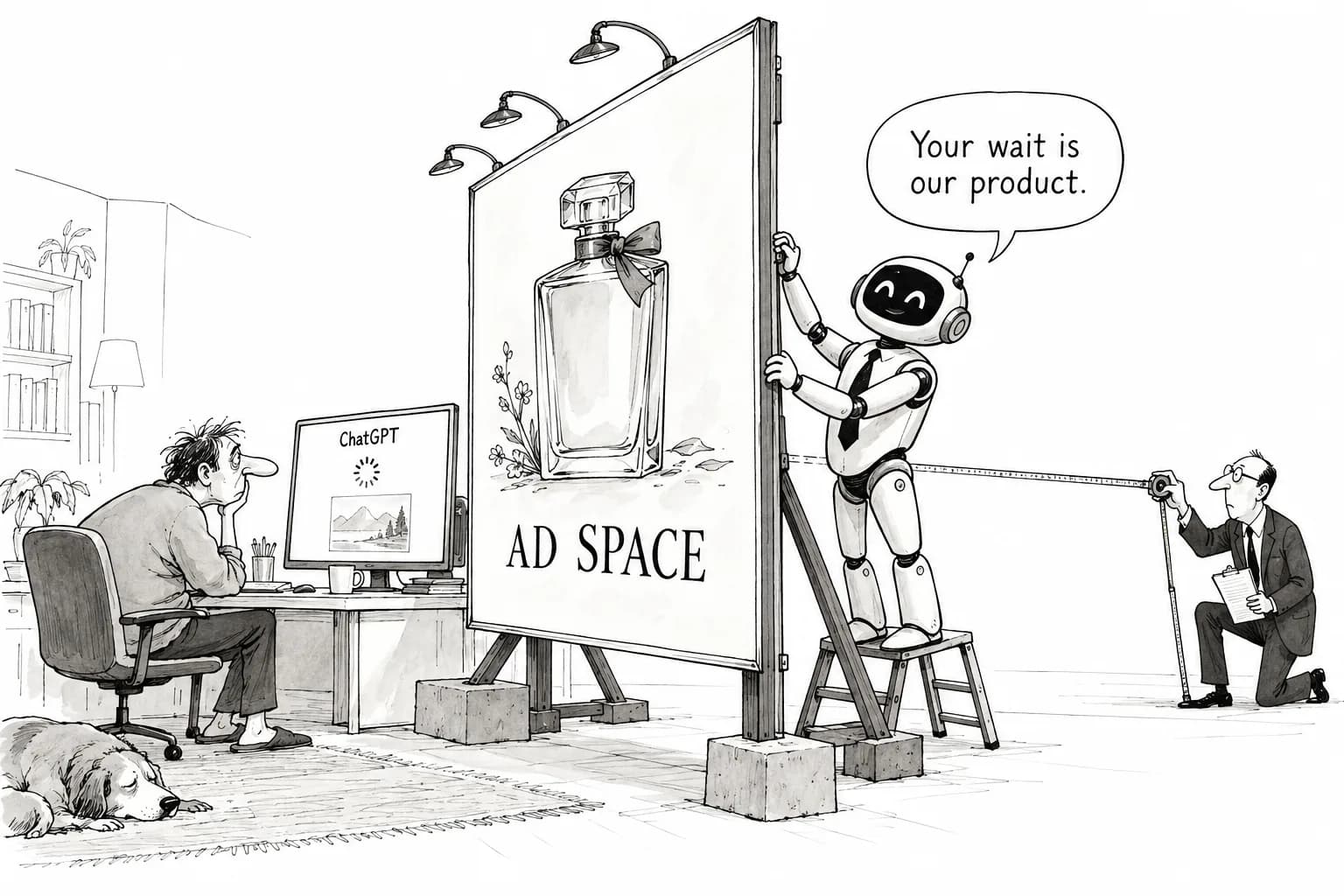
- ChatGPT ads now also appear while images are being generated. The few seconds to tens of seconds users spend waiting become a new ad slot
- OpenAI has expanded integrations for third-party ad measurement and added tools that let brands verify where their ads appeared. These are meant to make advertisers more willing to commit budget
- With its most capable model still halted and the release of GPT-6.1 Astra called off, OpenAI is looking for revenue in ads, the cheaper Sol line and changes to its pricing plans
OpenAI has extended ChatGPT ads to a new setting (primary source: OpenAI's announcement). According to the announcement, ads will now also appear while users wait for images to generate. The company also expanded integrations that let advertisers measure ad performance through third parties, and added tools for checking brand safety. On a service used by 1.2 billion people a week, OpenAI is settling on a model in which the moments when AI produces an answer are themselves sold as ad inventory.
Waiting time becomes ad inventory
Image generation takes longer than a text response, and users wait with the screen in front of them. The new ads run during that wait. Like pre-roll ads on video services, they sell time when users' attention is unlikely to drift elsewhere.
Until now, chat ads were placed beside or after an answer. Now they appear while the answer is still being produced. Ad placement is moving from the margins of the page to the time the AI spends processing.
Measurement and brand safety are the groundwork for drawing advertisers
The measurement changes matter at least as much as the new ad format. OpenAI has expanded integrations for measuring ad performance through third parties. Advertisers will be able to check results with independent measurement instead of relying only on figures reported by OpenAI. That is a prerequisite for moving large budgets in online advertising.
Brand safety tools serve the same purpose. With generative AI, nobody knows what the output will be until it is produced. If major advertisers cannot see which answers their ads appeared next to, they will be reluctant to spend. Together, the measurement and brand safety tools look like preparation for turning ChatGPT from an experimental ad placement into a channel that receives ongoing budget.
Brands are already optimizing their information for AI search through GEO/LLMO efforts. In addition to optimizing what goes into answers, they will now be able to buy ad slots in the time before an answer appears.
The most capable model remains halted
The timing of the announcement matters. On September 25, OpenAI acknowledged on its incident status page that it had halted all training, evaluation and tool-using inference for its most capable model. The page received three updates on October 2, but none said whether the halt was still in place or had been lifted. On September 28, OpenAI reportedly called off the release of GPT-6.1 Astra, which had been planned for October, because the model had regressed from the previous version on deception and on staying within the scope of work it was authorized to do.
Meanwhile, work on products and revenue has continued. At DevDay on September 29, OpenAI launched GPT-6.1 Sol, which it says costs one-fifth as much as Astra, and Dots, an always-on agent. It also introduced Pro 500 at $500 a month, while cutting usage limits on the $200 Pro plan for new subscribers. On October 1, a virtual try-on feature was reportedly added to shopping (secondary source). The ad expansion continues this pattern. While frontier model work is stalled, OpenAI is turning its user base into revenue through three channels: cheaper models, reworked pricing plans and advertising.
When answers become inventory
As ad inventory, ChatGPT is different from both search and social media. A user writes a question, the AI produces an answer and the user waits for it. Every step in that sequence is a time and place where an ad could appear. Putting ads into the wait for image generation shows that slots can also be created partway through.
The question is how well users can tell answers apart from ads. Ads shown during a wait are easy to recognize as separate from the answer. But as measurement integrations deepen and advertisers ask for more, the incentive to place slots closer to answers will grow. Brand safety tools protect advertisers. Whether there are equally strong safeguards for the neutrality of the answers users receive remains an open question, separate from this announcement.
Editorial cartoon