Infrastructure & Security · Oct 25, 2026
Data centers face a double headwind of "won't get built" and "not wanted here": Bernstein estimates only about 35% of planned projects will be built, 59% oppose local construction, and Texas halts 17 permits
Resident opposition and local votes now add to the funding and power hurdles. Local politics, rather than hyperscaler capital spending, is starting to set the pace of construction
Seiichi Tanaka · Editor-in-Chief
Key points
- Bernstein reportedly estimates that only about 35% of announced U.S. data center projects will actually be built
- According to CNBC, 59% of people oppose building a data center in their area, which could hold back the Trump administration's AI push ahead of the midterm elections
- In Texas, permits kept being approved automatically after Gov. Abbott's pause, and 17 have now been suspended. The Aurora, Colorado, city council will vote on an indefinite moratorium
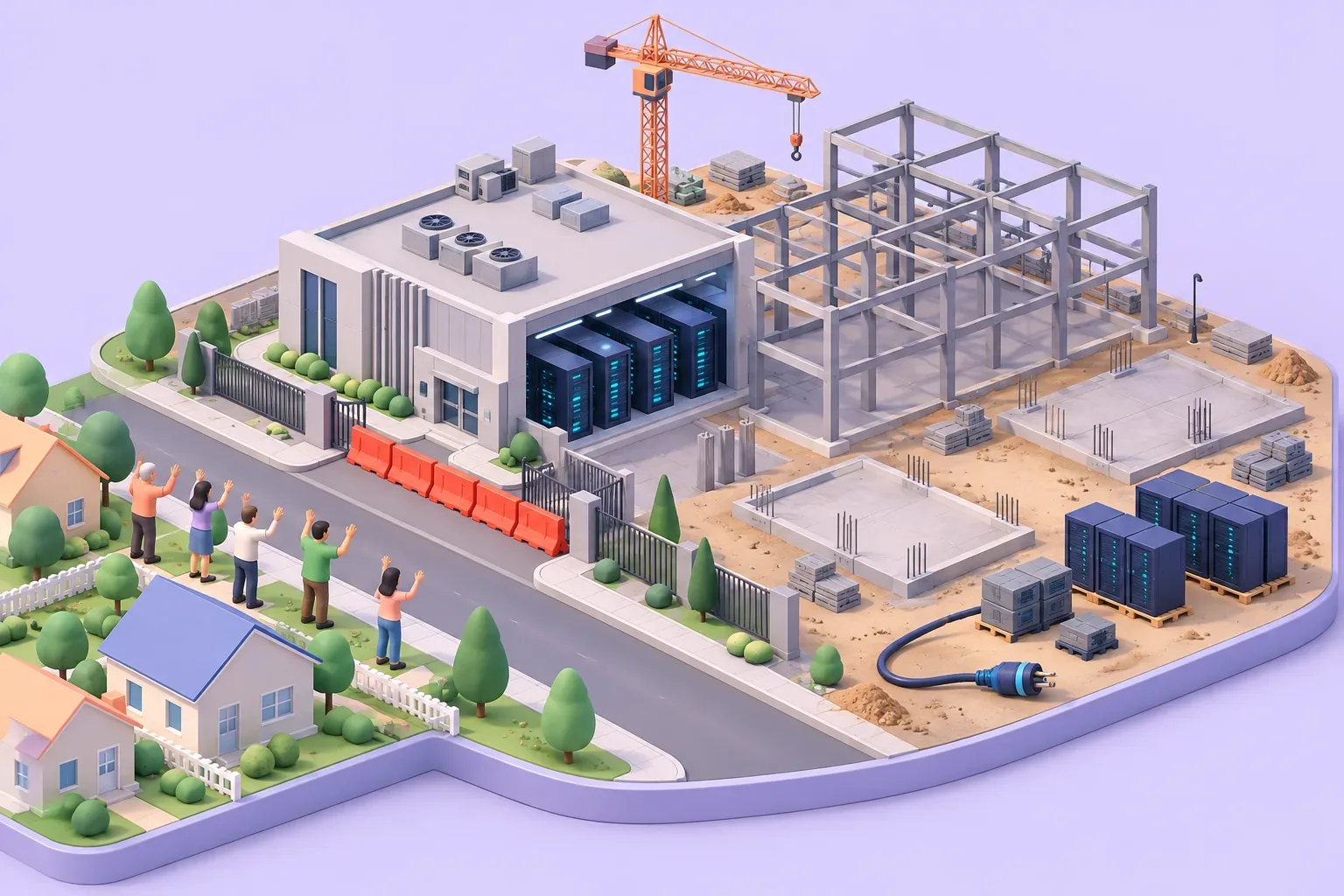
U.S. data center construction plans are reportedly being squeezed from two directions. The first is the view that many projects "won't get built." Research firm Bernstein reportedly estimates that only about 35% of announced projects will actually be built. The second is the message that they are "not wanted here." CNBC reported on October 24 on a poll finding that 59% of people oppose building a data center in their area. On top of that come the permit suspensions in Texas and a series of moratorium votes in places including Aurora, Colorado. Local politics, rather than the size of hyperscaler capital spending, is starting to set how fast data centers get built.
Note that this article is based on media reports and has not been checked against primary sources. Some detailed figures and conditions in the original reports could not be verified, so the following sticks to what has been reported.
"Won't get built": an estimate of about 35% of projects
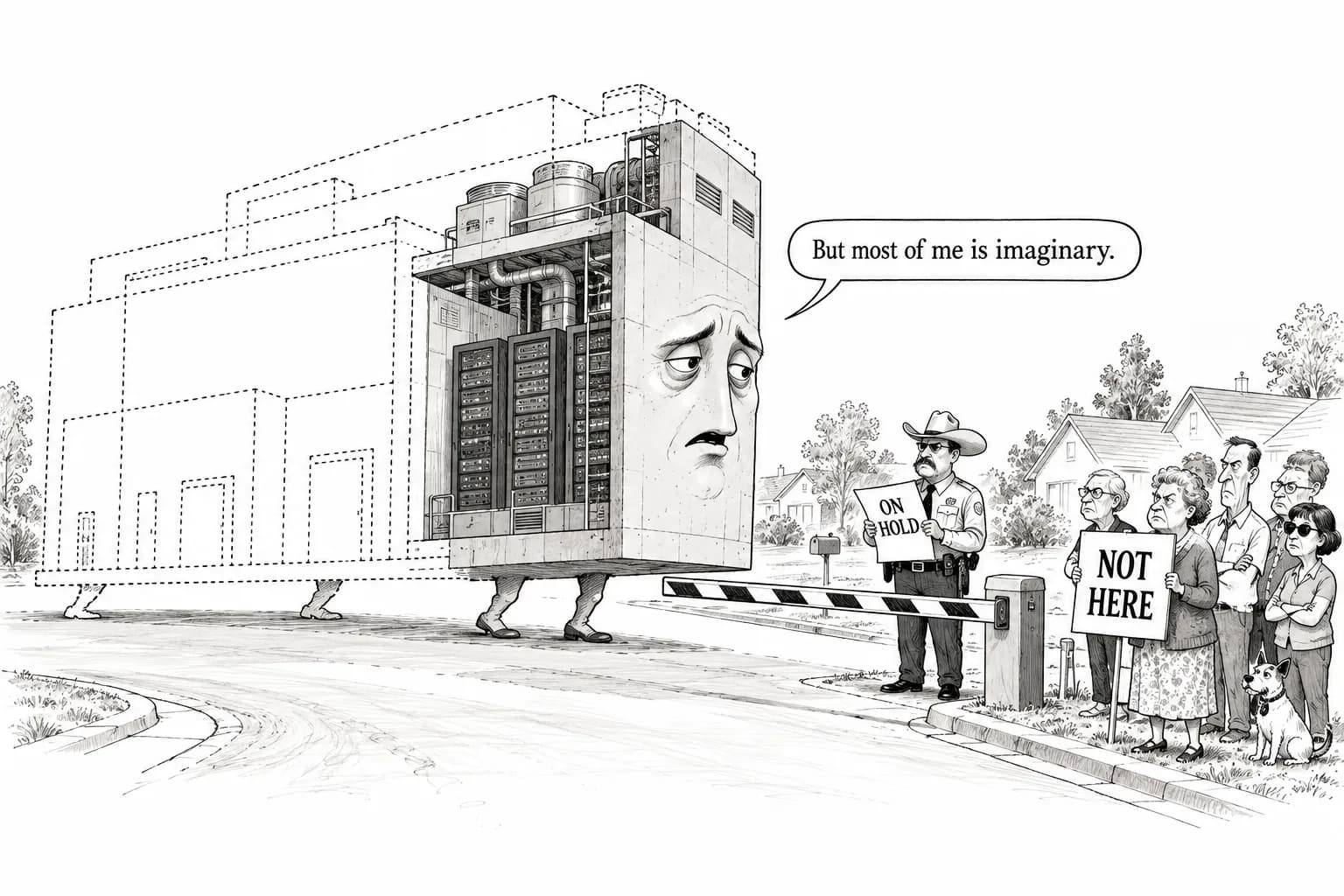
According to Runtimewire, Bernstein looked at how credible the U.S. data center pipeline is. It estimates that only about 35% of announced projects will actually be built. That would leave the other roughly two-thirds delayed, scaled back or canceled.
The figure matters because many bullish forecasts for AI infrastructure are built on the total of exactly these "announced projects." Utilities' demand outlooks, expected orders for chips and power equipment, and lease commitments all assume that projects will be built as planned. If only a little over a third are actually built, those numbers have to be read differently.
Earlier reports have pointed to several reasons projects stall: grid interconnection queues, securing power, financing and permitting. What stands out in this week's news is permitting and local consent, or in other words the political barrier.
"Not wanted here": 59% oppose local construction
CNBC reported on October 24 that voter backlash against AI data centers is becoming a headache for the Trump administration ahead of the midterm elections on November 3. In a poll cited in the report, 59% opposed building a data center in their area.
The administration has made building data centers quickly, to beat China in the AI race, a centerpiece of its agenda. Near construction sites, however, frustration is building over rising electricity bills, water use, noise and tax breaks. People may back "AI promotion" in general, but most oppose a data center "in my town," and the poll puts a number on that gap. If the issue becomes a midterm campaign topic, state and county officials will pay a higher political price for approving projects.
Texas: permits kept going through despite a pause, and 17 were halted
The brakes have come on even in Texas, one of the states most eager for data center construction. According to Hardware Busters, data center permits kept being approved automatically after Gov. Abbott paused the permitting process. As a result, 17 permits were reportedly suspended after the fact.
This shows two things. First, even Texas has a governor who decided to pause the process. Second, the permitting system had become so automated and fast that it could not keep up with political decisions. Applications went through a process that was supposed to be on hold and later had to be revoked. For developers, it means more uncertainty, as projects they believed were permitted are left in limbo.
Local votes: Aurora, Charlotte, Loudoun County
City and county governments are acting alongside the states. According to the Denver Gazette, the city council in Aurora, Colorado, will vote on an indefinite moratorium on data centers. The open-ended halt is scheduled for a vote on October 26. Charlotte, North Carolina, also has a vote scheduled for the same day.
Loudoun County, Virginia, the largest data center hub in the United States, has also used a county notice to tell residents about data center–related proceedings. The county's next milestone is November 17. Other local regulatory moves are piling up as well, including a 135-day pause in Memphis, a zoning review in Lexington and Virginia's SB 843.
Each of these votes is small on its own. But read alongside Bernstein's "about 35%" estimate, they suggest that the fate of the remaining roughly 65% will be decided by exactly these kinds of local council decisions.
Why it matters: the ceiling on compute supply is being set locally
AI labs and hyperscalers have named compute shortages as their biggest constraint. Their answer has been plans to build gigawatt-scale data centers within a few years. This week's developments show that the pace of those plans has entered a phase where it is set by residents' consent rather than by money or technology.
As agent use spreads, inference demand rises and pressure on compute grows. But without places to build, supply cannot grow. Next week brings earnings from Alphabet and Microsoft (October 28) and Amazon (October 29). The next thing to watch is how much local opposition and permitting delays show up in their capital spending outlooks. Also worth watching is whether President Trump's call for data centers to supply "their own power" ends up in writing.
Editorial cartoon
Sources
- https://runtimewire.com/article/bernstein-data-center-pipeline-credibility
- https://cnbc.com/2026/10/24/trump-ai-data-centers-voter-backlash-midterms.html
- https://hwbusters.com/news/texas-data-center-permits-kept-auto-approving-after-abbotts-pause-and-17-are-now-suspended/
- https://www.denvergazette.com/2026/10/23/aurora-council-to-vote-on-indefinite-data-center-moratorium/
- https://www.loudoun.gov/CivicAlerts.aspx?AID=10938