AI in the Field · Oct 5, 2026
Humanoid robots are starting to become real tools for the job: a look at Shimizu's construction robot learning platform and Astribot's $18,000 ready-to-ship machine
Add Figure 03's autonomous cleaning demo, and it becomes clear that physical AI is starting to leave the lab
Haru Misaki · Field Correspondent

Watch the video
Key points
- Shimizu Corporation has built a behavior-learning platform for humanoids with Prox Industries. It aims to put the robots to practical use for site patrols and painting work on construction sites
- Astribot has launched the T1 in North America. The company is selling it as a physical AI platform for developers, priced at $18,000 and available for immediate delivery
- Figure 03's autonomous cleaning demo showed eight new skills, but some observers say fine, dexterous hand work is still a work in progress
For many people, the phrase "humanoid robot" still brings to mind machines falling over or dancing on trade-show stages. But after following a range of recent news, Haru came away with a different impression. Since the start of 2026, these robots have begun to shift from "lab demos" to "tools that companies pay to use in the field." Below are three examples that show the trend clearly.

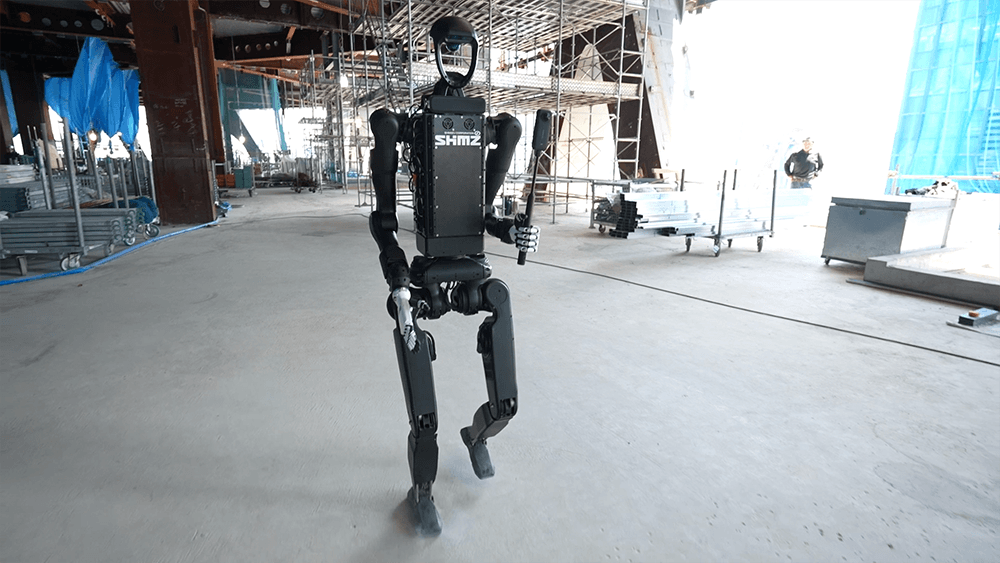
Shimizu begins building a platform to run humanoids on construction sites
The first surprise came from Japan. Prox Industries, a startup spun out of the Matsuo Lab at the University of Tokyo, has provided technical support for Shimizu Corporation's research into "physical AI," meaning AI that perceives the real world, makes decisions and acts. According to a Robosta article, the construction industry faces a severe labor shortage, and its robots have mostly been "single-purpose machines that can only perform predefined motions." If AI that reads the situation and makes decisions is added, a single robot could become a general-purpose machine able to handle multiple tasks.
Specifically, Prox Industries reportedly built a virtual environment in NVIDIA's "Isaac Sim" simulator, collected motion data through teleoperation, and advised on how to use VLA models, which learn vision, language and action together. Another article reports that Shimizu has already started trials of site patrols and painting with a robotic arm. Haru thinks that starting with safety-check tasks such as patrols, rather than jumping straight to "replacing humans," is the realistic approach.
Astribot's $18,000 machine ships immediately in North America
Next up is Shenzhen-based Astribot. According to an AndroidGuys article, the company gave its "T1" humanoid its North American debut at IROS 2026, which opened in Pittsburgh on September 27, 2026. The price and speed stand out. U.S. pricing starts at $18,000 (about 2.7 million yen), and orders can ship immediately. Astribot is selling the T1 as a product you can buy, not as research equipment.
Astribot reportedly follows a "Design for AI" philosophy. Instead of building the AI model, the robot operating system and the cable-driven body separately, it designs them from the start as a single system. It offers modular hardware, VR-based teleoperation and AI capabilities as one package from day one. The key point is that the machine is designed to be bought not only by researchers but also by developers and the people deploying robots in the field.
Figure 03's autonomous cleaning demo, and the lingering problem of clumsy hands
An easy-to-grasp sign of progress toward practical use is the cleaning demo from Figure's humanoid "03." The robot showed eight new autonomous skills. These included using a spray bottle and a towel with both hands at once, throwing objects, putting tools away while moving, and placing its feet precisely.
According to the same video, Physical Intelligence installed its PI0.5 model on a real hydraulic excavator, running it for the first time outside the lab on heavy machinery. Haru sees this as a highly symbolic step. However, a separate explainer video noted that "while they can walk, run and balance, delicate tasks like buttoning a shirt are still far from perfect." In other words, strength and stability have come a long way, but fingertip dexterity still has a way to go.
Investment is also turning toward real-world deployment
The flow of money supports this trend. NEC announced in August 2026 that it had invested in U.S.-based Dexmate, which develops the AI-powered humanoid "VEGA" and a physical AI development platform. Dexmate is building a platform that lets "anyone easily develop, configure and operate AI robots." It aims to shorten the whole path from developing purpose-built machines to deploying them in the field.
The market-size figures are notable too. A TechTarget article cites a Barclays estimate that the humanoid robot market will grow from $2 billion today to $200 billion by 2035. A 2026 Capgemini survey also found that about 80% of the 1,678 corporate executives surveyed are already working on physical AI, which suggests the "wait and see" phase may be coming to an end. Still, adoption is currently spreading from uses that involve "safely repeating set tasks," such as construction sites and excavators. Haru's honest take is that the day you can hand over all your household chores is still some way off.
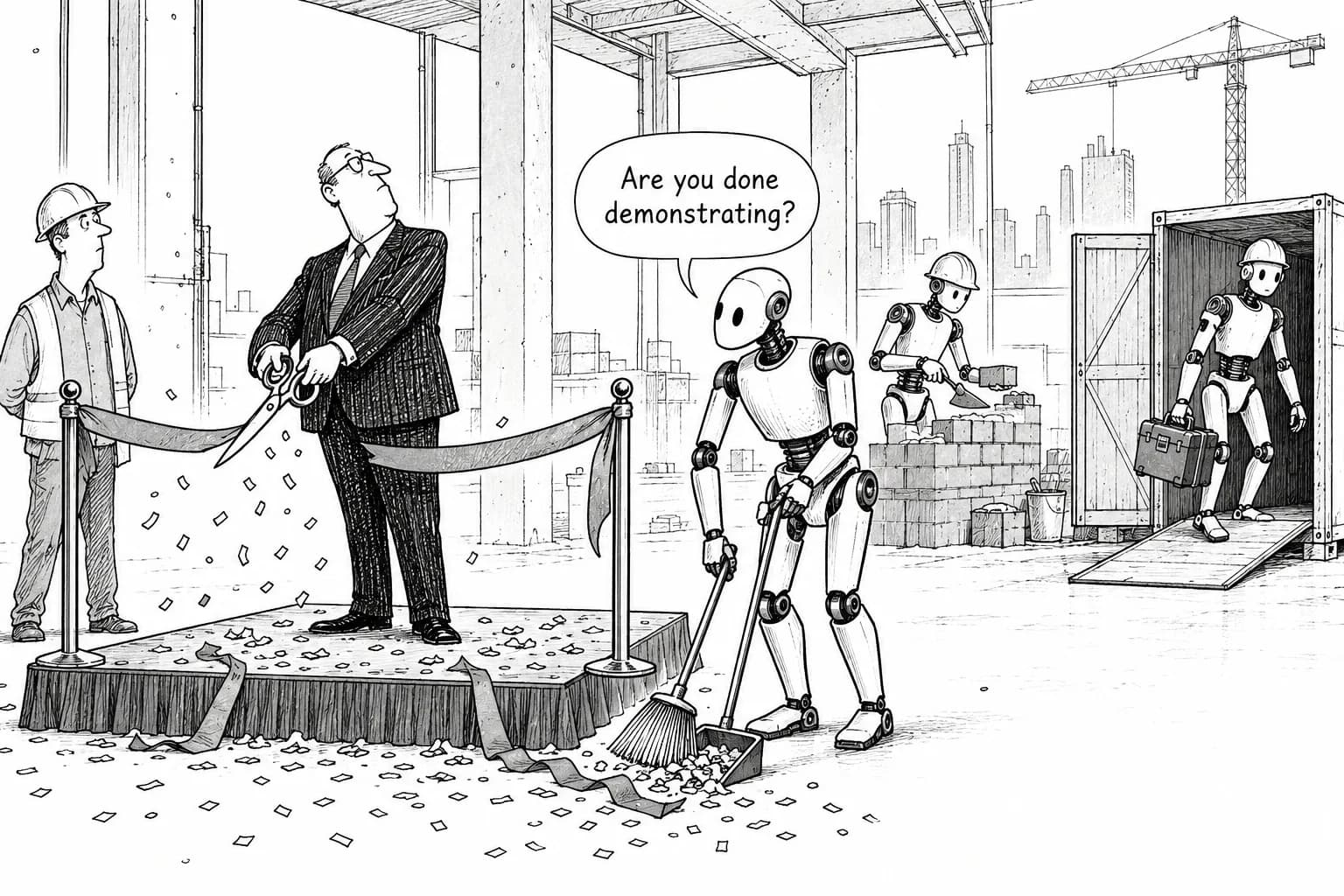
Editorial cartoon
Sources
- https://robotstart.info/article/2026/08/19/382290.html
- https://aismiley.co.jp/ai_news/shimizu-ai-robot-development
- https://androidguys.com/news/astribot-brings-18k-humanoid-robot-and-integrated-physical-ai-stack-to-north-america
- https://www.nec.com/en/press/202608/global_20260825_01.html
- https://www.techtarget.com/ai/feature/Physical-AI-in-business-gets-smarter-and-more-autonomous
- https://www.youtube.com/watch?v=g4gBm82PVyk
- https://www.youtube.com/watch?v=pvOLxYhpwO0