Money · Oct 5, 2026
Amazon unveils "Branded Conversations" to put advertiser input into AI shopping answers, moving ad space inside the answer as product candidates reportedly shrink from about 50 to 5
From selling ad slots in search results to selling a say in what AI recommendations contain: what Amazon sells is shifting from "placement" to "explanation"
Koji Yamamoto · Economics Analyst
Key points
- Branded Conversations is an ad product that recommends products in multi-turn shopping conversations based on information supplied by brands (Amazon Ads primary source, September 29)
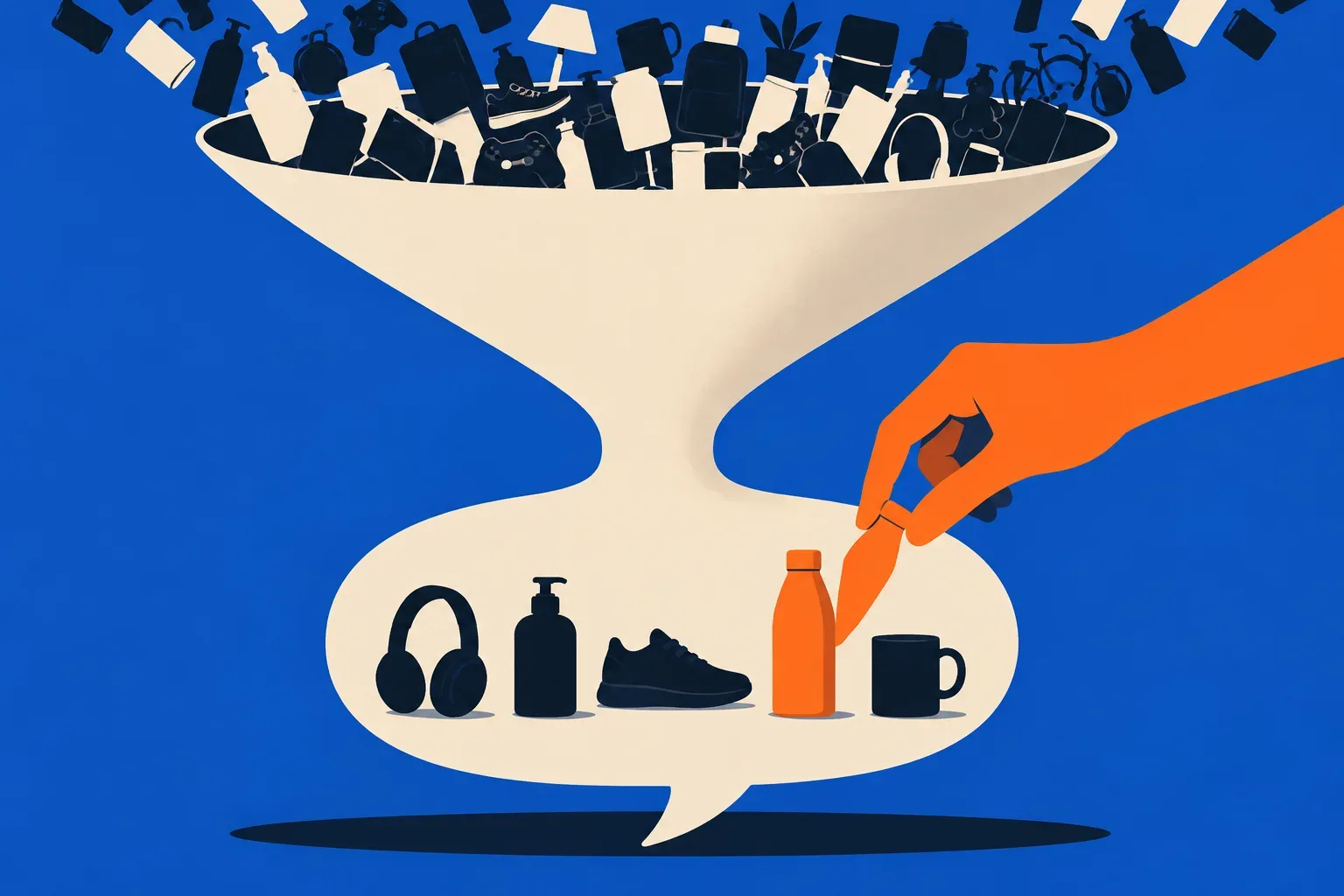
- In AI answers, the roughly 50 product candidates seen in search results reportedly shrink to around 5, and the number of available ad slots shrinks with them
- What Amazon sells is moving from on-screen "placement" to rights over the "explanation" in recommendations. How clearly ads are labeled is set to become the next point of contention
Amazon's advertising business has begun shifting where its revenue comes from. Amazon Ads on September 29 announced "Branded Conversations," a new ad product that builds advertiser information into conversations with its AI shopping assistant. When shoppers narrow down products through several rounds of back-and-forth with the AI, product information and descriptions supplied by brands are reflected in that conversation.
Behind the move is a shrinking amount of space for ads. The number of products an AI presents as an answer reportedly drops to around 5, down from about 50 candidates in traditional search results. That figure comes from trade media reports, not from an official Amazon announcement. Still, the direction is clear. If product lists are replaced by short answers, the sponsored slots that used to sit within those lists have far less room to exist. Branded Conversations is Amazon's response to that decline. The thinking: if slots are disappearing, sell the right to shape what the answer says.
What is being sold: "explanation," not "placement"
For a long time, Amazon's search advertising was a business of selling placement. Products from brands that won the auction appeared at the top of search results or in a corner of a product page. Shoppers compared dozens of candidates themselves, and some of them were ads.
Branded Conversations sells something different. Muthu Muthukrishnan, vice president of Sponsored Ads at Amazon Ads, described the product's aim as follows.
Branded Conversations enables brands to provide product expertise and storytelling at customer decision moments.
The key phrase is "customer decision moments." Search ads targeted shoppers while they were browsing candidates. Branded Conversations targets the stage at which the AI narrows the field and explains why a particular product is a good choice. What brands get is not a position on the page but a chance to insert their own information and story into that explanation.
Amjad Jbara, director of applied science for Sponsored Products, described it from the system's side.
multi-turn shopping conversations to help shoppers find the right products informed by brand-provided inputs
The words "informed by brand-provided inputs" are at the heart of the product. AI recommendations have been built from product data, reviews and shoppers' questions. Now information from paying advertisers is added to the mix. Advertiser information formally becomes part of the material recommendations are built from.
Why now: 5 candidates means 5 slots
Amazon has been expanding AI shopping features such as Rufus and Alexa+ (Amazon's overview page). WeRSM reported the announcement as letting brands influence Alexa's shopping answers. The more conversational shopping spreads, the less time shoppers spend scrolling through long lists of search results.
For the ad business, this is an inventory problem. Ads billed on impressions and clicks sell more when there are more places to be seen. On an answer screen where candidates reportedly fall from about 50 to 5, sticking with the same model can only mean selling less. And cramming ads into the remaining 5 slots would erode trust in AI answers. If shoppers stop believing the answers, conversational shopping itself stops working.
So rather than adding more slots, Amazon chose to sell how deeply advertisers can engage within a single answer. AdExchanger described the announcement as a bundle of new agentic ad formats and brand controls. On a separate page, Amazon Ads also laid out its approach to advertising for agentic shopping. Branded Conversations is part of a broader effort to rebuild ad products for screens where answers are short.
The first test comes in sale season
The announcement's timing coincides with the start of the holiday shopping season. Amazon will reportedly hold Prime Big Deal Days on October 6–7 across 22 countries (report). Carmen Nestares, vice president of marketing for North America and Prime Tech, introduced the sale on September 19 as follows.
Prime Big Deal Days makes it easy to check it all off while saving.
Checking off a whole shopping list at once is exactly the kind of task suited to an AI assistant. Many moments of indecision arise at once, and each time the AI narrows the options. The announcement does not say how far Branded Conversations will be available during this sale. But it is clearly the period when shoppers' indecision is most concentrated. It will also be when advertisers start comparing which works better: putting their own explanation inside the answer, or competing for sponsored slots in a shortened list.
The open question: where does the ad end?
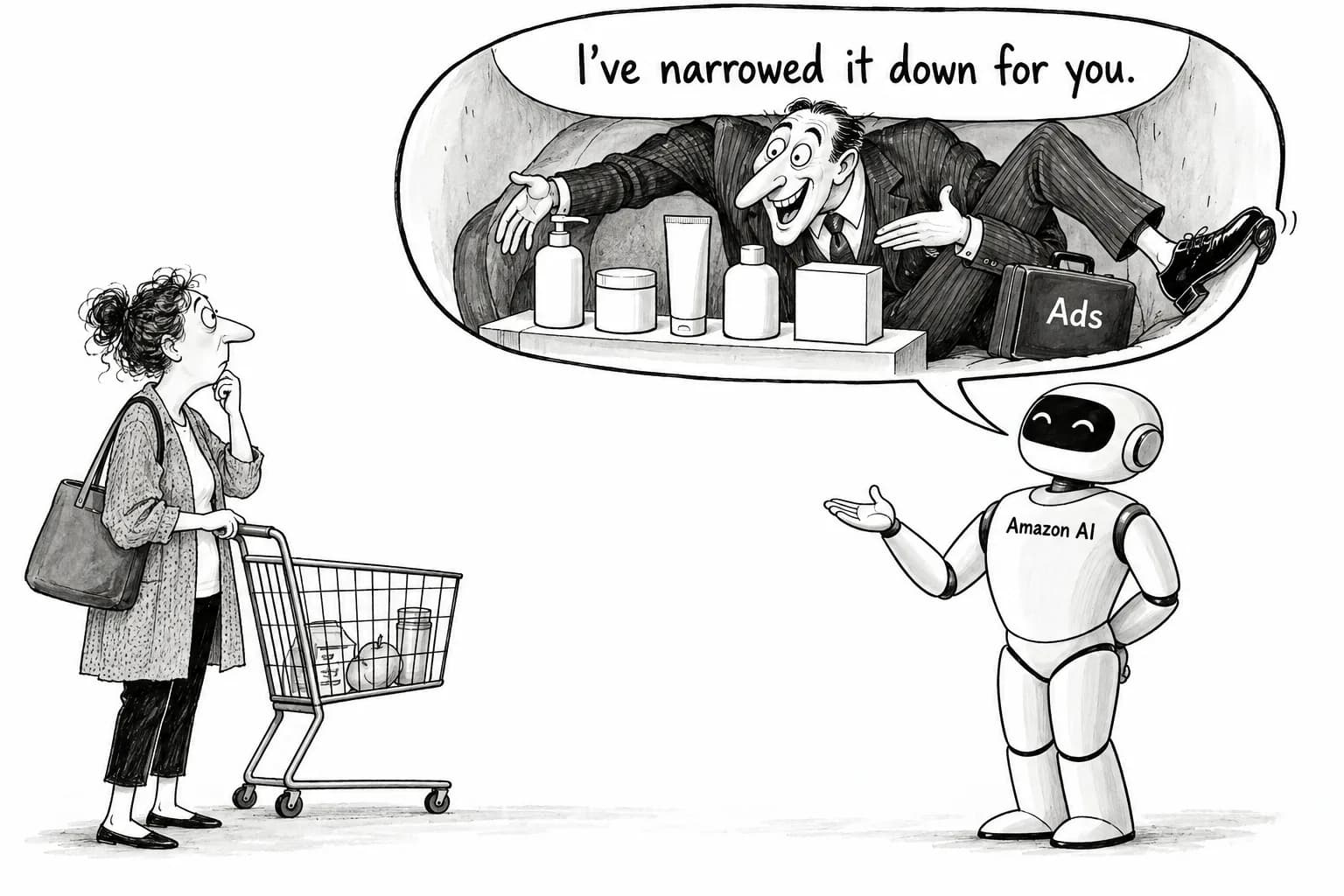
Search ads at least carried a "Sponsored" label. Shoppers could tell which items in a list were ads and which were not. When advertiser information is mixed into the explanation itself, that line blurs. When an AI says "this product has strong waterproofing," how is a shopper supposed to know whether that assessment came from product data and reviews, or from a description supplied by the advertiser?
The announcement emphasizes that brands can deliver detailed product information within conversations. How that information will be displayed within answers, however, is the next focal point. If AI recommendations determine how much sells, the right to shape what those recommendations say could become more valuable than top slots in search results. And the more valuable it is, the stronger the concern that this right will be sold in ways shoppers cannot see.
What Amazon has laid out is a bet on moving its ad inventory from on-screen placement to the content of AI answers. In a world where candidates shrink to 5, everything depends on which of those 5 are chosen and how they are explained. Amazon is trying to turn that explanation into a product it can sell to advertisers.
Editorial cartoon
Sources
- https://advertising.amazon.com/library/news/branded-conversations-review-requests
- https://www.adexchanger.com/platforms/amazon-gets-conversational-with-new-agentic-ad-formats-and-brand-controls/
- https://wersm.com/amazon-brands-shape-alexa-shopping-answers/
- https://advertising.amazon.com/library/news/agentic-shopping-advertising
- https://ppc.land/amazon-sets-prime-big-deal-days-for-october-6-7-across-22-countries/
- https://www.aboutamazon.com/news/retail/amazon-ai-shopping-tools