Work & Society · Oct 22, 2026
Gender gap in AI chatbot use has nearly closed, Pew finds, but men still lead in daily use (27% vs. 20%), confidence (22% vs. 15%) and feeling more productive at work (35% vs. 25%)
The 11-point gap in usage from two years ago is gone. Gaps of 7 to 10 points remain in how often people use chatbots, how confident they feel and what they get out of them at work. The AI divide is shifting from whether people use the tools to how deeply they use them
Koji Yamamoto · Economics Analyst

Key points
- The gender gap in whether people use chatbots has shrunk from 11 points two years ago to nearly zero (Pew, Oct. 16, primary source)
- Men lead on all three measures of depth: daily use (27% vs. 20%), confidence in using chatbots (22% vs. 15%) and feeling they help get work done (35% vs. 25%)
- The gap has moved from "whether people use them" to "how deeply people use them." Usage rates alone don't show it
Pew Research Center, the U.S. research organization, published a short report on Oct. 16 analyzing gender differences in AI chatbot use (Source). On the question of whether people use chatbots at all, the gap between men and women has nearly disappeared. But men remained ahead on three other questions: using chatbots daily, feeling confident with them and saying they help get work done. The finding is not that the gap has closed. It is that the gap has moved.
The usage gap disappeared in two years
The report's authors, Pew's Monica Anderson and Eugenie Park, summed up the starting point this way.
The gender gap in overall chatbot use has closed. A similar share of men and women now report using AI chatbots. This is a shift from two years ago, when men were 11 percentage points more likely than women to say this.
An 11-point gap two years ago is now close to zero. AI chatbots have gone from a tool for a group of early adopters to one used by people of both genders. Judged only by whether people use them, the gender gap looks like a solved problem.
But this figure only shows that more people have used a chatbot at least once. It says nothing about how often they use one, how skilled they are with it or what they use it for. The second half of the report shows that gaps remain on exactly those points.
On three measures of depth, men lead by 7 to 10 points
The first is how often people use them.
Men are more likely than women to say they use chatbots on a daily basis (27% vs. 20%)
The gap is 7 points, which makes men roughly 1.35 times as likely as women to use chatbots daily. Men and women are now equally likely to have used a chatbot, but not equally likely to have made it a daily habit.
The second is confidence.
Men are more likely than women to say they're extremely or very confident using chatbots (22% vs. 15%).
This gap is also 7 points. Because the base figures are smaller, though, men are about 1.5 times as likely as women to say this, the widest relative gap of the three. Only about 2 in 10 men or women say they are extremely or very confident, which means most users are not yet confident in their skills.
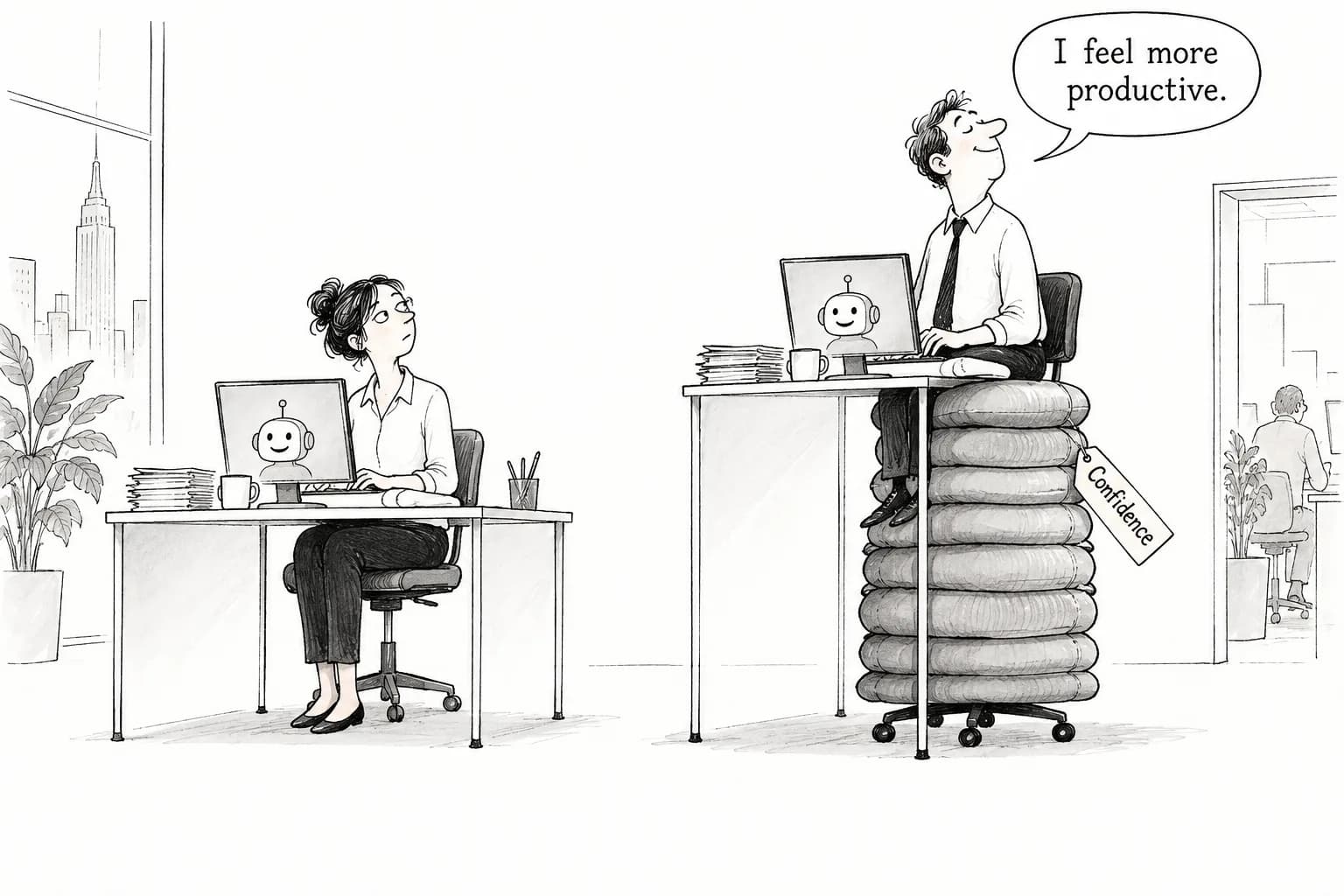
The third is the payoff at work. Thirty-five percent of men and 25% of women said chatbots help them get their work done. At 10 points, this is the largest gap of the three.
All three numbers point the same way. Men and women are now getting started in equal numbers. But the people who use chatbots every day, feel confident with them and turn them into results at work are more often men.
Why the depth gap persists: frequency, confidence and results feed each other
It makes more sense to see the three measures as connected than as separate (what follows is this newspaper's analysis based on Pew's figures; Pew did not establish cause and effect). People who use chatbots every day learn faster how to phrase requests to get good answers and where the tools tend to get things wrong. That knowledge builds confidence. With confidence, people go beyond small tasks such as drafting emails and start handing over core work such as analysis or preparing documents. That brings a sense that the tool is helping, which leads them to use it even more.
Once this cycle starts, it tends to widen gaps. Even with equal usage rates, the gap between people who have entered the cycle and those who have not will not necessarily narrow over time. The fact that the same 7- to 10-point gender gap appears on all three measures suggests that how easily people enter this cycle still differs by gender.
The same pattern shows up along lines other than gender. Andrej Karpathy wrote on Oct. 11 that people's understanding of LLM capabilities is shaped like a "steep funnel" (as previously reported). By his rough figures, 1 billion to 2 billion people use free chatbots, while about 20 million use frontier models for work. A survey Anthropic released on Oct. 16 (as previously reported) also found a wide gap in the median share of their own work that people think AI can do: 75% among the company's employees versus 28% among U.S. workers. As the number of users grows, depth of use does not spread evenly. Pew's gender figures can be read as this broader trend seen along an easy-to-see line: gender.
What should be measured is changing
The most practical takeaway from the report is that the yardstick for measuring how well people are using AI needs to change. The share of people who use chatbots has become a measure close to its ceiling. The differences that matter from here on will show up in measures of depth: how often people use the tools, whether they feel they can use them well and whether the tools lead to results at work.
The same goes for companies and schools. Handing out accounts and getting people to try a chatbot once now reaches men and women equally. The next challenge is how to build these tools into daily work and bring people to the point where they can confidently hand tasks over. As chatbots evolve into agents that take on work, gaps in the ability to judge how much to hand over are likely to show up as bigger gaps in results.
The disappearance of an 11-point gap in two years shows that AI is no longer a tool for a select few. At the same time, the gaps in daily use (27% vs. 20%), confidence (22% vs. 15%) and feeling more productive at work (35% vs. 25%) show that the divide has not vanished. It has moved. Tracking usage rates alone misses that shift.
Editorial cartoon