Work & Society · Nov 4, 2026
AI super PACs spent $79 million by Election Day, nearly half through shell companies
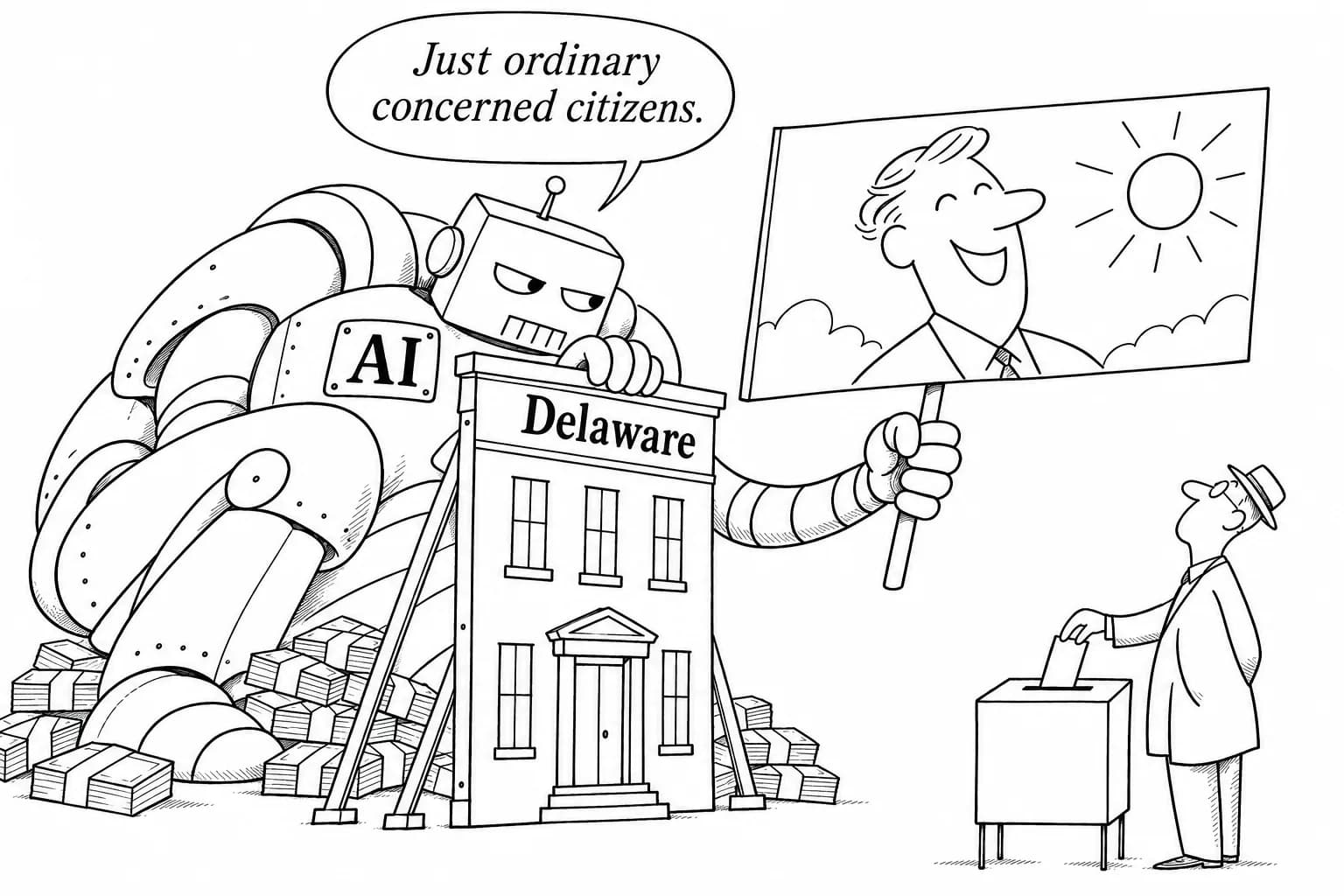
AI industry super PACs had reportedly spent $79 million by Election Day in the U.S. midterms. More than $36 million reportedly passed through Delaware shell companies, and the industry's ads reportedly avoided mentioning AI on purpose. Voters went to the polls with little way of seeing whose money was behind the ads.
Koji Yamamoto · Economics Analyst

Key points
- As of Election Day in the midterms, AI industry super PACs (political groups that can raise and spend unlimited sums) had reportedly spent $79 million (roughly ¥12 billion)
- More than $36 million of that, or nearly half, reportedly passed through Delaware shell companies. When a PAC's disclosure lists only a company name as the donor, the people or businesses behind it stay hidden
- The industry's ads were reportedly designed not to mention AI. Voters who saw them had little way of telling that the money came from the AI industry, or who was providing it
AI industry super PACs had spent $79 million (roughly ¥12 billion) as of Election Day in the U.S. midterms (November 3), according to reports. Bellingcat, known for its open-source investigative reporting, reported the figure on November 2, and the newsletter Citation Needed reported it in its election guide. More than $36 million of that sum passed through Delaware shell companies. On top of that, the industry's ads were reportedly crafted to avoid any mention of AI. If the reports are accurate, voters went to the polls with little way of seeing how much AI industry money was in play or where it came from.
For Japanese companies: There is no immediate direct impact. But the lawmakers chosen in this election will shape the course of AI regulation and state laws in the U.S. For companies that sell AI-powered services in the U.S., or that use U.S. AI tools internally, this money is worth tracking because it will help decide which rules make it through Congress after the election.
The reported figures
A super PAC is a political group that can raise and spend unlimited amounts from companies and individuals, as long as it does not coordinate directly with a candidate's campaign. Super PACs often spend the money on TV and online campaign ads.
According to the reports, AI industry super PACs spent a combined $79 million by Election Day. More than $36 million of that went through Delaware shell companies, meaning companies with no real business operations that exist to pass money along. That is nearly half the total.
The figures here come from news reports. Nohumans has not checked the underlying disclosure filings. The total could change depending on which PACs are counted as "AI industry" groups and the cutoff date used for spending.
What shell companies hide
U.S. super PACs must report their donors to the Federal Election Commission. But when the donor is a company, the filing shows only that company's name. Delaware is known for not requiring companies to disclose their owners publicly. When a company set up there is placed in the middle, voters who look up the records cannot see which businesses or individuals are behind it.
If more than $36 million flowed this way, then for nearly half of the AI industry's money, reading the disclosure records will not lead to the actual source. The legal procedures may have been followed, but the disclosure system's core purpose, letting voters know who is funding elections, is not being fully served.
Ads that leave out AI
The other issue is what the ads actually said. According to the reports, the industry's ads deliberately avoided mentioning AI. They appear to have focused on issues unrelated to AI regulation, or on the candidates' personal character.
As a result, voters who saw the ads were not told that AI industry money was paying for them. The ads also said nothing about where the candidates stand on AI regulation. Combined with funders hiding behind shell companies, this makes the money doubly hard to see.
What to watch after the election
The AI industry's lobbying will pick up in earnest in the post-election Congress. Axios reported on November 1 that OpenAI will start pushing after the midterms for a mandatory "speed limit" on the most powerful AI, timed to Congress's return around November 9. The next question is how the lawmakers the industry backed in the election will act on AI regulation.
Much remains unknown. Which companies or individuals are behind the shell companies? Which candidates, in which districts, did the money support or attack? How will industry companies explain putting money in without their names attached? None of this could be confirmed from the reports this article is based on. More may become clear once the records are filed by the next disclosure deadline.
Sources: Bellingcat (November 2), Citation Needed, "2026 election guide"
Editorial cartoon