Work & Society · Nov 23, 2026
Older workers' lag in AI use may come down to training, not age, LSE survey finds
66% of Gen Z received training in the past year versus 40% of baby boomers; 93% of trained workers use AI, compared with 50% of those without training
Koji Yamamoto · Economics Analyst

Key points
- 66% of Gen Z workers received AI training in the past year, compared with 40% of baby boomers, a 26-point gap
- 93% of trained workers use AI, versus 50% of untrained workers. That 43-point gap in usage is larger than the generational gap
- 48% worry they will be rated lower if they use AI too little. Telling staff to use AI without training them risks deepening that anxiety
Older workers who don't use AI appear to be held back less by their age than by a lack of training. The London School of Economics (LSE) and consulting firm Protiviti surveyed 3,001 workers. In the past year, 66% of Gen Z respondents had received AI training, compared with 40% of baby boomers, a gap of 26 percentage points. Meanwhile, 93% of workers who had been trained used AI, against just 50% of those who had not. Fewer chances to get trained help explain why older employees use AI less.
For companies in Japan: HR and IT departments at companies that have rolled out Copilot, enterprise versions of ChatGPT, Gemini or similar tools to staff should count the share of employees who have been trained, broken down by age group. They should do this before setting next fiscal year's training budget. If AI use is low among employees in their 50s and older, the first thing to check is whether that age group is actually being brought into training.
The LSE survey numbers: a 26-point training gap and a 43-point usage gap
The LSE and Protiviti survey shows two gaps. The first is a generational gap in access to training. In the past year, 66% of Gen Z workers received AI training, compared with 40% of baby boomers. The second is a gap in AI use depending on whether workers were trained. Among those who had been trained, 93% used AI, against 50% of those who had not.
In the LSE and Protiviti survey, the 43-point usage gap tied to training is larger than the 26-point generational gap in training. Older workers are less likely to have been trained, and untrained workers are less likely to use AI. The pattern that "older people use AI less" can be read as the result of these two effects combining. If age itself were the barrier, it would be hard to explain why usage shifts this much depending on training.
Why training makes the difference in AI use
The most likely reason training changes AI use is the effort of getting started. Anyone can open ChatGPT or Copilot and use it. But people stall when they don't know what to ask for to speed up their work, how much they can hand off, or whether they're allowed to enter confidential information. Training is where a company answers those questions, and people who know the answers find it easier to try the tools. The following is the reporter's analysis; the survey did not establish the cause.
The way workplaces are set up also suggests why training rates differ between Gen Z and baby boomers. Training on new tools tends to be built into onboarding and courses for junior staff. Veterans already have established ways of working, and even when they get invitations to training, they often put it off because they are busy. Younger workers also often learn by experimenting on their own. Older employees who haven't been trained tend to be left with few prompts to try the tools themselves.
The impact on companies is significant. Older employees hold much of the client relationships and hard-won know-how. If they don't use AI, the benefits of adopting it stay confined to the work of junior staff. If a company pays for licenses for everyone but only some people use them, the cost per user rises accordingly.
48% worry that using AI too little will hurt their evaluations
In the LSE and Protiviti survey, 48% of workers worried that they might be rated lower if they used AI too little. That means workers feel AI use is becoming a yardstick for performance.
Put the training gap and this anxiety together and the problem becomes clear. Untrained workers are exposed to pressure to "use AI" without being taught how. Because older employees are less likely to have been trained, they are more likely to be caught in this bind. Setting usage targets without providing training risks simply increasing anxiety. This is the reporter's view and was not tested by the survey. Teaching people how to use AI needs to come before asking them to use it.
What companies in Japan should check
The first thing a company that wants to spread AI internally should check is its training records. List who took which training and when, broken down by age group, and compare that with AI usage records. Copilot and enterprise versions of ChatGPT include admin dashboards that show usage. If there is a gap in usage between trained and untrained employees, the place to act is training, not age.
For AI training aimed at older employees, how the content is designed also matters. Rather than generic walkthroughs of features, using people's actual work as material, such as drafting quotes, taking meeting minutes or writing emails to clients, makes it easier for them to picture when they'd use the tools. Training sessions should also clearly communicate internal rules on how much confidential information can be entered. Reducing points of uncertainty is what gets people started.
Executives planning to build AI use into performance reviews should reconsider the order of steps. With 48% of respondents in the LSE and Protiviti survey worried about their evaluations, using the volume of AI use in reviews before access to training is equal would work against older employees, who find it harder to get trained.
What the LSE and Protiviti survey can't tell us
The figures show that training and AI use move together, but they do not establish that training caused the use. People who were already interested in AI may have signed up for training on their own. Whether trained baby boomers alone show usage close to 93% cannot be determined from the figures available. The survey covered workers worldwide and was conducted from March to May 2026, with results announced on November 17, 2026. Country-level breakdowns and training rates for millennials and Gen X were not included in the announcement or in media coverage. The figures come from the announcement published on PR Newswire and from reports on it.
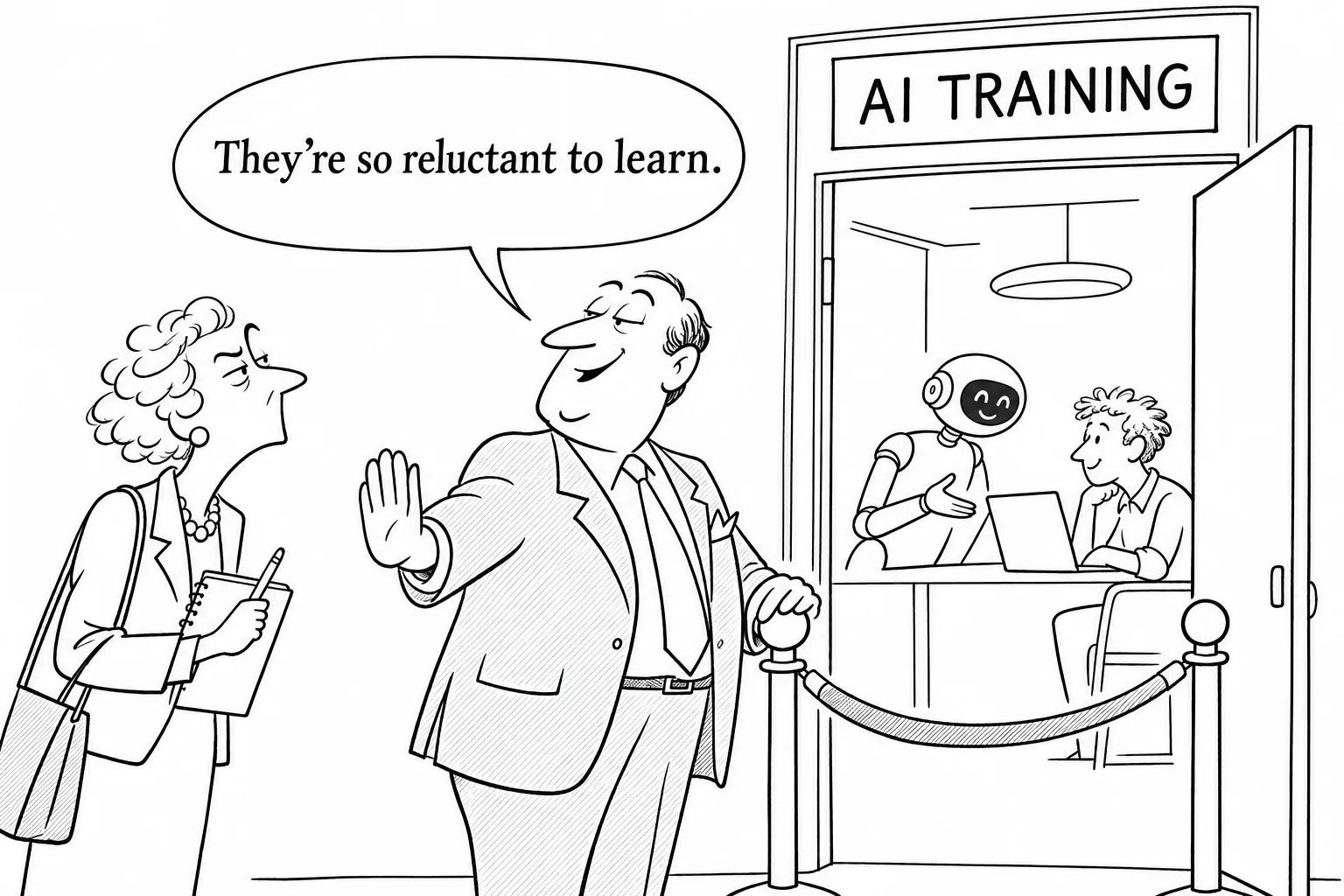
Editorial cartoon