Work & Society · Nov 21, 2026
Is AI just a passing fad? A journalist and critics clash as tech stocks fall
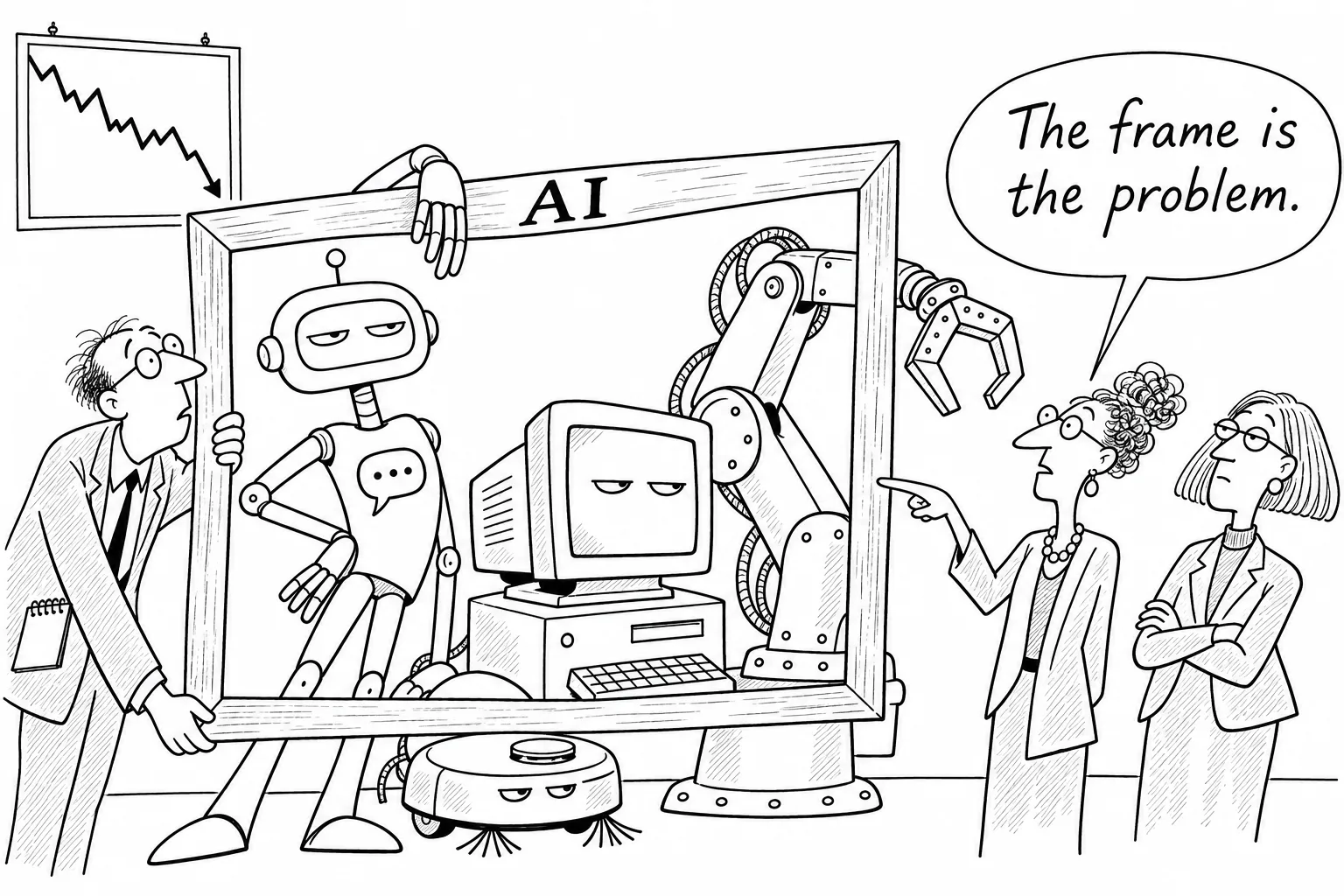
The Washington Post's Oremus wrote that "AI will remain even if the bubble bursts, and the right comparison is the web of 1998." Bender and Hanna countered that "'AI' is not one coherent thing." What is really in dispute is how the question itself is framed
Koji Yamamoto · Economics Analyst

Key points
- Washington Post reporter Oremus wrote that AI will not disappear even if stocks fall. The right comparison, he said, is not crypto but the web of 1998, before the dot-com bubble
- Linguist Bender and researcher Hanna countered that "AI" is not a single, coherent technology. Asking whether it "will last," they argued, lumps separate things together
- The lesson for companies: rather than judging AI wholesale as "fad or real," it is more reliable to check its effectiveness and cost task by task
As AI-related stocks fall, the question of whether AI was just a passing fad has become a subject of debate in the United States. Will Oremus, a technology reporter at the Washington Post, wrote on Bluesky that AI will remain even if the bubble bursts. The right comparison, he said, is not crypto but the web of 1998. In response, Emily Bender, a linguist known for her criticism of AI on ethical grounds, and Alex Hanna, director of research at the DAIR institute, countered that "AI" is not a single, coherent thing. In their view, the very framing of the question, "fad, or here to stay?", is flawed.
For Japanese companies: This debate will not change the prices or contracts of the AI tools you currently use. The same goes for Copilot, the enterprise version of ChatGPT and Gemini. Corporate planning and IT staff drawing up next fiscal year's budget should avoid evaluating AI tools collectively as "AI as a whole." By the end of the fiscal year, break usage down by task, such as producing meeting minutes, answering inquiries and writing code, and write down the time saved and the amount paid. The point is to avoid scaling everything up or cutting everything back in step with stock price swings.
Oremus's argument: The comparison is not crypto but the web of 1998
The core of Washington Post reporter Will Oremus's argument is to look at stock prices and technology separately. Even if AI companies' shares fall and the bubble bursts, the technology itself will not go away, Oremus wrote.
The web of 1998 that Oremus invoked refers to the period before the dot-com bubble. The bubble burst in 2000, and many internet companies went under. Even so, the web remained in use, and the companies that survived grew large. In Oremus's analogy, the AI stock slump corresponds to this path. Crypto, by contrast, is dismissed as an example where speculative fervor came first and the technology never reached broad use in daily life or work.
It is significant that Oremus's analogy emerged amid a stock slump. With each decline, voices saying "it was an empty fad after all" grow louder. Oremus, in effect, countered that the fervor of financial markets and whether a technology remains in use are separate matters.
Bender and Hanna's rebuttal: "AI" is not one coherent thing
Bender and Hanna challenged the premise of Oremus's argument rather than its conclusion. According to the two, "AI" is not a single, coherent thing. Asking "will AI last?" therefore lumps together technologies of very different kinds, they said.
In their 2025 book "The AI Con," Bender and Hanna have also argued that "AI" is less the name of a technology than a marketing term. Text-generating chatbots, image recognition, recommendation systems and tools that automate routine tasks are all called "AI." But how useful each one is, where it goes wrong and whom it harms all differ. In the two authors' view, saying "AI is here to stay" lends the trust earned by technologies that are already useful to technologies that are still unproven.
Bender and Hanna's rebuttal also applies to the analogy of the 1998 web. The web was a single mechanism for linking and displaying pages. Likening "AI" to the web makes a scattered set of technologies look like a single foundation.
What is in dispute is the framing of the question itself
The disagreement between Oremus on one side and Bender and Hanna on the other is not a difference in answers to whether AI will last or vanish. They are divided over what should be treated as a single unit of inquiry. Oremus treated "AI" as a single wave of technology and discussed its survival separately from stock prices. Bender and Hanna see that very notion of "a single wave" as the sellers' narrative.
The debate shapes how the stock slump is interpreted. Viewed as "the web of 1998," the slump is a temporary correction, and investment in the technology can continue. From Bender and Hanna's perspective, whether stocks fall or rise, there is no option but to examine the benefits and harms of each technology one by one.
For those using AI at companies, both views lead to the same conclusion. It is not a matter of choosing whether to bet on "AI as a whole" or to pull out. It is a matter of checking which tool, for which task, at what cost, delivered how much benefit. Raising or cutting the "AI budget" wholesale in line with stock prices risks discarding even the tools that work.
What could not be verified
This article is based on links to the three people's Bluesky posts and summaries of them. The full text of the posts, their exact timestamps and whether Oremus wrote an article to the same effect in the Washington Post have not been verified. How people other than the three responded to Oremus's argument has also not been examined.
Editorial cartoon