Money · Nov 5, 2026
AI stocks split on the election: those still building plunge, those that already own capacity rise
Power, neocloud, construction and cooling stocks were reportedly sold while Amazon, Microsoft and Alphabet were bought. CoreWeave's bonds yielded more than 15%, a level associated with distressed companies, according to reports
Koji Yamamoto · Economics Analyst
Key points
- The day after the election, companies that still have to build data centers (power, neoclouds, construction and cooling) reportedly fell sharply, while Amazon, Microsoft and Alphabet, which already own capacity, rose
- Investors expected the Democratic landslide and the change of governor in Texas to make power and permits harder to get for new data centers. If building gets harder, existing capacity becomes more valuable
- CoreWeave's bonds were reportedly sold until their yield topped 15%. The next test is how the company explains its debt and its orders when it reports earnings on November 10
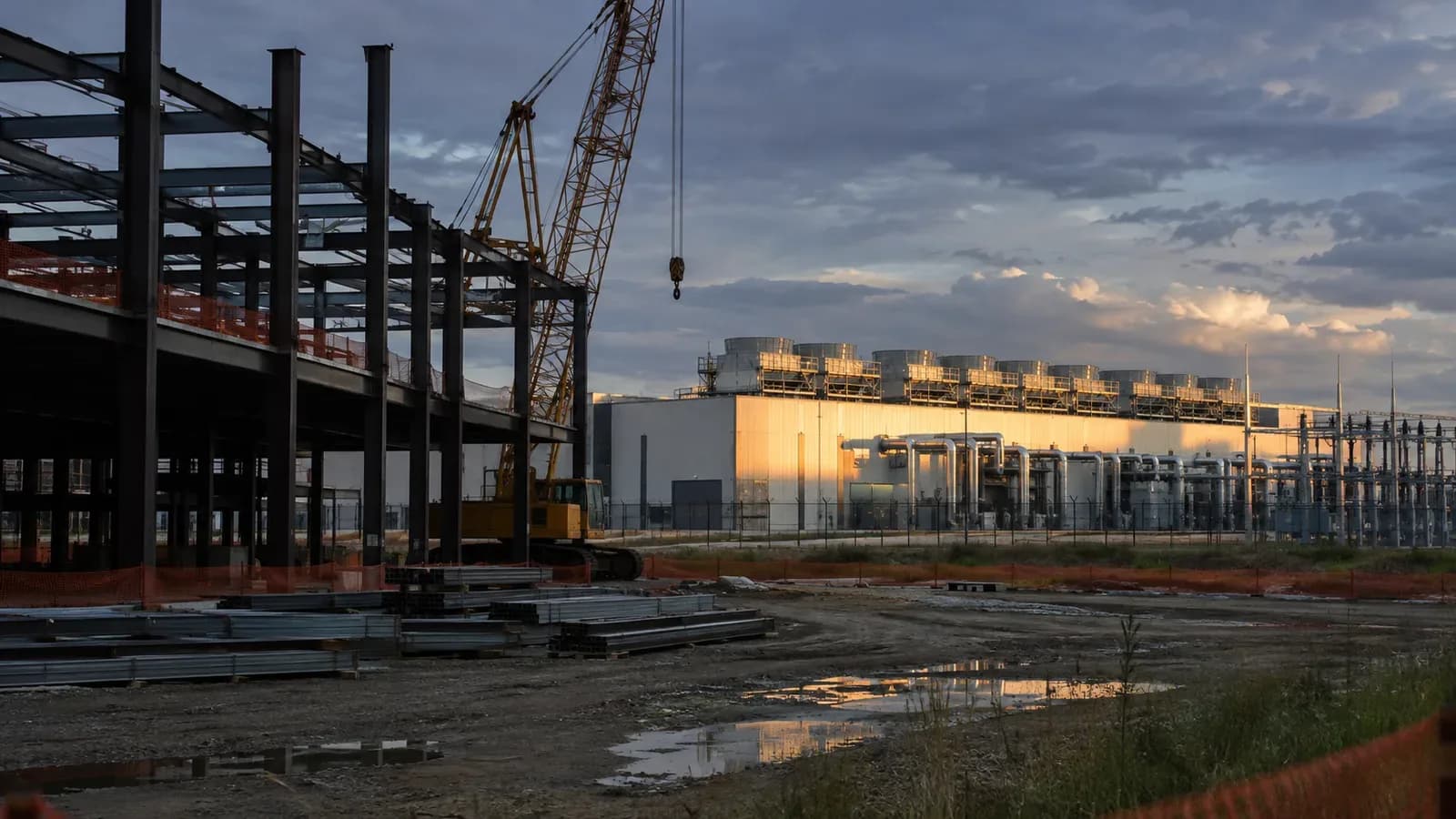
On November 4, the day after the U.S. midterm elections, the stock market reportedly divided AI-related stocks into two camps. Companies that still have to build data centers fell sharply. These include power sellers, new cloud companies that specialize in renting out GPUs (known as neoclouds), construction firms and makers of cooling equipment. Meanwhile, Amazon, Microsoft and Alphabet, which already own large amounts of capacity, rose. According to Bloomberg, bonds issued by CoreWeave, the largest neocloud, hit a record low, and their yield rose above 15%. That is the level of bonds issued by distressed companies.
What it means for Japanese companies: Companies that sell electrical equipment such as power cables and transformers, air-conditioning and cooling components, or building materials to U.S. data centers have reason to revisit their order outlooks. For companies that buy cloud services, if new capacity gets harder to build, the price of AI computing is unlikely to fall soon. That is a safe assumption to use when setting next year's budget.
What has been reported
Same-day market reports from Yahoo Finance and Stocktitan, along with an article in Malaysia's The Star, said AI data center stocks fell and renewable energy stocks rose after Democrats won a landslide in the election. In a separate article, Yahoo Finance reported that power companies Vistra and Constellation fell after the election. Investors had bought both on hopes that they would sell electricity to data centers.
The stocks that fell belonged to companies that plan to make money by building data centers. That group includes companies that handle power, land and permits, construction and cooling, as well as neoclouds that buy GPUs with borrowed money and rent them out. The stocks that rose were the three hyperscale cloud companies, which already own data centers and can invest with cash on hand. This article has not been able to confirm the size of the declines and gains for individual stocks.
Why the builders were sold
News reports point to the direction of policy after the election. Fast Company reported that Texas's new governor could sharply change the state's approach. Texas has been working to supply power to the U.S. AI boom. Bloomberg wrote that data centers in Texas are being targeted. Texas is where neoclouds and power companies have concentrated their large projects.
The market appears to be reasoning as follows. Local opposition to data centers' heavy power use became a political force in the election. If that holds, permits for new construction and connections to the grid could be delayed. Pressure to make data centers pay for expanding the grid could also grow. The burden of all this would land on projects that have not yet been built. The rise in renewable energy stocks also suggests the market was selling the way data centers have been built so far, not AI itself.
What CoreWeave's bonds reveal
CoreWeave's bonds showed most clearly how hard things have become for the builders. A bond's yield rises as its price falls. In general, a bond yielding well above 10% signals that the market is seriously worried about repayment. The level of more than 15% in the reports belongs to distressed companies, not growing businesses. CoreWeave's bonds had reportedly been trading at about 80% of face value even before the election. They have now been sold further from there.
Neoclouds borrow money to set up GPUs and data centers in advance, then pay the debt back through long-term contracts with customers such as AI labs. If construction is delayed, revenue arrives later, but interest payments continue in the meantime. Bonds are likely being sold ahead of the stock because lenders are worried about this gap in timing.
Why the owners rose
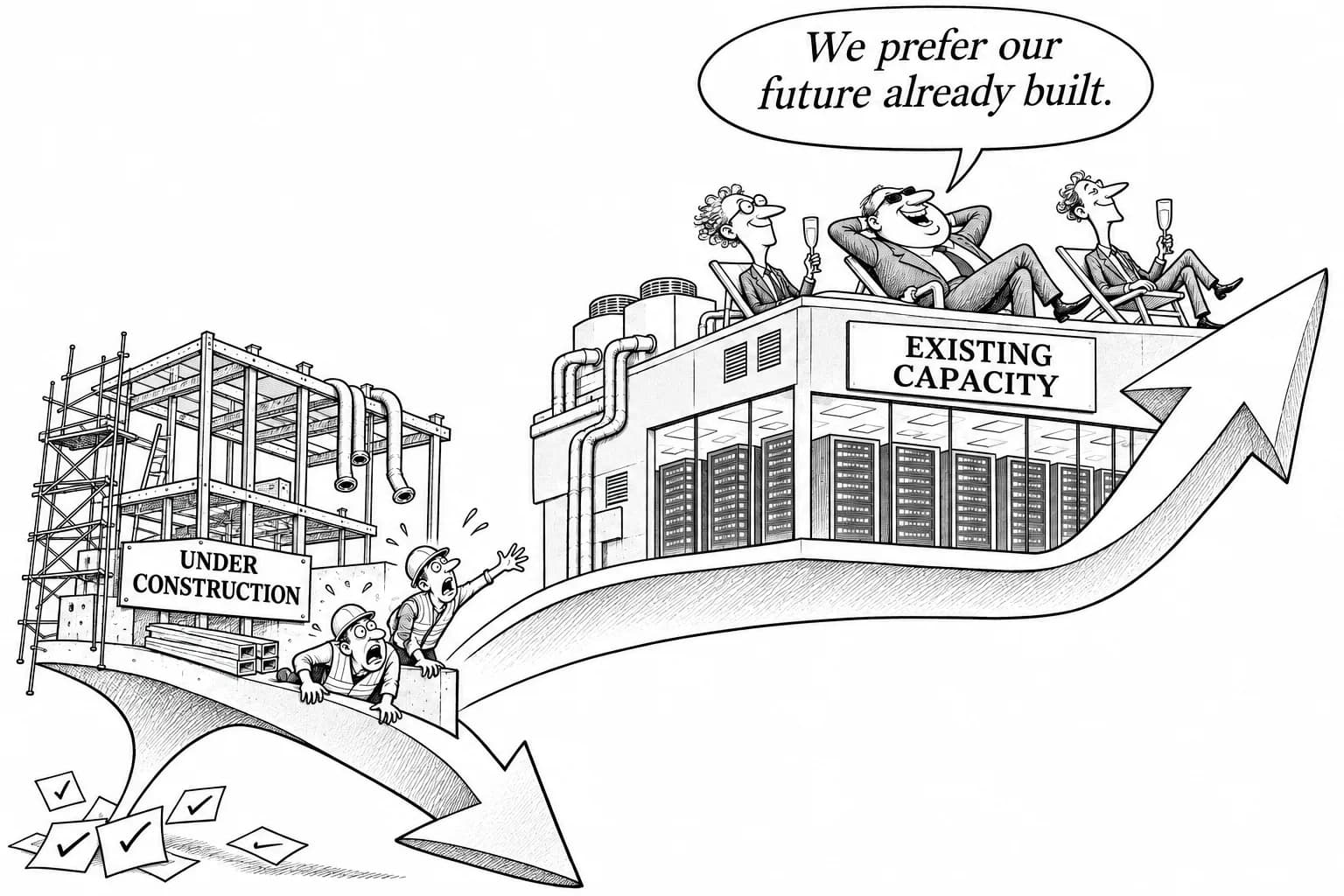
The same factors work in favor of Amazon, Microsoft and Alphabet. If new capacity gets harder to build, existing capacity becomes scarcer and more valuable. The three companies already own large data centers and hold rights to connect to the grid. They also have the cash to keep investing without relying on debt. One can also argue that if AI labs find it harder to rely on neoclouds, the work will flow back to the three.
In other words, the market was not doubting demand for AI. It was choosing again who will be able to meet that demand. Those that already own capacity win, and those that still have to build it with borrowed money lose.
What to watch
The first test is CoreWeave's earnings on November 10. Investors will watch how the company explains its debt repayment schedule and whether its Texas projects will be delayed. Rival Nebius also reports earnings around the same time. Anthropic, which is expected to go public in the second half of November, has reportedly stated compute purchase commitments of $895.4 billion in its IPO filing. Much of that compute is capacity that has yet to be built. If the builders struggle, it will affect where AI labs get their compute. What Congress and the new governor actually decide after the election will show whether the market got it right that day.
Editorial cartoon
Sources
- https://finance.yahoo.com/markets/stocks/articles/stock-market-today-nov-4-145445827.html
- https://www.stocktitan.net/articles/stock-market-today-live-november-4-2026
- https://www.thestar.com.my/tech/tech-news/2026/11/05/ai-data-center-stocks-slide-renewables-rally-after-democratic-us-midterm-sweep
- https://finance.yahoo.com/markets/stocks/articles/vst-ceg-stocks-drop-election-181047161.html
- https://www.bloomberg.com/news/articles/2026-11-04/coreweave-bonds-hit-new-lows-as-texas-data-centers-in-crosshairs
- https://www.fastcompany.com/91634444/texas-wanted-to-power-americas-ai-boom-its-new-governor-could-change-everything