Money · Nov 6, 2026
AI and chip stocks tumble across Japan, the US, South Korea and Taiwan; Nasdaq enters correction, Advantest falls 14.7%
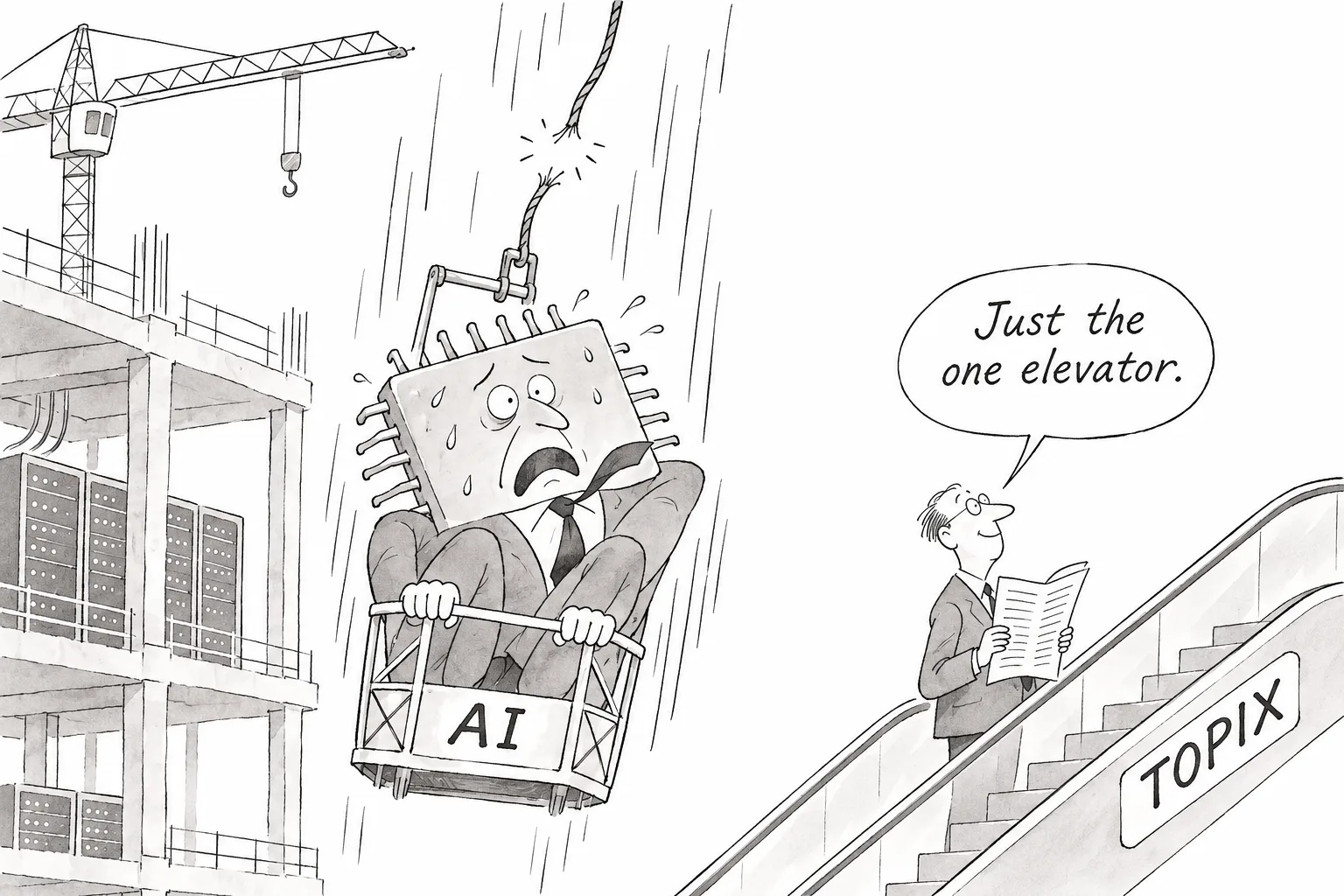
Fears that data center construction will slow after the election hit only AI infrastructure stocks. A single company pulled the Nikkei average down by about 1,097 yen, while the TOPIX reportedly rose
Koji Yamamoto · Economics Analyst

Key points
- On November 5, fears spread after the US election that "data center construction will slow." AI and semiconductor stocks were reportedly sold off heavily in Japan, the US, South Korea and Taiwan. The Nasdaq entered correction territory on an intraday basis
- In Tokyo, Advantest fell 14.7% and alone reportedly pulled the Nikkei average down by about 1,097 yen. However, 168 of the 225 stocks rose, and the TOPIX also climbed. The selling was concentrated in AI names
- South Korea's KOSPI reportedly fell 5.28%. UBS sees a possible "temporary slowdown" for data centers after the election. The move reads as a reassessment of expectations for AI infrastructure, not a broad stock market sell-off
AI and semiconductor stocks were sold off heavily in unison across Japan, the US, South Korea and Taiwan on November 5, according to reports. The trigger was the outcome of the US election, after which fears spread that data center construction could slow. The tech-heavy Nasdaq Composite fell more than 10% from its recent high on an intraday basis — a level known as a "correction." In Tokyo, chip-testing equipment maker Advantest fell 14.7%, and this one company alone pulled the Nikkei average down by about 1,097 yen. The TOPIX, a broad index tracking the Tokyo Stock Exchange, reportedly rose, however. The market as a whole was not sold. The more plausible reading is that expectations placed on AI infrastructure were reassessed.
What it means for Japanese companies: For semiconductor equipment makers such as Advantest and Tokyo Electron, and the suppliers of their components, sales outlooks shift with the pace of US data center investment. People who hold investment trusts tracking the Nikkei average through the new NISA or corporate pension plans should be aware that the Nikkei can be swung sharply by the moves of a handful of AI stocks.
US: AI stocks dragged the indexes lower
CNN reported that the tech-heavy Nasdaq plunged. Al Jazeera also reported that AI stocks plunged after the election, driving down US markets broadly. The Nasdaq entered correction territory on an intraday basis, meaning during trading. Whether it remained in correction territory at the close could not be confirmed here.
The reason given for the selling is not AI's capabilities or demand themselves, but the speed at which data centers can be built. The computing resources AI companies use cannot grow until both data center buildings and grid connections are in place. Markets saw the election outcome as potentially changing how permits are granted and how electricity rates are set.
Tokyo: the Nikkei fell while the TOPIX rose
The distortion was stark in the Tokyo market. Market news site investingLive ran the story under the headline "168 of 225 Nikkei stocks rise but AI losses drag the index lower as the TOPIX rallies." Advantest fell 14.7% and alone reportedly pulled the Nikkei average down by about 1,097 yen.
The Nikkei average is structured so that higher-priced stocks have a greater influence on the index. When a high-priced AI-related stock like Advantest falls sharply, the index drops even if many other stocks are rising. The TOPIX, by contrast, combines a broad range of Tokyo Stock Exchange stocks weighted by company size. Its gain shows that buyers outnumbered sellers across most of the Tokyo market. Investors were not fleeing Japanese equities; they were moving money out of AI infrastructure stocks and into other names.
Seoul and Taipei: memory and chip economies rattled
South Korean business daily Seoul Economic Daily reported that the KOSPI, South Korea's benchmark stock index, fell 5.28% on fears of a "blue wave" (a sweeping Democratic win) over data centers. The Korean market is heavily weighted toward companies that make memory used in AI data centers, making it especially sensitive to the outlook for data center investment.
Taiwan's news agency Focus Taiwan also reported on the Taiwanese stock market's moves on November 5. Taiwan's market is heavily weighted toward companies that manufacture AI chips under contract. Japan, South Korea and Taiwan all sit within the AI chip supply chain. The view that US data center construction will slow reverberated across that entire chain at once.
Why the election matters for data centers
According to investment information site Finimize, Swiss financial giant UBS sees a possible "temporary slowdown" in data center construction after the midterm elections. Data centers are deeply tied to state and local politics through land permits, grid connections and how electricity rates are set. Resident pushback over rising electricity bills has become a campaign issue in elections across the country over the past year.
If those seeking tighter regulation gain power in Congress or state agencies through the election, construction permits could be delayed, or moves could emerge to make data centers bear a greater share of electricity costs. AI and semiconductor company stocks have been richly valued on the premise that data centers will keep multiplying at the current pace. That premise has now come under at least some doubt.
Not a broad sell-off, but a reassessment of AI infrastructure
What matters about the day's moves is that the selling was concentrated in stocks tied to AI infrastructure. In Tokyo, the TOPIX rose, as did most of the stocks in the Nikkei average. The stock market as a whole was not sold off on fears of an economic downturn. It was a reassessment: investment in AI data centers may not proceed as quickly as previously thought.
However, the figures and reasons cited here are all based on media reports. They have not been confirmed against announcements from companies or exchanges. Whether the selling is temporary or the reassessment continues will become clearer from upcoming numbers. US power company Vistra is scheduled to report earnings on November 6, AI cloud provider CoreWeave and SoftBank Group on November 10, and NVIDIA on November 17. Those reports will show, in the companies' own words, whether data center construction plans are being delayed.
Sources
CNN, Al Jazeera, StockTitan, investingLive, News On Japan, Seoul Economic Daily, Focus Taiwan, Finimize
Editorial cartoon
Sources
- https://www.cnn.com/2026/11/05/investing/tech-heavy-nasdaq-plunges
- https://www.aljazeera.com/economy/2026/11/5/ai-stocks-plunge-after-election-driving-down-us-markets
- https://www.stocktitan.net/articles/stock-market-today-live-november-5-2026
- https://investinglive.com/stock-market-update/168-of-225-nikkei-stocks-rise-but-ai-losses-drag-the-index-lower-as-the-topix-rallies/
- https://newsonjapan.com/article/151257.php
- https://en.sedaily.com/news/2026/11/05/blue-wave-fears-over-data-centers-drive-kospi-down-528
- https://focustaiwan.tw/business/202611050014
- https://finimize.com/content/ubs-flags-a-post-midterms-speed-bump-for-data-centers