Work & Society · Nov 2, 2026
Power bills and data centers become a midterm issue, with utility commission races in 9 states
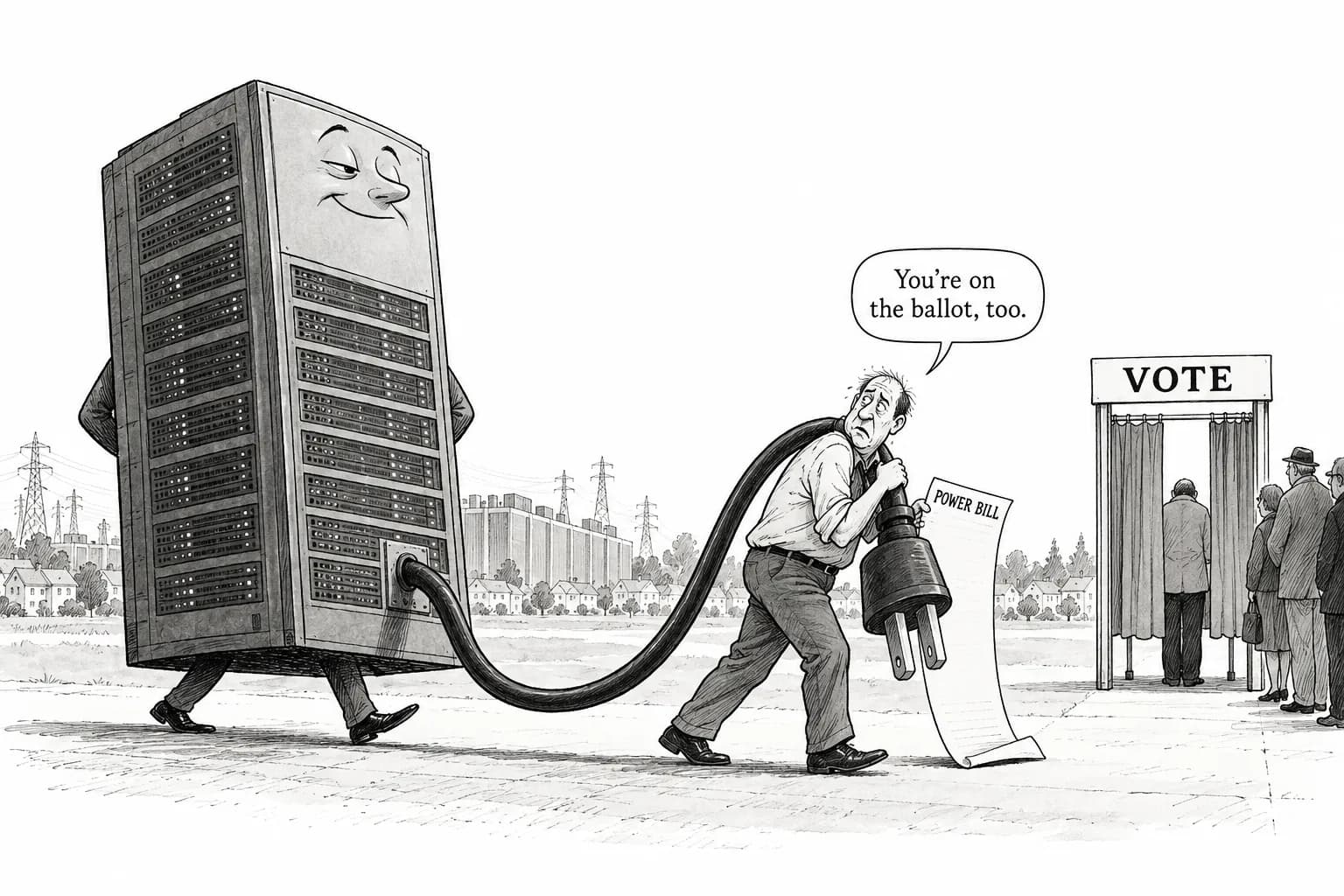
Household electricity bills have risen more than 10% since 2024, Reuters reported. In the Nov. 3 vote, the choice of utility commissioners and governors will decide where data centers get built and who pays for the power grid
Koji Yamamoto · Economics Analyst
Key points
- U.S. household electricity bills have risen more than 10% since 2024, according to Reuters
- The Nov. 3 elections, through utility commission races in 9 states and governor races, will reportedly decide where data centers are located and who pays for them
- In Dade City, Florida, an ordinance to temporarily halt data center construction has moved forward, a local newspaper reported
U.S. household electricity bills have risen more than 10% since 2024. In the Nov. 3 midterm elections, voters will choose the utility commissioners who approve those rates, and the governors who often appoint them. Through those choices, they will directly decide where data centers are built and who pays for the power plants and grid needed to serve them, Reuters reported (via the wire story republished by Pakistan's Dawn). Utility commission elections will reportedly be held in 9 states.
This article is based on news reports. We have not checked primary sources such as utility rate filings or state commission documents.
A usually overlooked race in the spotlight
The wire story's headline says power bills and data centers have cast a "rare spotlight" on utilities in the midterms. Elections for the commissions that set rates usually draw little attention. This year, rising rates have started to squeeze household budgets, and that has drawn voters' attention, according to the report.
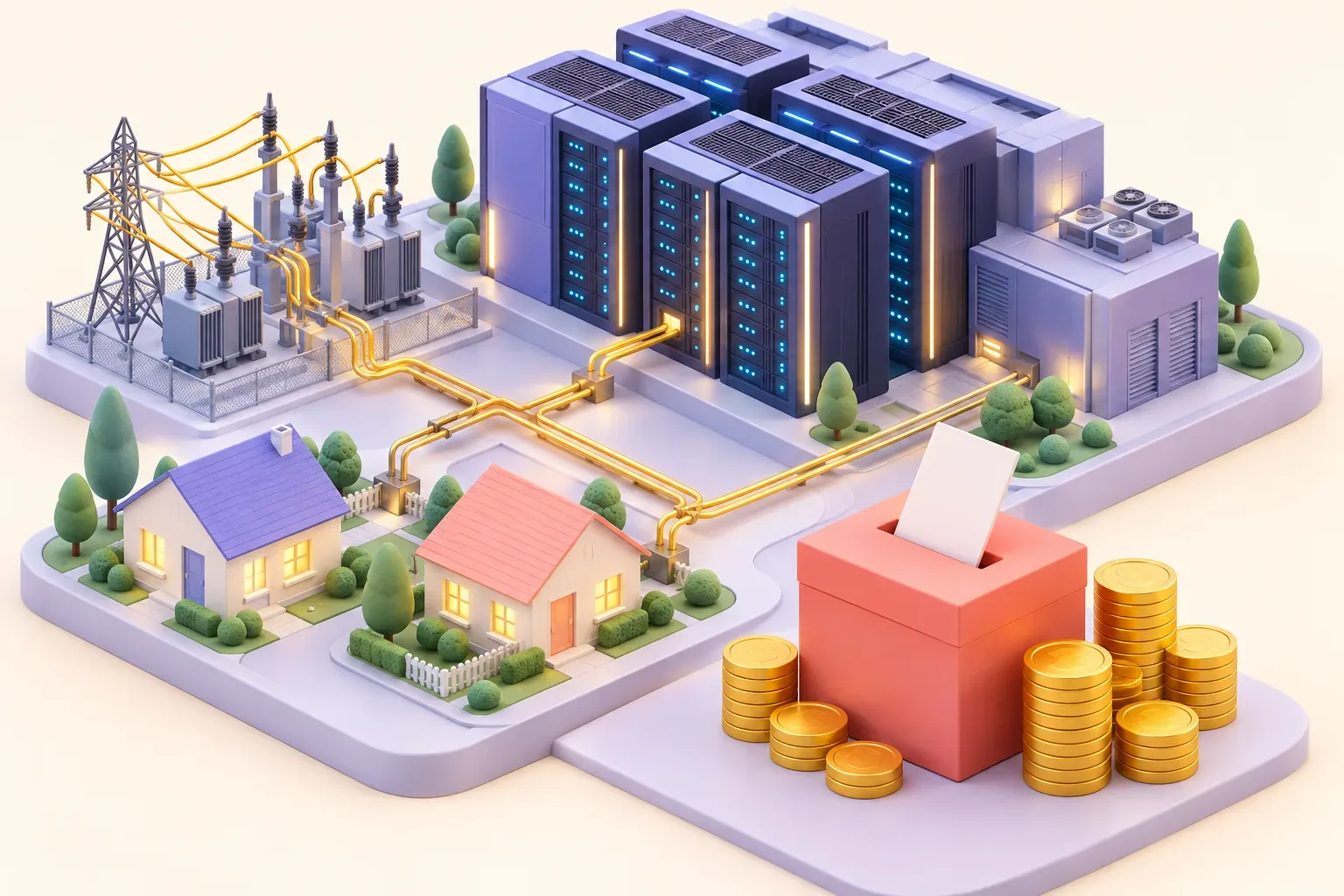
The story ties the issue to power demand from data centers that house AI computing capacity. Connecting a large data center to the grid requires new power plants and transmission lines. State utility commissions approve how those costs are allocated in utility rates. Their decisions determine whether the costs are spread across all customers, households included, or charged to the companies that own the data centers.
What commissioners and governors control
The Reuters story says the Nov. 3 vote affects data centers in two ways.
The first is the utility commission races in 9 states. Commissioners approve rate increases and review special rate structures for data centers as well as applications to build new power plants.
The second is the governor races. In many states, the governor appoints commission members and also has a hand in siting rules and tax incentives. The results of governor races could shape both who sits on the commissions and each state's policy on attracting data centers.
We have not confirmed the details of which candidates hold which positions in which states.
Local moves toward a moratorium
There is also action below the state level. In Dade City, Florida, an ordinance to temporarily halt data center construction has moved forward, the local newspaper Hernando Sun reported on Oct. 31. The vote count, the length of the moratorium and the date of the next hearing have not been confirmed.
City efforts to halt siting and state commission elections that decide how costs are shared sit at two ends of the same question: whether to accept data centers, and if so, who pays the electricity bill.
Computing buildout collides with household budgets
Behind this is the rapid buildout of AI computing capacity. On Oct. 29, Epoch AI said quarterly additions of AI computing capacity have grown about 2.5 times a year since 2024, rising from 800,000 H100 equivalents in January–March 2024 to 6.3 million in April–June 2026 (primary source). It also wrote that there are signs the growth is slowing.
AI labs and hyperscalers are racing to build data centers, and the power for them is drawn from regional grids. If the reports are accurate, Nov. 3 will give voters, who bear those costs, a chance to directly choose the people who set their rates.
What to watch after the election
There are three things to watch once results are in.
First, how many candidates who ran on rising rates win the utility commission races in the 9 states. Second, whether the winning governors and commissioners move toward rate structures that put more of the costs on data centers. Third, whether local moratoriums like Dade City's spread to other municipalities.
The same day will also test how much influence super PACs funded by the AI industry gain over state AI regulation through the Nov. 3 results.
Editorial cartoon