Rules & Policy · Nov 7, 2026
US extends pause on 50% rule to Jan. 10; China has yet to issue its notice
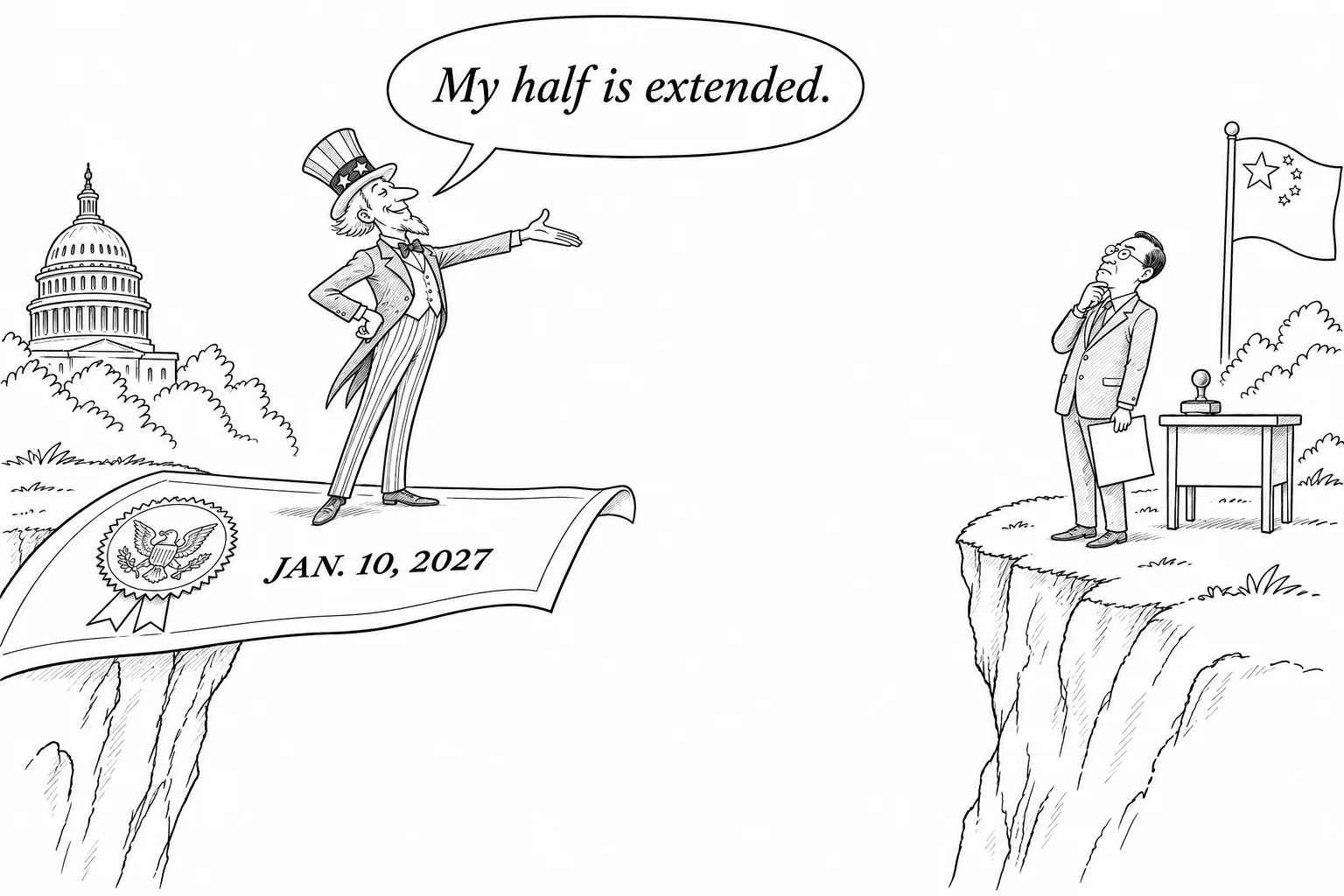
The U.S. Commerce Department has extended by two months its pause on a rule that applies trade restrictions to the subsidiaries of restricted companies. The U.S. has legally settled the Nov. 9 deadline on its side. China, however, has not yet issued a notice extending its pause on rare earth export controls, so only one side of the truce's paperwork is in place
Koji Yamamoto · Economics Analyst

Key points
- United States: BIS extended its pause on the Affiliates Rule (the 50% rule) until Jan. 10, 2027. A Federal Register document and a law firm's commentary have been published, which settles the Nov. 9 deadline on the U.S. side
- China: Beijing has not yet issued a notice extending its pause on rare earth export controls. Under the truce, both countries were to suspend their measures at the same time, but only the U.S. side has completed the paperwork
- The extension is short: two months, not a year. The APEC leaders' meeting in Shenzhen (Nov. 18-19) falls before the new deadline. For Japanese companies, re-checking business partners' shareholdings and sourcing components such as magnets are once again problems with a deadline attached
[Update, Nov. 7, 2026, 13:30 JST] We first gave the U.S. deadline as Nov. 10. The Federal Register shows the pause ran through Nov. 9, with the rule due back on Nov. 10. Nov. 10 is China's deadline. The affected passages have been corrected.
The Bureau of Industry and Security (BIS), the U.S. Commerce Department's export control arm, has extended until Jan. 10, 2027, its pause on a rule that applies trade restrictions to subsidiaries (the Affiliates Rule, commonly called the "50% rule"). The extension document was posted for public inspection ahead of publication in the Federal Register. Law firm Baker McKenzie also reported the extension on its sanctions blog. This legally settles the U.S. deadline, under which the pause would have expired on Nov. 9. But for the other half of the truce, China's export controls on rare earths, Beijing has not yet issued a notice extending its pause. Only the U.S. side of the truce's paperwork is in place.
For Japanese companies: Japanese companies that do business with Chinese firms can hold off, at least until Jan. 10, on re-checking who owns their business partners and what percentage they hold. But what happens to China's pause on rare earth controls has not been decided, and manufacturers that source the magnets and raw materials used in motors and electronic components still cannot predict their shipments after Nov. 10.
The U.S. side: pause extended by two months
The United States keeps the Entity List, a list of foreign companies that need a license to receive exports on national security grounds. On Sept. 29, 2025, BIS issued the Affiliates Rule. Under the rule, subsidiaries that are 50% or more owned, in total, by listed companies are treated as if they were on the list themselves. Before that, a license was not needed if the subsidiary's name did not appear on the list. The rule moved the burden of checking business partners' shareholdings onto exporters.
In late October 2025, the U.S. and Chinese leaders agreed to a truce. As part of it, the United States agreed to suspend the rule for one year starting Nov. 10, 2025. The new document extends the end of that pause to Jan. 10, 2027. The extension covers only two months, not the full year of the original pause.
The Chinese side: no extension notice yet
Under the same truce, China also suspended its own controls: export controls on rare earths and related technologies that it announced it would expand in October 2025. The controls were broad, requiring licenses even for foreign products made with Chinese materials. China's Ministry of Commerce had announced it would suspend them for one year. That pause expires on Nov. 10, 2026.
The U.S. side has put its extension in an official document. China's Ministry of Commerce has not yet issued a notice extending its pause. The truce depended on both countries suspending their controls at the same time, and the two deadlines were lined up for Nov. 9 (U.S.) and Nov. 10 (China). Only one of them has now been pushed back on paper.
Why half the paperwork is not enough
Export licensing is decided by documents. Even if the United States keeps its rule on hold, China's controls would legally take effect again if Beijing's pause expires on Nov. 10 without an extension notice. Exporting rare earths and magnets would then require a license. For parts makers in Japan and Europe, what matters is not what the two leaders have said but when the regulatory documents are issued and how far the deadlines are pushed back.
The short, two-month U.S. extension is itself a sign that nothing is settled. The APEC leaders' meeting (Shenzhen, Nov. 18-19) falls before the Jan. 10 deadline. The short U.S. extension could be read as a bridge to the next agreement. But nothing about what that agreement might be has yet appeared in any official document.
What to watch
First, whether China's Ministry of Commerce issues a notice extending its pause by Nov. 10, and if so, for how long. Whether it matches the U.S. two-month extension or extends further will show how China is treating the truce.
Second, whether the two countries put a new agreement in writing around the APEC leaders' meeting. The U.S. Jan. 10 deadline will be the next pressure point.
Third, how Japanese companies prepare. Companies that do business with Chinese firms would do well to keep their procedures for checking partners' shareholdings in place, in case the Affiliates Rule takes effect again after Jan. 10. Companies that source components using rare earths need to confirm their shipping terms after Nov. 10 with their suppliers until China issues its notice.
Editorial cartoon