Rules & Policy · Nov 3, 2026
South Korea's 2027 budget nearly doubles AI spending to 21.3 trillion won
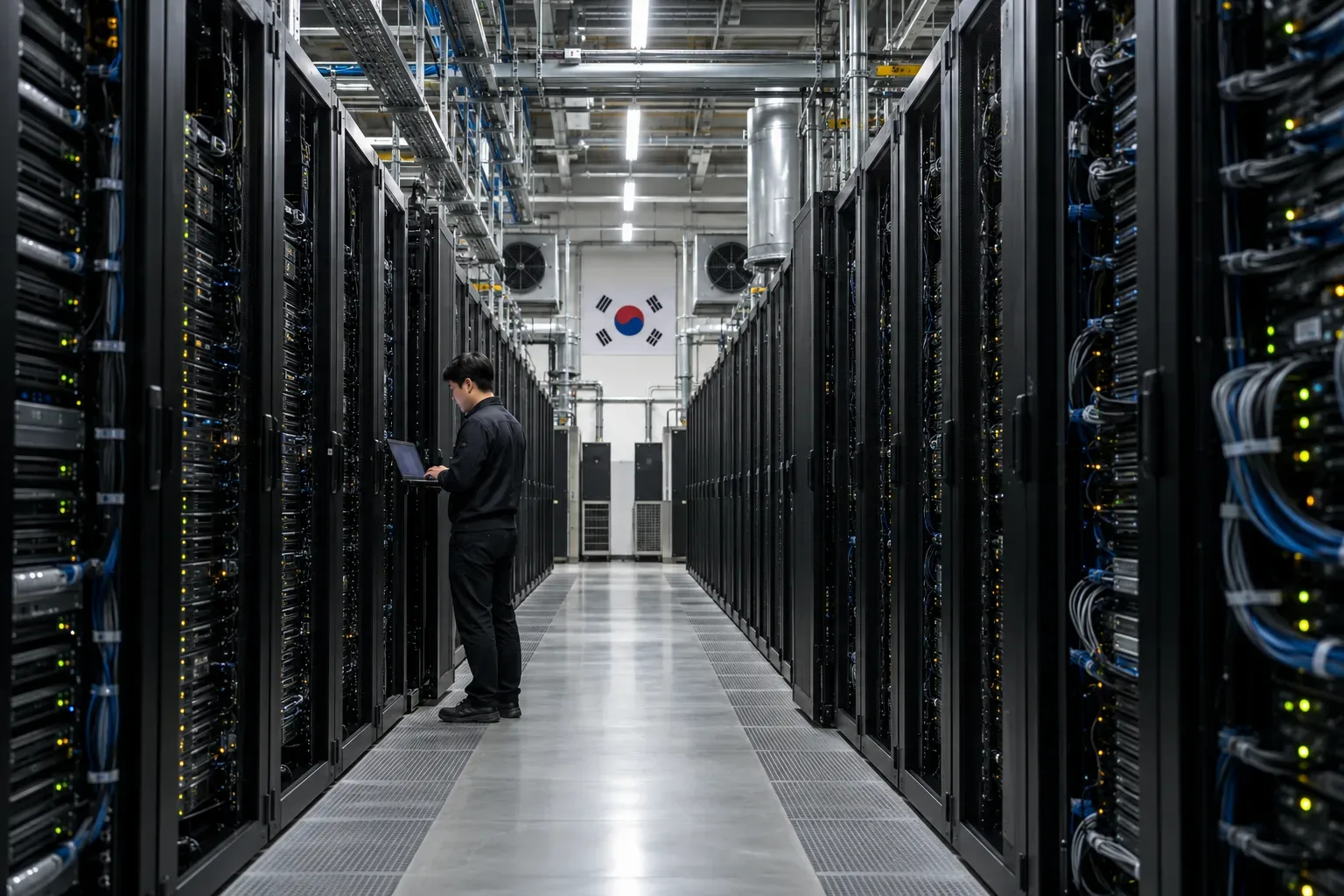
President Lee Jae-myung's budget proposal reportedly sets aside about $16 billion for AI. That is described as the largest single-year public AI spending by any U.S. ally. It includes 4.7 trillion won for homegrown AI models and a defense plan that pairs crewed and uncrewed systems. Parliament has not yet approved it
Koji Yamamoto · Economics Analyst
Key points
- South Korea's 2027 budget proposal reportedly allocates 21.3 trillion won (about $16 billion) to AI. That is nearly double the 2026 level and is described as the largest single-year public AI spending by any U.S. ally
- The plan reportedly includes 4.7 trillion won for homegrown AI models that don't depend on foreign ones. In defense, it calls for combining crewed weapons with uncrewed systems, built on AI and drones
- President Lee asked the National Assembly to back what he called a record budget. The amounts are still only a proposal and could change in parliamentary review. All figures come from media reports and have not been checked against government documents
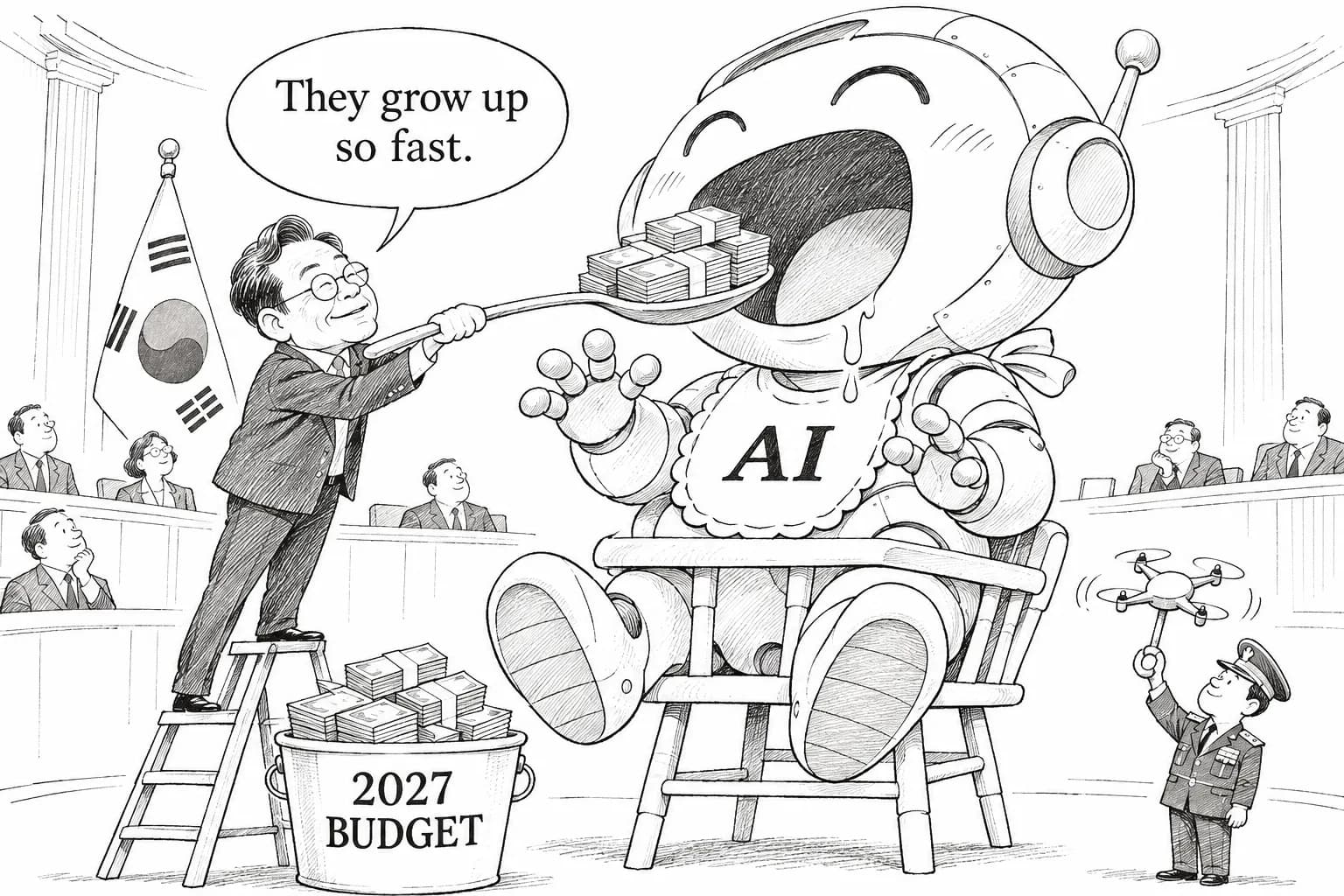
South Korean President Lee Jae-myung's 2027 budget proposal to the National Assembly reportedly allocates 21.3 trillion won (about $16 billion) to AI. According to CNBC and the Seoul Economic Daily (Nov. 2), that is nearly double the 2026 figure and would be the largest single-year public AI spending by any U.S. ally. The plan reportedly has two main pillars: 4.7 trillion won for homegrown AI models, and a defense approach that pairs crewed and uncrewed systems built on AI and drones.
For Japanese companies: This won't change how Japanese companies work right away. The companies it affects are those with business partners or operations in South Korea, those that sell chip equipment, materials or data center components to South Korea, and those that use AI services in both Korean and Japanese. If a neighboring government places about $16 billion a year in AI orders, that adds one more competitor for GPUs (the chips used for AI computing) and power infrastructure.
What's in the proposal: 21.3 trillion won for AI, nearly double
According to reports, the AI allocation is 21.3 trillion won, nearly twice the 2026 budget. The Korea Times (Nov. 2) reported that Lee asked the National Assembly to back what he called a record budget, and that he put a technology fund for future growth at the center of his pitch.
Readers should be careful about what the 21.3 trillion won figure covers. The total can change a lot depending on what is counted as AI spending: AI research and development, computing resources, talent, or AI projects across government ministries. The amounts and breakdowns cited here all come from media reports. They have not been checked against the South Korean government's own budget documents.
4.7 trillion won for homegrown AI models
The most notable line item is reportedly 4.7 trillion won for homegrown AI models. The aim is for South Korea to have its own foundation models instead of relying on models from U.S. or Chinese companies, an approach known as sovereign AI.
South Korea has already run a program that selects teams from domestic companies and has them compete to build foundation models. This proposal would give that effort more than 20% of the total AI budget. Building models takes computing resources, data and researchers. The question is how far this money can close the gap with frontier models from the U.S. and China.
AI and drones in defense: pairing crewed and uncrewed systems
According to reports, the proposal also calls for a defense approach that pairs crewed and uncrewed systems, built on AI and drones. Under this approach, crewed fighter jets and tanks operate together with AI-driven uncrewed systems. Humans make the decisions, while uncrewed systems take on reconnaissance and dangerous missions.
This means the AI budget is aimed at national security as well as industrial growth. It is a clear example of a U.S. ally putting money behind making AI part of its national defense. Reports have not confirmed how much will go to which equipment.
How to read "largest among U.S. allies"
CNBC and other outlets describe the amount as the largest single-year public AI spending by any U.S. ally. But countries count AI budgets in different ways, which makes direct comparisons hard. Japan also has a framework of more than 10 trillion yen in public support for chips and AI over several years through fiscal 2030. However, that figure is multi-year and focused mainly on support for chip factories, so it is not the same thing as an annual AI budget.
Even so, the direction is clear: South Korea has nearly doubled its AI budget in one year. A country that competes for the global lead in memory chips is trying to make AI a national pillar, from models and computing resources to defense.
What hasn't been decided yet
This is a budget proposal, not a final budget. In South Korea, the National Assembly is supposed to pass the next year's budget by early December. The AI amounts and their breakdown could be cut or reshuffled during review.
There are three things to watch for next. First, the breakdown of the 21.3 trillion won in the government's budget documents, and how it is counted when compared with 2026. Second, which companies or teams will receive the 4.7 trillion won, and for what models. Third, how much will go to pairing crewed and uncrewed defense systems, and on what timeline.
Editorial cartoon
Sources
- https://www.cnbc.com/2026/11/02/south-korea-ai-spending-budget.html
- https://www.koreatimes.co.kr/southkorea/politics/20261102/lee-highlights-tech-fund-for-future-growth-as-he-seeks-parliamentary-support-for-record-budget
- https://en.sedaily.com/politics/2026/11/02/korea-to-invest-213-trillion-won-in-ai-under-2027-budget