Money · Oct 8, 2026
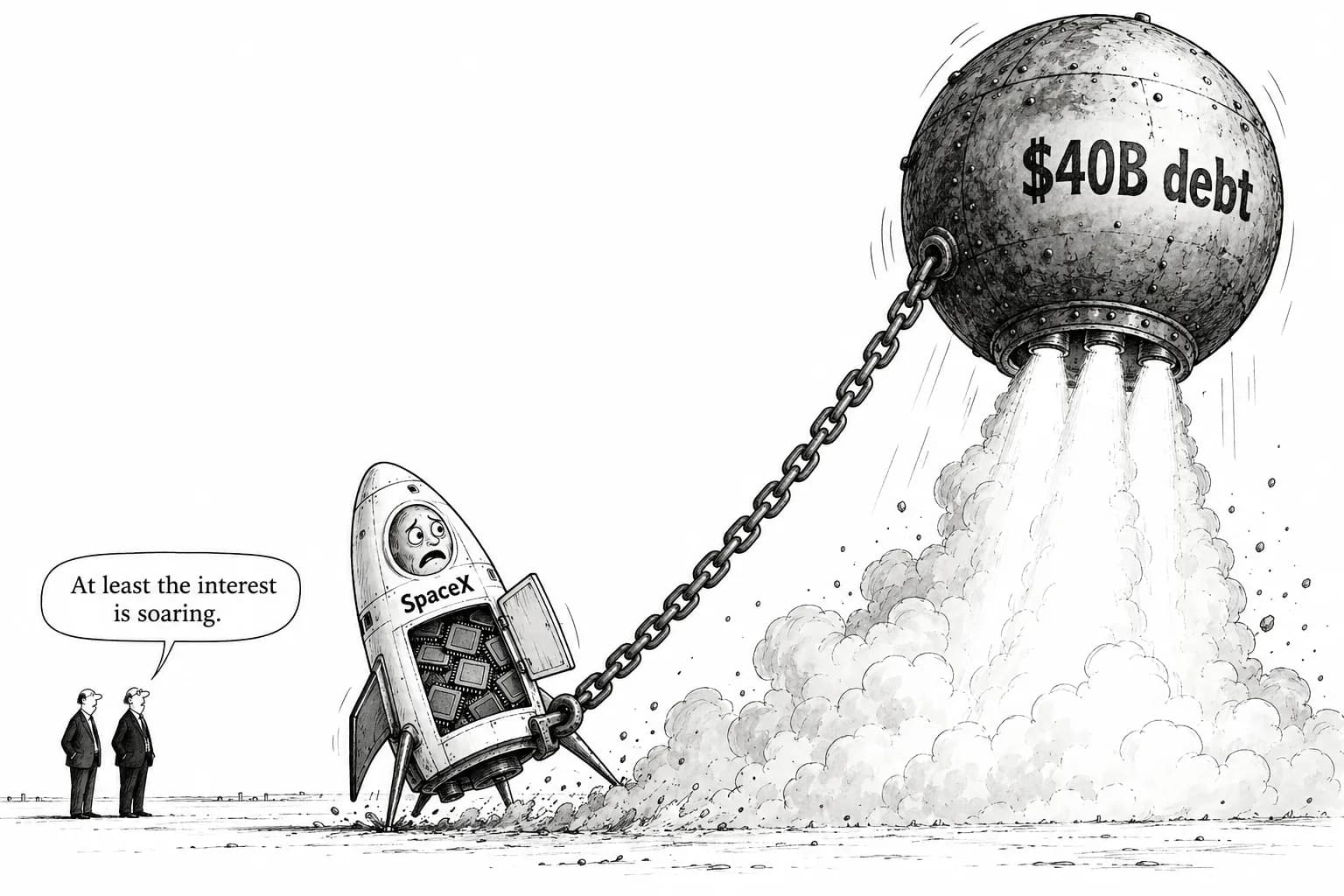
SpaceX reportedly plans $40 billion in borrowing to buy NVIDIA chips as AI spending leans on corporate debt amid rising rates
With the 10-year Treasury yield reportedly at its highest since 2002, buying computing power with borrowed money has reached its largest scale yet
Koji Yamamoto · Economics Analyst

Key points
- SpaceX reportedly plans $40 billion in new borrowing to buy NVIDIA chips. The company has not confirmed the plan, and the lenders, interest rate and term are not known.
- SpaceX shares reportedly fell after the report. The 10-year Treasury yield is reportedly at its highest since 2002, which makes borrowing more expensive.
- On the same day, major tech companies were reported to be raising money through bonds and equity to fund AI and cloud expansion. Funding for computing power is shifting from cash on hand to the capital markets.
SpaceX plans to borrow $40 billion in new debt to buy NVIDIA chips, according to a report (Yahoo Finance). SpaceX shares reportedly fell on the news. We have not yet been able to confirm an announcement from SpaceX itself or any regulatory filing. All figures in this article are based on media reports.
The report matters because of both its size and its timing. The 10-year U.S. Treasury yield is reportedly at its highest level since 2002 (CNBC, October 7). Debt-funded purchases of AI computing power have reached their largest scale yet just as borrowing costs are at their highest in more than two decades.
What has been reported, and what is still unknown
Three things have been reported: the amount is $40 billion, the money is for buying NVIDIA chips, and it is new borrowing.
How the money will be raised is not known. Available sources do not say whether it will take the form of bonds or bank loans, which financial institutions will underwrite it, what the interest rate and term will be, or which generation of chips will be bought and how many. In past cases, valuations and deal sizes have differed widely between media reports and the actual filings. The final size and terms will have to wait for a formal disclosure from SpaceX.
Why SpaceX is buying chips
SpaceX is changing from a rocket company into a buyer of AI computing power. Musk reportedly posted on X on October 3–4 that the company's AI unit, SpaceXAI, would be renamed "SpaceXSI," and said that "SpaceX is a super intelligence company" (wccftech; the X posts themselves have not been verified). On October 4, Axios reported that Reflection AI is sourcing computing power for its first open-weight model from Nebius and SpaceX.
That means SpaceX is not only running its own models but also renting computing power to other labs. According to the report, SpaceX intends to buy the chips for this with borrowed money rather than cash on hand.
Not just SpaceX
Also on October 7, BNN Bloomberg reported that tech companies are raising money through bonds and equity to fund AI and cloud expansion (BNN Bloomberg). Spending on data centers and GPUs has reached the point where earnings from core businesses can no longer keep up, and raising money in the capital markets is becoming the norm.
Chip prices do not fall because yields rise. But borrowers' costs rise with yields. If the 10-year yield is at its highest since 2002, new bonds and loans will be priced off that level. Chips depreciate over a few years, but interest payments on the debt continue. The more rates rise, the more fragile it becomes to fund AI capital spending with debt.
What to watch next
First, whether SpaceX makes a formal disclosure, and on what terms. The reported $40 billion may not appear unchanged in financing documents. Second, the FOMC minutes due to be released on October 7, and how yields move afterward. If long-term rates stay high, terms for the next AI bond deals will get tougher. Third, the market's reaction. SpaceX shares reportedly fell this time. That will be the first gauge of how far investors are willing to go along with a strategy of piling up computing power with borrowed money.
Until now, the debate over AI computing power has focused mainly on electricity and chip supply. The SpaceX report shows that another constraint has come into clear view: the cost of borrowing the money to buy computing power.
Editorial cartoon
Sources
- https://finance.yahoo.com/markets/stocks/article/spacex-stock-slips-on-report-of-its-40-billion-in-new-debt-for-nvidia-chips-140223011.html
- https://www.bnnbloomberg.ca/business/artificial-intelligence/2026/10/07/tech-companies-tap-debt-equity-to-fund-ai-and-cloud-expansion/
- https://www.cnbc.com/2026/10/07/treasury-yields-auction-fomc-minutes.html