Work & Society · Nov 16, 2026
Pope says limits are "not a defect but a condition of human greatness," trading views with former OpenAI researcher and others
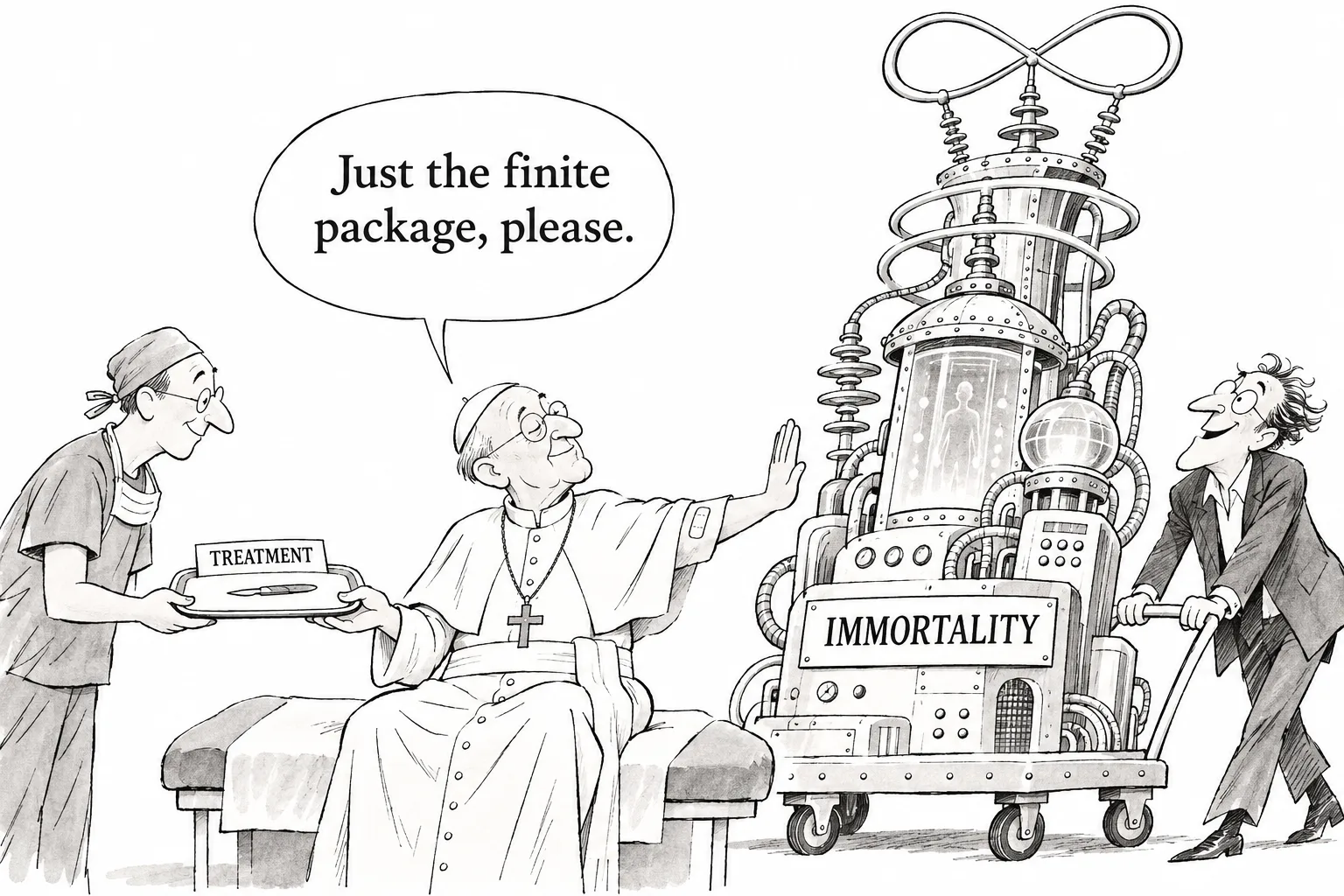
The Pope pushed back on the idea of using technology to end aging and death. A former OpenAI researcher took a middle position: reduce suffering as much as possible, except where it is needed to keep what is essential to being human. A free-market voice answered by pointing to the Pope's own cancer surgery
Koji Yamamoto · Economics Analyst

Key points
- Responding to the idea of using technology to end aging and death, the Pope wrote that having limits is "not a manufacturing defect, but the very condition of human greatness"
- A former OpenAI researcher took a middle position: suffering should be reduced, but what makes us human should not be erased
- A free-market commentator noted that the Pope himself had cancer surgery, asking where the line between medicine and life extension really falls
The Pope has openly rejected the idea of using technology to end aging and death. On his official X account, he wrote that having limits is not a defect but the very condition of human greatness. Within hours, a former OpenAI researcher and a free-market commentator who opposes regulation responded. AI companies have started selling themselves on "curing disease" and "extending lifespans." That raises a question: where does medicine end and "remaking human beings" begin? The exchange put that question up for public debate between the head of a global religion and the AI industry.
For Japanese companies: This does not affect most companies. Pharmaceutical, healthcare and life insurance companies that work on AI drug discovery or aging research, or sell products promising longer healthy lives, may want to act. Their communications and ethics teams could check, at the next materials review, whether advertising or IR materials use phrases such as "eliminating aging" or "conquering death." Companies that partner with Catholic schools or hospitals should be especially careful with wording on this topic.
The Pope: limits are a condition of human greatness
In an X post (around 11 a.m. Japan time on November 14, based on the post's ID), the Pope addressed the idea of using technology to eliminate aging and death. He said that having limits is not a manufacturing defect but the very condition of human greatness.
In this view, growing old and dying are part of what makes a person human. The implication is that trying to erase them with technology is different from curing disease. The Pope has spoken about AI many times before. This time, though, he shifted the question from "what can AI do" to "how far should humans be allowed to change."
Former OpenAI researcher: reduce suffering, keep what makes us human
Former OpenAI researcher Joshua Achiam responded to the Pope's post with a middle position (around 1:30 p.m. Japan time). The suffering caused by illness and aging should be reduced, he said, but we should not move toward erasing what it means to be human.
The response came from someone who has worked on building the technology, and it stopped short of saying technology should solve everything. His line is to pursue treatment while limiting efforts to remake the human form. Even under this view, however, it is unclear at what point something counts as "erasing what makes us human."
The free-market side: the Pope had cancer surgery too
Adam Thierer, a commentator who opposes regulation and argues for technological freedom, replied shortly afterward, pointing out that the Pope himself had undergone cancer surgery.
His argument runs like this. Surgery is also a medical technology that extends life. It makes little sense to accept it while condemning only technologies that take on aging and death as an affront to dignity. Much of today's routine medicine would once have been called "going against nature."
Why this debate, and why now
The three positions are three answers to the same question. The Pope finds value in having limits. Achiam separates "suffering" from "being human" and wants to reduce only the first. Thierer sees that line as something drawn after the fact.
The backdrop is the growing push by AI companies into medicine and the life sciences. Anthropic is working on drug discovery and has acquired a muscular dystrophy startup. Google DeepMind has released a model that predicts the effects of genetic variants. This work aims first at curing disease. But some go further and set the goal of "curing aging itself." The faster the technology advances, the more people outside the lab will have to decide where treatment ends and remaking the human body begins.
What could not be verified
The Pope's post carried the hashtags #ApostolicJourney and #Peru, along with a link to the Vatican's official website about an event with university representatives during his visit to Peru (November 13). It appears to be an excerpt from remarks made during that visit rather than from an encyclical or other formal document. According to Thierer's post, the Pope's surgery took place on October 13 to remove a cancerous lung tumor and was successful. That date and description come from Thierer's post and have not been checked against other sources. Achiam lists OpenAI as a former affiliation in his X profile; his current affiliation and title could not be confirmed. Post times are estimates calculated from the X post IDs.
Editorial cartoon