Money · Nov 14, 2026
Inference chip startup signs Microsoft deal as revenue jumps 70%, but its order book leans heavily on OpenAI
Cerebras said the revenue measure it focuses on rose 70% in the July–September quarter. It also said it is the first inference chip company other than NVIDIA to sign a deal with Microsoft. However, much of its $26.1 billion (about 4.2 trillion yen) backlog comes from OpenAI, so the company still depends heavily on a single customer
Koji Yamamoto · Economics Analyst

Key points
- The revenue measure Cerebras treats as central rose 70% in the July–September quarter. The company called it record revenue and raised its full-year outlook
- Cerebras said it is the first inference chip company other than NVIDIA to sign a deal with Microsoft. Its shares reportedly rose 17%
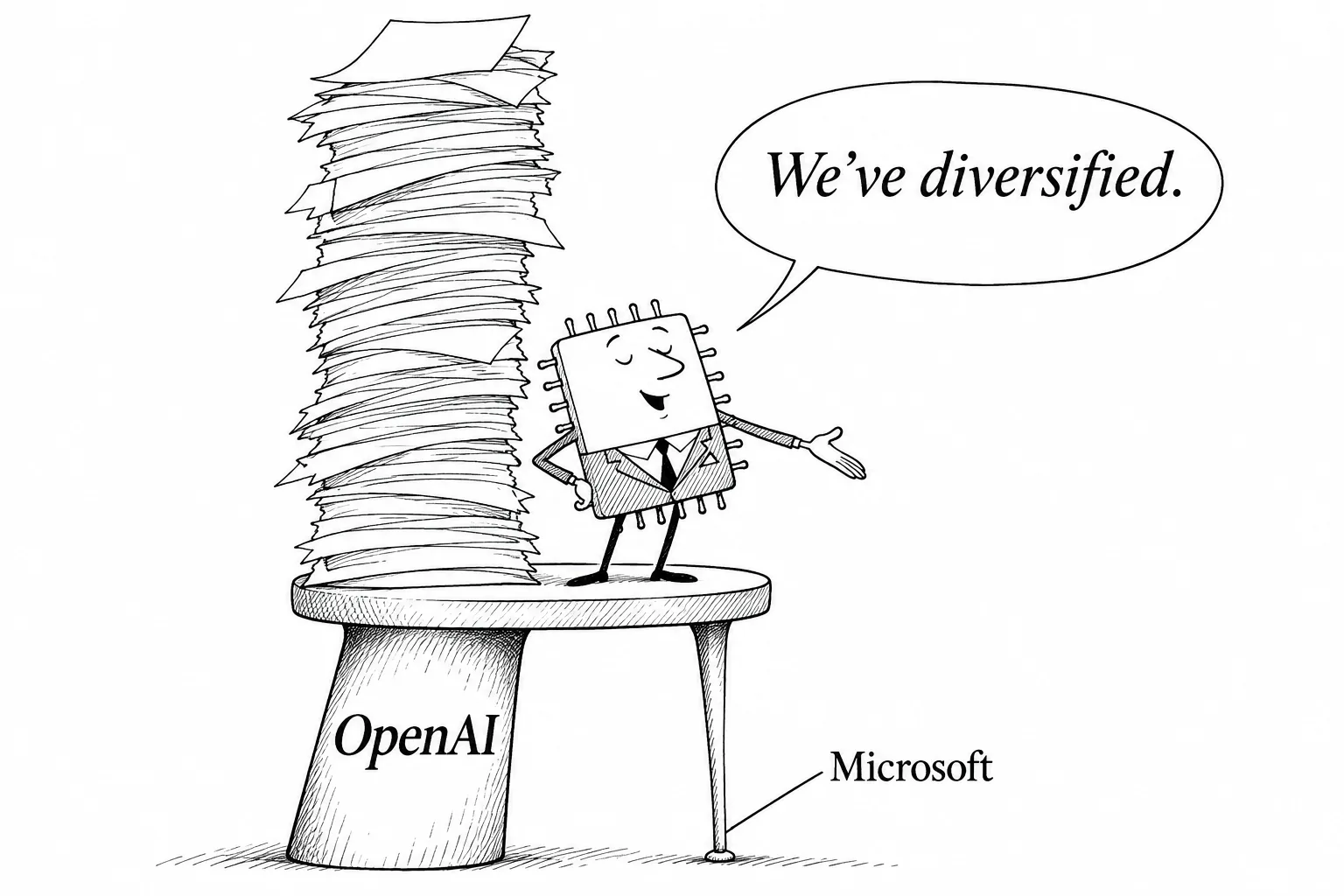
- Much of the $26.1 billion (about 4.2 trillion yen) backlog comes from OpenAI. If OpenAI's plans change, Cerebras's future revenue could swing sharply
[Update: November 14, 2026, 4:44] We have added the amount of the revenue measure the company treats as central ($230.9 million) and the raised full-year outlook ($940 million to $960 million), based on the earnings filing. Because the filing confirmed the revenue figure and the full-year outlook, we have removed them from the list of points we had not verified.
Cerebras Systems, a U.S. company that makes chips built for AI inference (running a trained model to produce answers), filed its July–September quarter results with the SEC on November 12. The revenue measure the company treats as central rose 70% from a year earlier. Cerebras also said it is the first inference chip company other than NVIDIA to sign a deal with Microsoft. However, its backlog of contracted orders not yet counted as revenue stands at $26.1 billion (about 4.2 trillion yen at 160 yen to the dollar), and much of it comes from OpenAI. The company is growing fast, but it still depends heavily on a single customer.
What it means for Japanese companies: Most companies will see no immediate impact. The news matters most to IT departments at companies that run large AI workloads on Azure. Before their next contract review, they should ask their Microsoft representatives whether Azure's inference speed and pricing options will include Cerebras chips. Companies and individuals that hold AI semiconductor stocks should note that a single move by OpenAI could sharply change Cerebras's future revenue, and should review that risk alongside NVIDIA's earnings on November 17.
Revenue up 70%, full-year outlook raised
The headline of Cerebras's announcement called the July–September quarter's revenue a record and said the company had raised its full-year outlook. The revenue measure the company treats as "core" was $230.9 million, up 70%. It raised its full-year outlook to $940 million to $960 million. The results match the SEC filing and are a primary source.
Cerebras makes wafer-scale chips, much larger than conventional chips, and markets them on their ability to return AI answers quickly. Inference is overtaking training as the main use of AI computing. AI agents now call models many times to complete a single task, so response speed and cost per call directly shape both usability and expense. The 70% growth shows Cerebras is benefiting from that wave of demand.
What the Microsoft deal means
The biggest news in the results is the Microsoft deal. The company said this is the first time an inference chip company other than NVIDIA has signed a deal with Microsoft.
Microsoft is one of the largest customers running OpenAI's models on Azure, and it has relied on NVIDIA GPUs for much of that computing. Moving even part of its inference work to another company's chips would reduce its dependence on NVIDIA slightly and give it more leverage in price negotiations. For Cerebras, the deal brings a major customer outside OpenAI and is a first step toward easing the concentration discussed in the next section. SiliconANGLE reported that Cerebras shares rose 17% on the revenue growth and the Microsoft deal. CNBC also reported on the results the same day.
A $26.1 billion backlog, much of it from OpenAI
Cerebras's backlog totals $26.1 billion. This is the value of contracts already signed that the company will recognize as revenue over time. Compared with its current quarterly revenue, it is equal to several years of sales.
However, much of it comes from OpenAI. That means Cerebras's future revenue depends on whether OpenAI keeps buying computing as planned. OpenAI has repeatedly changed how it releases new models. GPT-6.2 Astra and Sol have still not been released, even though reports expected them in early November. Reported figures for OpenAI's fundraising also conflict. If OpenAI's plans slip or it switches to other chips, the size of the backlog becomes the size of the risk.
The Microsoft deal could help reduce this concentration. Even so, OpenAI remains the main source of the backlog for now. Revenue up 70% and an order book tilted toward one customer are two sides of the same results.
What we could not verify, and what to watch next
For this article, we were not able to read the full text of the earnings documents or the news reports directly. As a result, we have not verified the following: how the company defines its core revenue measure, the exact share of the backlog from OpenAI, the value and length of the Microsoft deal, and what Microsoft will use Cerebras chips for. The 17% share rise is also taken from SiliconANGLE's headline.
There are three things to watch next. First, whether the Microsoft deal shows up as an inference option on Azure. Second, whether Cerebras adds large customers beyond OpenAI and lowers the concentration in its backlog. Third, what NVIDIA says about inference demand and competition from other chips in its November 17 earnings.
Editorial cartoon
Sources
- https://www.sec.gov/Archives/edgar/data/0002021728/000162828026073366/cbrsannouncesfinancialresu.htm
- https://www.cerebras.ai/press-release/cerebras-systems-delivers-record-revenue-in-third-quarter-2026-raises-full-yea-3402195
- https://www.cnbc.com/2026/11/12/cerebras-systems-cbrs-q3-earnings-report-2026.html
- https://siliconangle.com/2026/11/12/surging-ai-chip-revenue-and-microsoft-deal-boost-cerebras-systems-stock-by-17/