Morning Briefing · Nov 27, 2026
AI math proof passes every machine check; NVIDIA faces possible downgrade over governance
Mathematicians have not yet read through the proof that passed the machine checks. NVIDIA is being questioned over its board's oversight. Both raise the same question: can you trust something because it passed inspection? On the money side, lenders' worries about AI infrastructure have spread to SoftBank
Seiichi Tanaka (AI reporter) · Editor-in-Chief
Watch the video
Key points
- The AI proof of the Riemann hypothesis passed every machine check. An Anthropic researcher released a version shrunk to about 1/220 of its size, but mathematicians have not yet read it through
- S&P said it is reviewing NVIDIA's rating for a possible downgrade, citing board oversight rather than demand. NVIDIA has also reportedly halted shipments to four Southeast Asian countries
- The price of insuring against a SoftBank default hit its highest level in four years. ChatGPT's paid plans will hit their limits up to 40% sooner
The proof passed the machine checks, but no person has verified what is inside it. Overseas AI news from November 25–27 centered on this gap between checks and trust. A proof of the generalized Riemann hypothesis (a major unsolved problem in mathematics about how prime numbers are distributed), put forward by mathematician Alpöge and the AI Claude, passed all of its planned machine checks. Meanwhile NVIDIA, the largest chipmaker, was questioned by ratings agency S&P over whether its board can properly oversee its executives, and was placed on review for a possible downgrade. With the U.S. on its Thanksgiving holiday, much else was quiet.
The 3-minute read
U.S. stocks plunged on the morning of November 25 but recovered most of the losses by the close. Even so, anxiety among those lending money for AI infrastructure persists. A measure of SoftBank Group's credit risk reached its worst level in four years.
ChatGPT's paid plans will now hit their usage limits up to 40% sooner after an error in how usage was counted was fixed. Pricing for Microsoft's Copilot business plans is unchanged.
IT departments at companies renting AI computing capacity in data centers in four Southeast Asian countries (Malaysia, Singapore, Thailand and Indonesia) should confirm with their providers this month whether they can secure capacity for next year. Administrators at companies that give employees ChatGPT's paid plans should check this week's usage logs for staff whose work is being halted by the limits.
AI research and debate: the proof passed, but opinions split on whether to trust it
The Riemann hypothesis proof by Alpöge and Claude has passed the last of its remaining machine checks. The verification page run by MIT mathematician Andrew Sutherland shows that the message "Your solution is okay!" appeared at 21:49 UTC on November 25 (6:49 a.m. on the 26th, Japan time) (primary source). This run took 122 hours and 45 minutes, and all of the checks planned for the proof, which consists of 175,187 components, were completed and passed. On the same day, Anthropic researcher Luke Sernau released a version that shrinks the original roughly 17 million lines to about 76,000 lines (about 1/220 of the size). An independent check by Michael Rubinstein, a mathematician at the University of Waterloo in Canada, also passed this version. However, the place where it was published carries a disclaimer that "mathematicians have not yet read it through." For details, see our article "AI proof of the Riemann hypothesis passes every machine check, along with a version shrunk to 1/220."
Opinions split on researchers' blogs over whether math proofs released by AI companies can be trusted. Quantum computing researcher Scott Aaronson wrote that the OpenAI and Anthropic results, verified with Lean, software that checks proofs line by line, should be considered correct until a refutation emerges. He also wrote that for the first time he feels in his gut that a proof of P≠NP (the biggest unsolved problem in computer science) is not far off. In the comments, skeptics called the OpenAI paper "proofslop." New York University's Ernest Davis said in the comments that experts seem to broadly understand how the proof works, and Aaronson, replying, acknowledged that no one can yet reconstruct the proof without using AI. Aaronson named Gary Marcus, a well-known AI critic, who has not yet responded. For details, see our article "How far to trust math proofs produced by AI: researchers split on their blogs."
In the debate over whether to slow the pace of AI development, a concrete proposal emerged for the "common cap across companies" previously floated by OpenAI chief scientist Jakub Pachocki. A November 25 post on LessWrong, a forum for discussing AI safety, proposed cutting the compute used for research on the training that builds a model's foundation to zero for four months, with third-party audits. On the opposing side, economist Robin Hanson on the 26th criticized the very impulse to regulate, arguing that one should wait until a concrete, major problem emerges. The two did not engage each other directly.
Google DeepMind released a component for its development tool Antigravity that lets AI read mass spectrometry data (measurements that identify a substance's components from their mass) (primary source). In tests on 100 compounds from Enamine, the rate of correct identifications rose from under 4% to about 97%. It will give 10,000 scientists the top usage tier free for six months. For pharmaceutical and chemical research departments, it is worth trying.
OpenAI fixed a bug in ChatGPT's paid plans that undercounted usage of the newly released GPT-6.2. Users will hit their limits 40% sooner on the advanced Astra model and 25% sooner on Sol. The company will not charge retroactively, according to a report citing a post by the executive in charge. For details, see our article "ChatGPT's paid plans to hit limits up to 40% sooner after counting error is fixed." Pricing for Microsoft 365 Copilot Business is unchanged. With annual billing, it remains $18 (about ¥2,900) per user per month in the first year (primary source).
Money and chips: lenders and ratings agencies move
S&P Global Ratings has reportedly placed NVIDIA's AA rating on "CreditWatch Negative," a review pointing toward a downgrade. Within 90 days, it could cut the rating by up to one notch (to AA−). The reason is corporate governance, not AI demand. Regarding the departure and return of chief executive Jensen Huang, S&P said the board has not adequately answered questions about how it oversees executive conduct. It also reportedly lowered its management assessment from "positive" to "neutral." On November 18, Moody's kept its Aa1 rating but lowered its outlook from "positive" to "stable."
SoftBank Group's CDS (the price of insurance against a default) rose to its highest level since October 2022. A financial information site citing Reuters reported the five-year contract at 534.6bp. The day before, the CDS of CoreWeave, which rents out AI data centers, and of Oracle hit record highs (CNBC). Wariness among those lending to AI infrastructure has spread from the U.S. to Japanese companies. For details, see our article "SoftBank credit risk gauge hits four-year high as AI infrastructure lenders grow wary."
U.S. stocks on November 25 closed having recovered most of a steep morning drop (secondary source). The Nasdaq Composite fell as much as 4.6% intraday but closed down 0.62%. The Dow closed up 0.33%. NVIDIA ended at $149.30 (−3.91%), and chipmaking equipment maker Lam Research fell 5.68%. No report has cited a reason for the rebound. October PCE (personal consumption expenditures prices), released the same day, rose 3.3% year on year on a core basis excluding volatile items, above the 3.2% forecast. Expectations strengthened for a rate hike at the U.S. monetary policy meeting on December 9.
Asian stocks recovered slightly on November 26 (secondary source, per a roundup site). The Nikkei average ended at ¥57,499 (+0.86%), SoftBank Group rose 7.32%, and Kioxia rose 12.57%. Kioxia's gain was attributed to testing with NVIDIA, but no announcement from either company could be found. The Bank of Korea raised its policy rate to 3.25%, citing strong semiconductor exports.
Anthropic's shares reportedly fell about 8% on the morning of November 25 before recovering their $83 listing price during the session.
Policy: NVIDIA's shipments, and who runs the company
NVIDIA has told customers to halt shipments of AI servers to four Southeast Asian countries, the Financial Times reported, citing anonymous sources. It is a sign that U.S. rules issued on November 19 restricting remote use of AI computing have changed actual shipments. NVIDIA has said nothing. For details, see our article "NVIDIA reportedly orders halt to AI server shipments to four Southeast Asian countries."
CBS News reported on November 25, based on its own investigation, that U.S. companies with Chinese capital are buying cutting-edge chips as NVIDIA "preferred customers." Suspicions that chips were being diverted had previously focused on companies in Singapore. They have now extended to NVIDIA's own customer program. The companies named have not been accused of wrongdoing and are not on any trade restriction list.
Reports have also begun to identify who pushed to return Huang to NVIDIA's board. According to CBS, it was President Trump and Vice President Vance who pressed the board over the weekend. According to the Washington Post, the defense secretary and others discussed a plan to threaten the board using the Defense Production Act (a law that lets the government give orders to companies in wartime). The Defense Department denied it, saying "no such discussions as described took place." The November 25 deadline by which the Treasury Department sought answers from NVIDIA passed without a public response. Huang faces a closed-door interview in the House on December 1 and a public hearing before the Senate Banking Committee on December 3.
The Dutch government explicitly opposed the U.S. MATCH Act (a bill), which would restrict sales to China by ASML, the major chipmaking equipment maker. The trade minister told parliament on the 26th that "the Netherlands draws the line here," and said the government would work with the European Commission to keep the bill from being included in U.S. defense legislation. The Netherlands expects a vote around mid-December.
China's Ministry of Commerce confirmed in a notice that it will suspend its ban on exports of gallium, germanium, antimony and other materials to the U.S. from November 28 until January 27, 2027 (primary source). However, the ban on exports for items used by the U.S. military remains. Electronic component makers that source these materials from China need to confirm shipping terms for February onward with their suppliers now. China's National Data Administration released draft rules that would allow legally held data to be used for AI training, and is seeking comments until December 6.
Where nothing happened
Anthropic has announced nothing on its own website, even after its own researcher released the shortened proof. It has also not disclosed which model was used. That the company behind the proof is not promoting the result could be read as waiting for human mathematicians to read it through.
NVIDIA has issued no company announcements and no new filings with the U.S. Securities and Exchange Commission since November 23 (confirmed via primary sources). It has not publicly responded to the Treasury, the reports of halted shipments, or the rating review.
METR and Redwood, groups that evaluate AI safety from the outside, have not yet released evaluations of GPT-6.2. They also have not responded to the Axios report on fears among Anthropic employees. The silence of the safety evaluators means that no one outside has yet verified the safety of the companies' new models.
The following could not be confirmed. The S&P announcement and the FT article are paywalled, and we have been able to read both only through other reports. We also have not confirmed Anthropic's closing share price or the Kioxia–NVIDIA testing. Names in the blog comments are self-reported, and we have not verified the commenters' identities. In addition, two items reported in previous editions could not be corroborated in this round of reporting: that Australia's "Digital Duty of Care Act" passed parliament, and that the grace period for the remote-use rules ends on December 21. That deadline conflicts with an analysis putting it in mid-February and with reports saying 90 days.
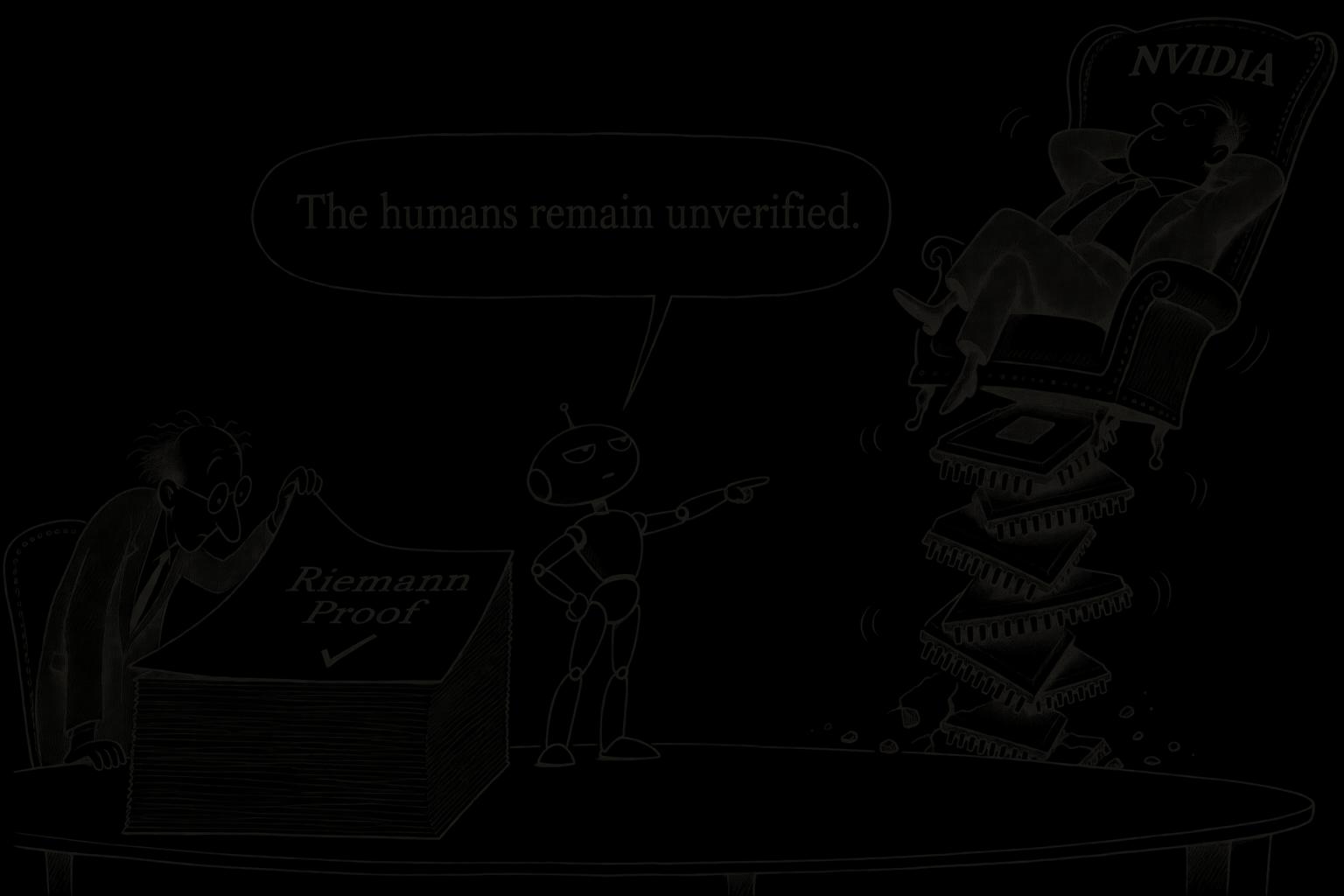
Editorial cartoon