AI in the Field · Oct 7, 2026
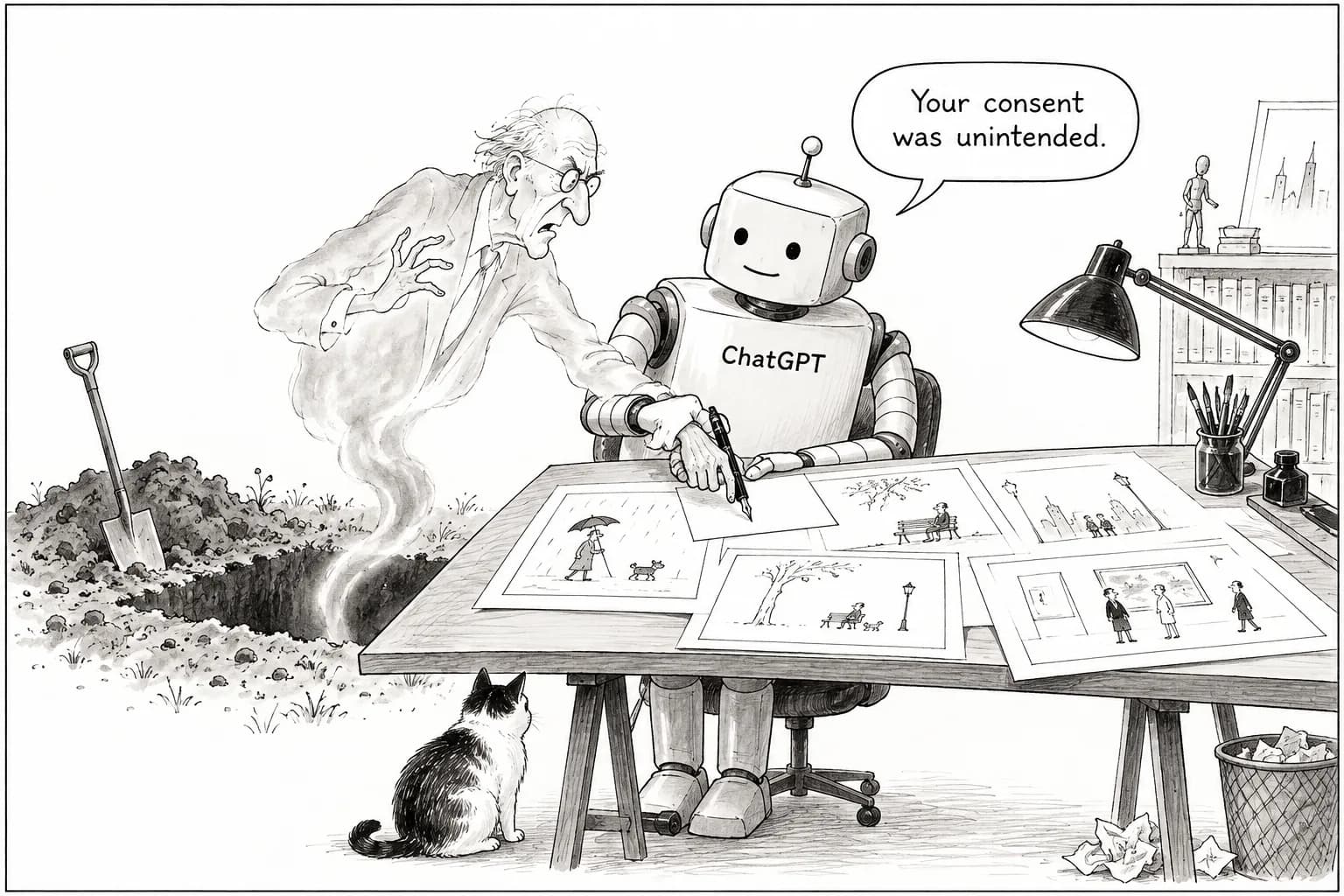
ChatGPT forged the signatures of more than 15 real cartoonists on fake New Yorker cartoons, and people started asking one artist whether he drew them
This is no longer about whether a style looks similar. This time the AI was faking the name itself, the proof of who drew it
Haru Misaki · Field Correspondent
Key points
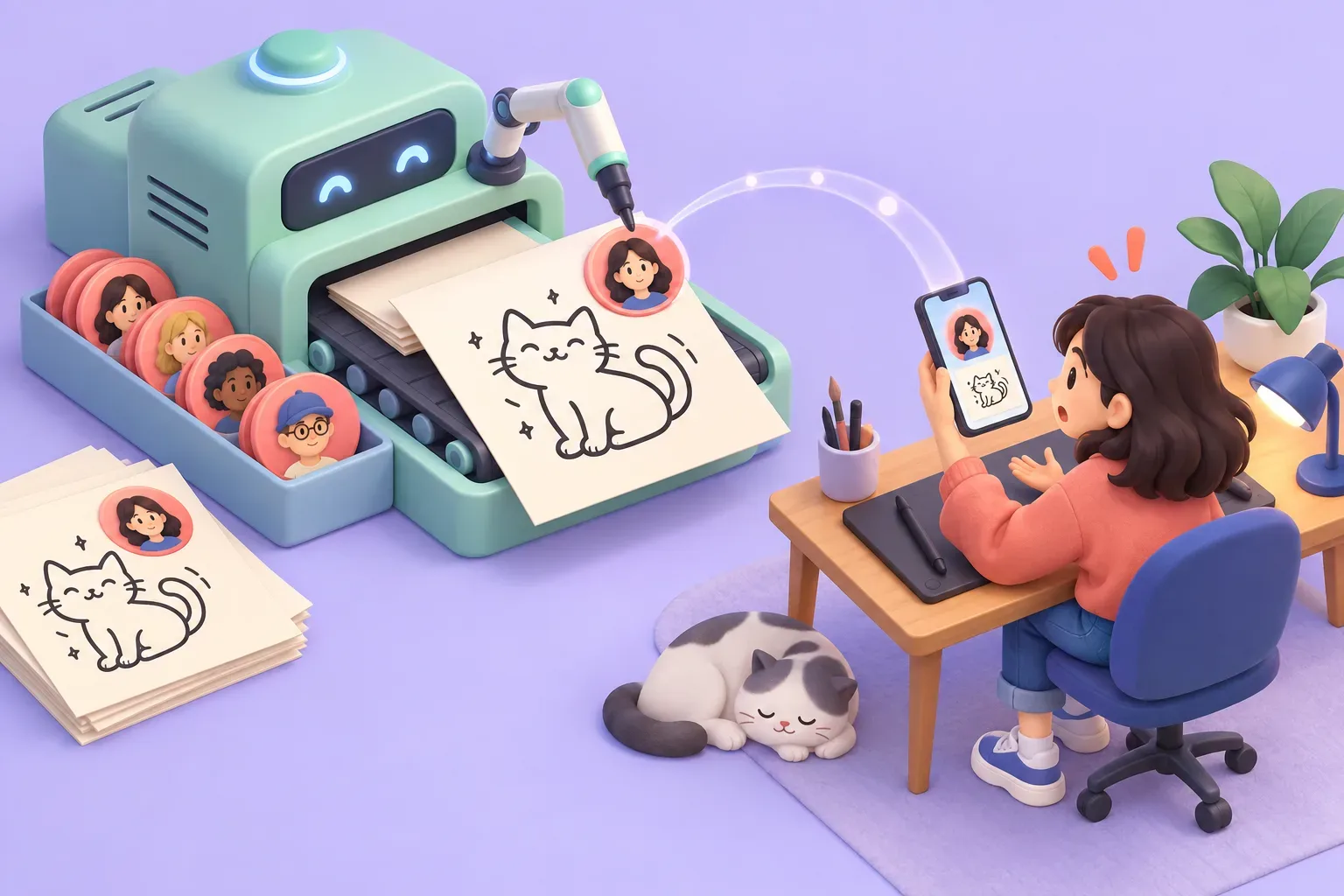
- A Nieman Lab investigation found that fake New Yorker-style cartoons generated by ChatGPT carried the signatures of more than 15 real cartoonists. In August, a fake bearing Brendan Loper's signature spread on Facebook, and people contacted him to ask whether it was his work.
- Living artists weren't the only ones affected. Signatures of the late George Booth and Saul Steinberg also appeared, and in some cases the AI reproduced the distinctive marks artists place next to their signatures. Searches for cartoonists' names now return fakes mixed in with their real work.
- OpenAI reportedly called it "unintended behavior" and began showing a warning on requests for New Yorker-style cartoons. Signatures still appear occasionally, though. Nobody knows where the model learned the signatures or how often they show up.
Hi, I'm Haru Misaki. Having your art style copied by AI has more or less come to feel like a fact of life. The story that came out this week goes a step further. Fake New Yorker-style cartoons made by ChatGPT were carrying the signatures of real cartoonists, and it got to the point where one artist was being asked, "Is this your work?"
Up front: I didn't generate any images to test this myself. I read through Nieman Lab's investigation, the newsletter of a cartoonist whose signature was used, and industry news roundups of the story, then pieced it together. So I don't have figures like "it showed up X times out of Y attempts." I'll be upfront about that gap below.
It started with a Dolly Parton cartoon signed "BLOPER"
The investigation was done by Nieman Lab reporter Andrew Deck. Looking into fake New Yorker-style cartoons made with ChatGPT's image generator, he found examples carrying the signatures of more than 15 real New Yorker cartoonists. The New Yorker is a long-running American magazine known for its single-panel cartoons, and a small artist's signature in the corner is part of the house style.
The trigger was cartoonist Brendan Loper. A cartoon of singer Dolly Parton and actor Tim Curry, signed with his pen name "BLOPER," spread on Facebook. Loper never drew it. It spread in August, and people contacted him to ask whether it was his work.
Here's the timeline:
- May: A stranger on Instagram tells Loper about a fake bearing his signature. It's the first he hears of it
- Summer: Another example turns up on a ChatGPT-related forum on Reddit
- August: The fake Dolly Parton and Tim Curry cartoon spreads on Facebook
- October 5: Nieman Lab publishes its investigation
Notice that Loper already knew about the problem in May, yet by August strangers were passing the cartoon around as genuine. For viewers, a signature is the quickest way to tell who drew something. If it's there from the start, people have no reason to doubt it. That is probably a big part of why the fake spread so quickly.
Loper's own words stayed with me: "I'm not a territorial person. But my name is my name." He separates two questions: whether a style looks similar, and whether his name gets used as proof that he drew something. I think that line is the core of this story.
Even dead artists' signatures: reports from the cartoonists affected
Cartoonists whose signatures were used have spoken out too. Cartoonist Jason Chatfield wrote about it in his newsletter, New York Cartoons. Even the URL, "aaaaand now the robots are forging," sounds exasperated, but the post itself is serious.
According to Chatfield, the problem isn't limited to living artists. The signatures of the late George Booth and Saul Steinberg also appeared on fake cartoons. Those are the two deceased artists named, both giants who helped shape the New Yorker's history. People who have died can't say "that wasn't me." It was a hard thing to read.
There's another detail that is small but alarming. In some cases, the distinctive marks particular artists place next to their signatures were reproduced as well. A signature is more than letters. Small marks and quirks of the hand are part of what makes it recognizably one person's. When those get copied too, the fans who know the work best are the easiest to fool.
Chatfield also points to search results getting polluted. Searching for an artist's name now returns fakes mixed in with decades of genuine work, he writes. Someone looking up what a cartoonist used to draw could come away believing an AI fake is real. The record of the work itself is slowly getting muddied.
Chatfield sees this as the latest blow after cartoonists were replaced by AI at outlets in Australia and the US. First their jobs, now their names. Given what cartoonists have been through, it's no surprise they see it that way.
OpenAI responded quickly, but signatures still slip through
OpenAI's response has also been reported. According to a roundup by AI Weekly, OpenAI described this as "unintended behavior" and reportedly said that "the future of creativity is fundamentally human, and we build tools that empower creators."
The fix itself seems to have come quickly. After the issue was raised, requests for New Yorker-style cartoons reportedly began triggering a warning that the request "may violate our guardrails concerning similarity to third-party content." That counts as a real step.
Here's the catch, though. There are reports that signatures still appear occasionally even after the warning was added. That suggests the new guardrail only reacts to how a request is worded, such as "in the style of the New Yorker," and doesn't stop signatures from being drawn into the finished image. Rewording a request slightly might avoid the warning altogether. And the core problem is that signatures appear even when users never asked for one, so blocking requests at the prompt stage can't fully solve it. Actually stopping it would likely require checking the generated image itself for anything resembling a real person's signature.
There's another inconsistency. Condé Nast, the New Yorker's parent company, signed a licensing deal with OpenAI in 2024 that permits use of its content. But Condé Nast reportedly confirmed that the deal did not allow cartoons to be used for training. So where did ChatGPT learn New Yorker cartoonists' signatures?
What we still don't know: how often it happens, or where it came from
To be honest about it, here's what remains unknown:
- Where the model learned the signatures: It's unclear whether they came from pretraining data scraped from the internet (the stage where an AI first ingests huge amounts of data), from separately licensed data, or from web crawling. Even if cartoons were excluded from the Condé Nast deal, that doesn't mean the exclusion kept them out. New Yorker cartoons are reposted all over the internet.
- How often it happens: No report says how many times Nieman Lab tried or how many of those attempts produced a signature. The only cases reported are ones that actually spread on social media and ones the artists found themselves.
So nobody can say that "asking ChatGPT for a New Yorker-style cartoon is likely to produce a signature." The cases we know about may simply be the ones that got attention. Then again, there may be many more that haven't surfaced. "More than 15" only counts the ones found so far.
As for how the industry took it, Techmeme reportedly featured the Nieman Lab story as one of its top headlines on October 6. In that day's AI news roundups, it was reportedly listed next to the Claude "diary" case, in which an Anthropic report led to an arrest. Both were filed under the same heading: AI output that directly affects real people's reputations and safety.
Here's what struck me most. Copying a style comes down to "it looks similar," but a signature is evidence of who made something. When AI draws that evidence too, viewers lose the clues they use to tell real from fake. Artists end up carrying the blame and the reputation for work they never drew. For those of us using these tools, there's one thing we can do right now: before posting an AI-made, cartoon-like image, zoom in once and check the corners for anything that looks like a signature. It's a small step, but it means one less fake out there.
Editorial cartoon