Rules & Policy · Oct 30, 2026
Meta's new terms reportedly take effect, putting liability for AI errors on customers
Meta's new commercial terms reportedly took effect on October 30. Under them, business customers bear the cost of errors even from AI features that Meta switched on by default. The CLAIM Act in the U.S. House, which would hold developers liable, is still only a draft, so contracts are starting to decide who pays for AI errors before the law does
Koji Yamamoto · Economics Analyst
Key points
- Meta's new commercial terms reportedly took effect on October 30. Business customers are liable for errors by AI features such as Advantage+, even when Meta switched those features on by default
- Advertisers are pulling ads whose look AI "enhanced" without being asked. Meta says advertisers can turn the features off one by one, but the features stay on by default while liability moves to the customer
- Rep. Trahan's draft CLAIM Act would let people sue over harm caused by AI agents, but it reportedly has not been introduced yet. Before any law arrives, major platforms are using their terms of service to decide who is responsible
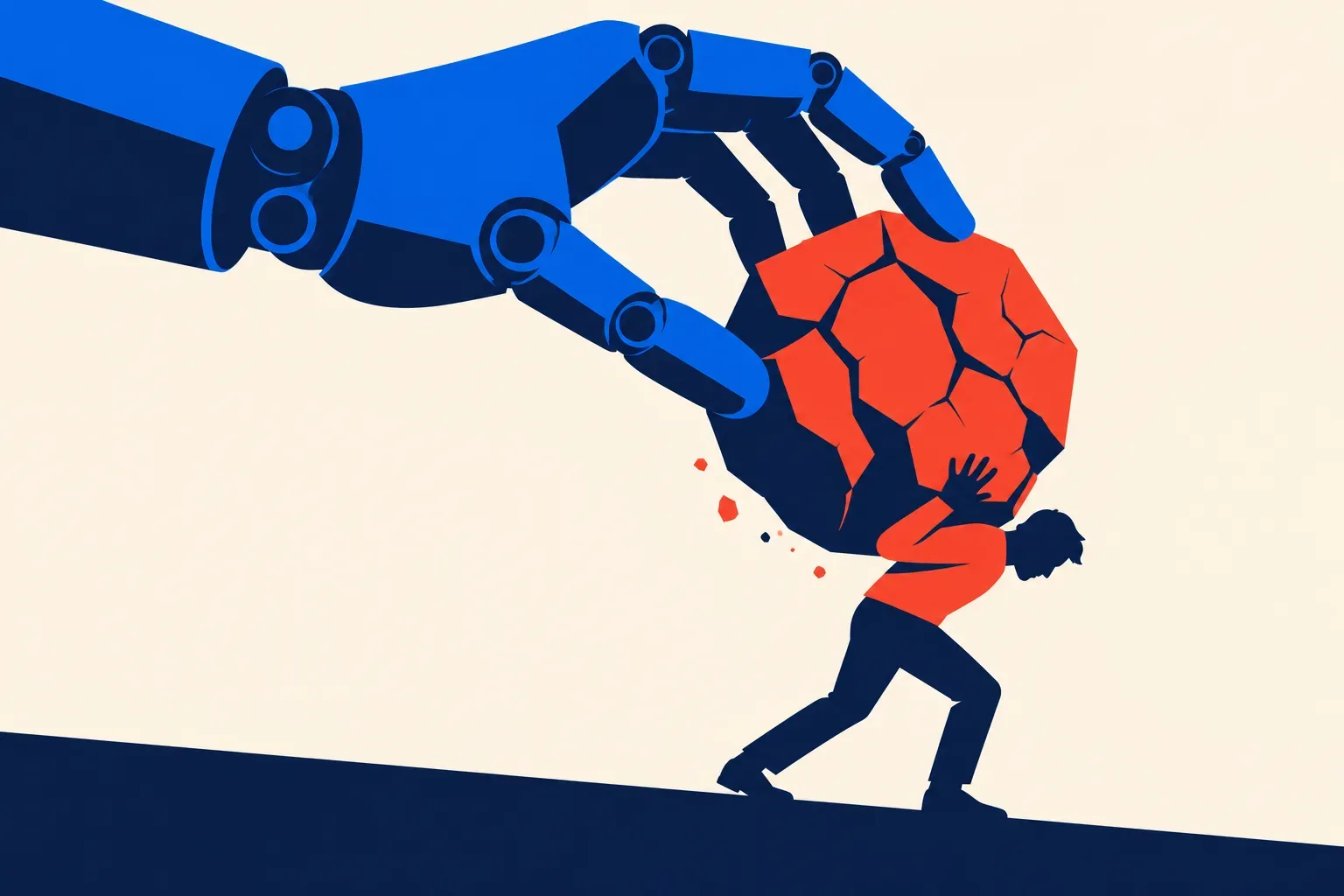
When AI gets something wrong, who pays for the loss? The first answer has come from terms of service, not from Congress. Meta's new commercial terms for business customers took effect on October 30, according to reports. Under them, business customers carry all the risk, including errors caused by AI features that Meta itself turned on by default. In the U.S. House, meanwhile, a bill that would hold AI developers liable is still a draft. Contracts are deciding the split of responsibility before the law does.
This article is based on news reports and law firm commentary. We have not verified the original text of the terms, so the exact wording of the provisions and the effective date need to be checked against the source. Our earlier coverage gave the effective date as November 20, so accounts of the date conflict.
What the new terms reportedly change
Law firm Shumaker sums up the change in the title of its analysis: "Meta gets all the data, enterprise customers get all the liability." Shumaker, Relevant Audience and Jolt Journal report three main points.
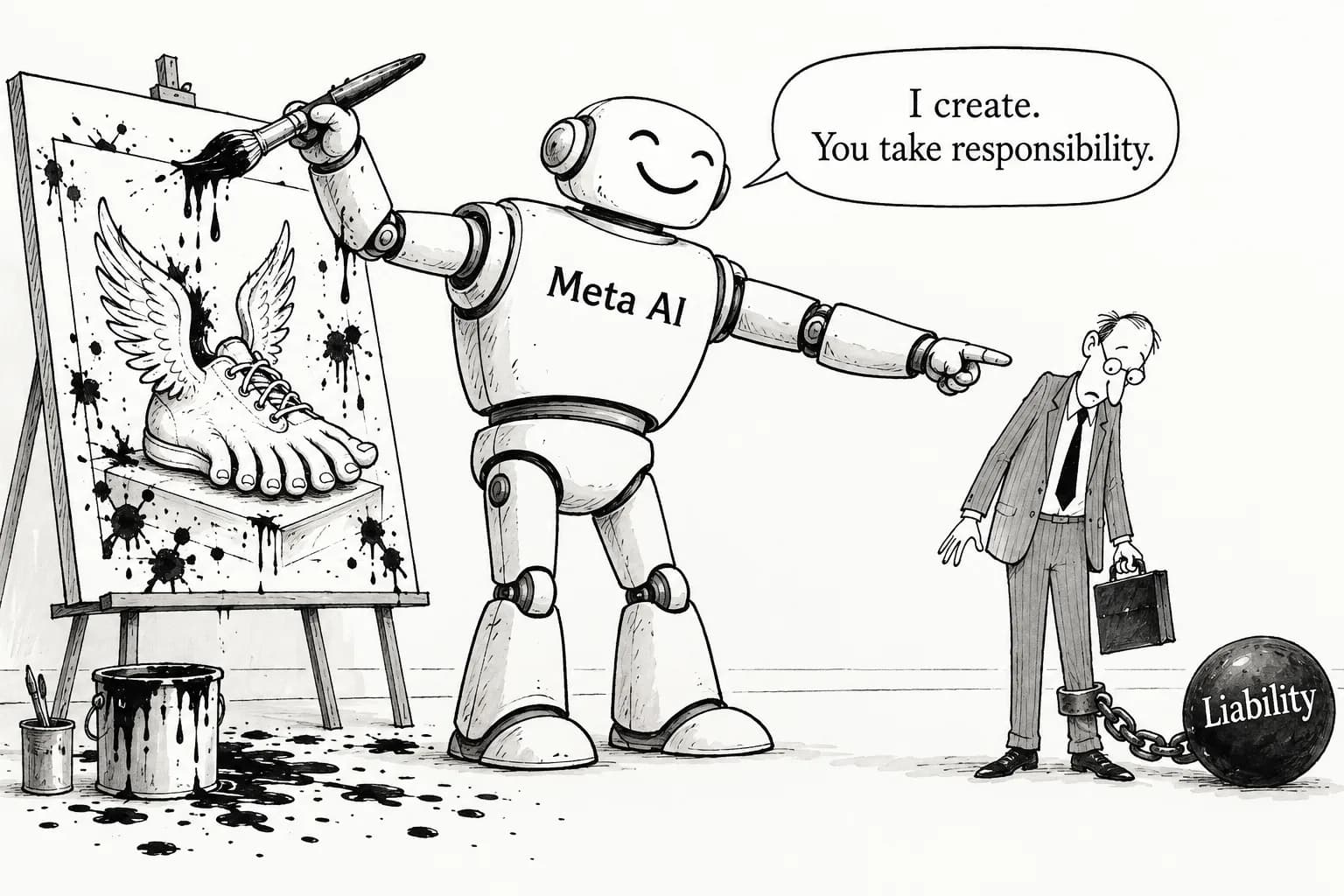
First, customers are responsible for what AI features produce. If AI writes or alters ad copy or images and the result misleads, infringes rights or breaks regulations, the advertiser is liable, according to the reports.
Second, this covers features that Meta turned on by default. It reportedly applies not only to features advertisers chose themselves but also to enhancement and generation features that Meta enabled by default.
Third, the data provisions lean the other way. Shumaker says rights over data have been tilted toward Meta. Meta captures the value of the data while customers bear the risk of the output. This imbalance is the central issue.
"Unrequested enhancements" show the risk in practice
This risk is already real. According to Adweek, Meta's Advantage+ AI enhancements changed how ads looked in ways advertisers did not intend, and advertisers have been pulling ads that received these unrequested "glow-ups." If a product looks different from the real thing, that can lead to problems under advertising rules or disputes with consumers. Meta's tool applied the enhancement, but under the new terms the advertiser is liable.
Ryan Adams, who handles search and social advertising at Exverus, said:
Meta puts the responsibility squarely on the advertiser, even when Meta's own tools applied the enhancements.
The problem is that the people who design the features are not the people who carry the liability. Kayla Loecker, who leads programmatic advertising operations at AdCellerant, called the combination of default-on features and liability shifted to advertisers an operational risk.
By switching these AI features on by default and shifting 100% of the legal liability onto the advertiser, Meta creates huge operational risks.
A Meta spokesperson said advertisers have a way to turn the features off.
Advertisers can turn off individual Advantage+ features in Ads Manager at any time.
In Meta's view, since the features can be turned off, advertisers who leave them on should accept the results. But defaults strongly shape what users do. In agent-design terms, the platform decides what is allowed by default at the harness-engineering stage. For advertisers running hundreds or thousands of ads, simply checking each feature and turning it off one by one takes real work. Meta controls the design, while customers carry both the work of checking and the liability. The new terms make that arrangement official after the fact.
Why contracts are moving ahead of the law
Contracts move first because of a gap in bargaining power. For many companies, Meta's ads are a sales channel with few substitutes. Even if they dislike the terms, walking away from advertising is not realistic. David Dweck, president of Go Fish Digital, put the imbalance plainly.
Meta knows that they've got advertisers a bit over a barrel here.
Standard terms are not negotiated. They are imposed by one side. As long as the law does not settle how liability is split, clauses written by the stronger party become industry practice. When a platform of Meta's size writes that customers are responsible for AI output, other platforms and SaaS providers have a reason to do the same.
This goes beyond ad enhancements. As agents increasingly send messages, place orders and push code to production, the losses grow when the party that sets the defaults is not the party that bears the consequences. If an agent built in as an AI coworker acts in a customer's name, the terms make the customer responsible for its actions first.
The CLAIM Act in Congress is still a draft
Congress has a push in the other direction. According to CFO Dive, Rep. Lori Trahan, a Massachusetts Democrat, released a draft of the CLAIM Act to clarify liability rules for harm caused by AI agents. The aim is to let developers be held liable for negligence. Trahan said:
When someone breaks the law and hurts you, you can take them to court. That shouldn't change just because the wrongdoer is an AI agent.
Her argument is that people who are harmed should still be able to sue, even when the wrongdoer is an AI. But the bill is only a draft, and there is no clear path to formal introduction or passage. With the midterm elections on November 3, little time is left on the congressional calendar.
The timing gap is wide. The draft was released on October 7, and the terms reportedly took effect on October 30. While the bill is being debated, the terms are already applying to millions of advertisers. Even if a law passes, whether it can stop companies from shifting liability through business-to-business contracts will depend on how it is written. The next question is how to reconcile consumer-protection provisions with liability waivers in standard business terms.
What it means for business customers
For now, business customers have only two ways to protect themselves: operations and contracts. On the operations side, they need to take stock of the AI features that platforms turn on by default and have a process for explicitly switching off the ones they don't use. For the party carrying the liability, a review step before output goes public and records that show which feature produced which output (Agent Observability) also become essential. If a customer cannot explain the cause of a problem through AI forensics, the terms make everything the customer's fault.
On the contract side, the test is how far large customers can push for changes to the clauses. Meta is sticking to its position that the features can be turned off. Fixing the imbalance between defaults and liability will take either regulators stepping in or large advertisers negotiating together. How UK and EU authorities will treat the terms is also still unclear.
Liability for AI errors is being decided first by a single line in the terms of service, not by technology or ethics debates. Will the law ratify that or overturn it? The fate of the CLAIM Act and the reaction of regulators around the world are the next things to watch.
Editorial cartoon
Sources
- https://www.adweek.com/media/advertisers-pull-meta-ads-that-had-unwanted-ai-glow-ups/
- https://www.shumaker.com/insight/metas-new-commercial-terms-meta-gets-all-the-data-enterprise-customers-get-all-the-liability/
- https://www.relevantaudience.com/meta/meta-commercial-terms-ai-features-advertiser-liability-october-30/
- https://www.joltjournal.com/business/meta-business-terms-ai-liability/
- https://www.cfodive.com/news/house-proposal-clarify-liability-rules-ai-agents/832433/