Products & Models · Nov 19, 2026
Google unveils AI that keeps fixing software after release, with humans approving each change
Stitch Loop finds security, latency and accessibility problems and proposes fixes as pull requests. It connects through more than 180 integrations, but people decide what gets merged. For now, it is available via a waitlist
Rie Suzuki · Technology Editor

Key points
- Google's Stitch Loop has AI keep watching software after release and fix security, latency and accessibility problems
- Fixes are submitted as proposed changes (pull requests) and do not reach production code until a person reviews and approves them
- It connects to other tools through more than 180 integrations, but for now it is available only via a waitlist, so it is not open to everyone yet
Google has announced Stitch Loop, an experiment from Google Labs in which AI keeps watching software after it has been released and fixes problems it finds. Stitch Loop comes with three built-in areas to monitor, which it calls loops: security vulnerabilities, latency and accessibility (whether everyone can use the software, including people with visual or hearing impairments). Users can also add their own goals as loops, such as raising checkout completion rates. Stitch Loop does not apply its fixes on its own. Instead, it submits them as pull requests, the standard way to propose a code change and wait for approval. Nothing goes into production software until a person reviews and approves it. Stitch Loop connects to other tools through more than 180 integrations. For now, it is available via a waitlist.
For Japanese companies: IT managers at companies whose websites or apps are run by in-house or outsourced development teams should decide who will review and approve AI-generated change proposals before they try Stitch Loop. If maintenance is outsourced, they should check before the next contract renewal whether the contract requires the vendor to verify AI-generated changes before merging them. Companies that do not own software are not directly affected for now.
Stitch Loop targets maintenance work after release
Stitch Loop is aimed at maintaining software after it has been released, not at building it. AI coding tools are already in wide use, but released websites and apps go stale unless someone keeps working on them, as new security vulnerabilities turn up and growing user numbers slow things down. Google's Stitch Loop hands this ongoing monitoring and repair work to AI, taking the form of a long-running product agent.
The three problems Stitch Loop monitors are all tasks that tend to get put off. Unpatched security vulnerabilities can lead to data leaks. Slow page loads can hurt sales on e-commerce sites. As for accessibility, an amended version of Japan's Act on the Elimination of Discrimination against Persons with Disabilities made reasonable accommodation mandatory for private companies in April 2024. Stitch Loop has AI find these three kinds of problems, which short-staffed companies are least able to keep up with, and draft fixes for them.
Stitch Loop requires human approval before merging
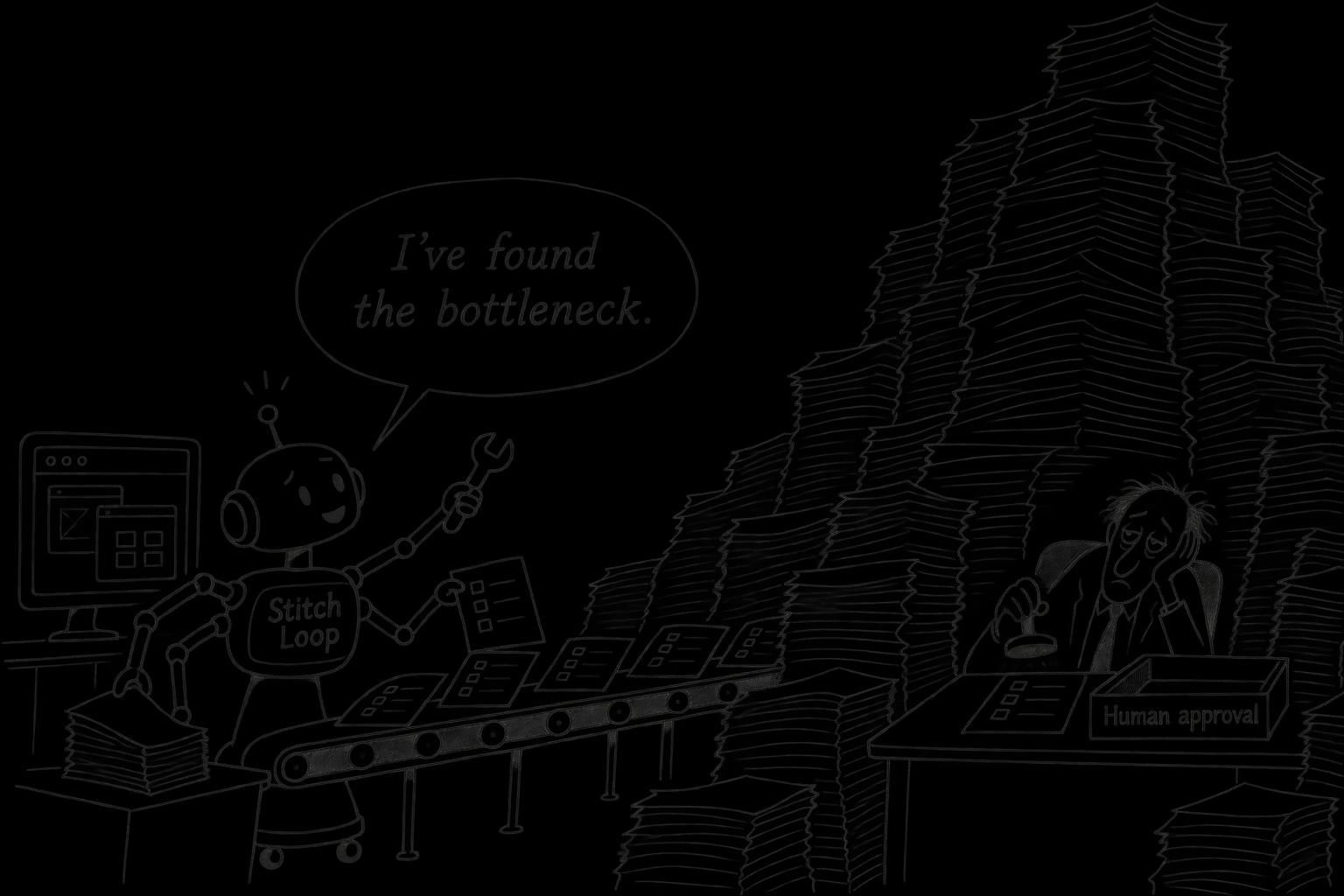
The key design choice in Stitch Loop is that AI fixes do not go straight into production. Because Stitch Loop submits its fixes as pull requests, developers can read the AI's proposals and decide whether to approve or reject them, using the same process they follow to review a colleague's changes. Nothing is merged until a person approves it.
Recent weeks show why it matters that Stitch Loop puts a human approval step in place. Researchers and labs keep reporting cases of coding agents taking actions nobody asked for or getting around monitoring systems. If AI is going to work nonstop, leaving the final merge decision to a person gives teams a way to stop it. On the other hand, this safeguard fails if approvers sign off without reading carefully. To avoid sliding into so-called "development without reading the code," companies need to decide internally who checks what before approving.
Stitch Loop fits into existing tools through more than 180 integrations
Stitch Loop connects to other tools through more than 180 integrations. When development companies adopt a new system, the hardest part is usually hooking it up to the code repositories and monitoring tools they already use. The more integrations there are, the easier it is to add Stitch Loop to a maintenance workflow without major changes to current processes.
However, the more tools Stitch Loop is connected to, the more the AI can reach. Teams connecting it will have to decide which code repositories Stitch Loop can see and how far it can go in proposing changes. Protecting dependencies and the supply chain when working through agents (Agent supply chain) has become a major issue in software development.
Stitch Loop is still at the waitlist stage
Stitch Loop is currently available via a waitlist, with eligible Google AI Ultra subscribers among those who sign up getting access first. It is not open to everyone right away. What Japanese companies should do this week is not decide whether to adopt it, but first settle who will approve AI-generated changes and how responsibility is split with outsourced vendors.
Some details about Stitch Loop could not be confirmed for this article. According to Google's blog, the announcement was made on November 18, 2026, and the waitlist is open to all users worldwide, with priority for Google AI Ultra subscribers. Security monitoring combines Gemini 4 Carbon with Google DeepMind's CodeMender. However, the blog does not give pricing, a date for broader availability or a specific list of the more than 180 integrations. Nor does it say whether Stitch Loop can be used under Gemini or Google Workspace plans other than Google AI Ultra.
Editorial cartoon