Infrastructure & Security · Nov 20, 2026
Alibaba's AI cloud revenue jumps 53%, but heavy capex pushes free cash flow negative
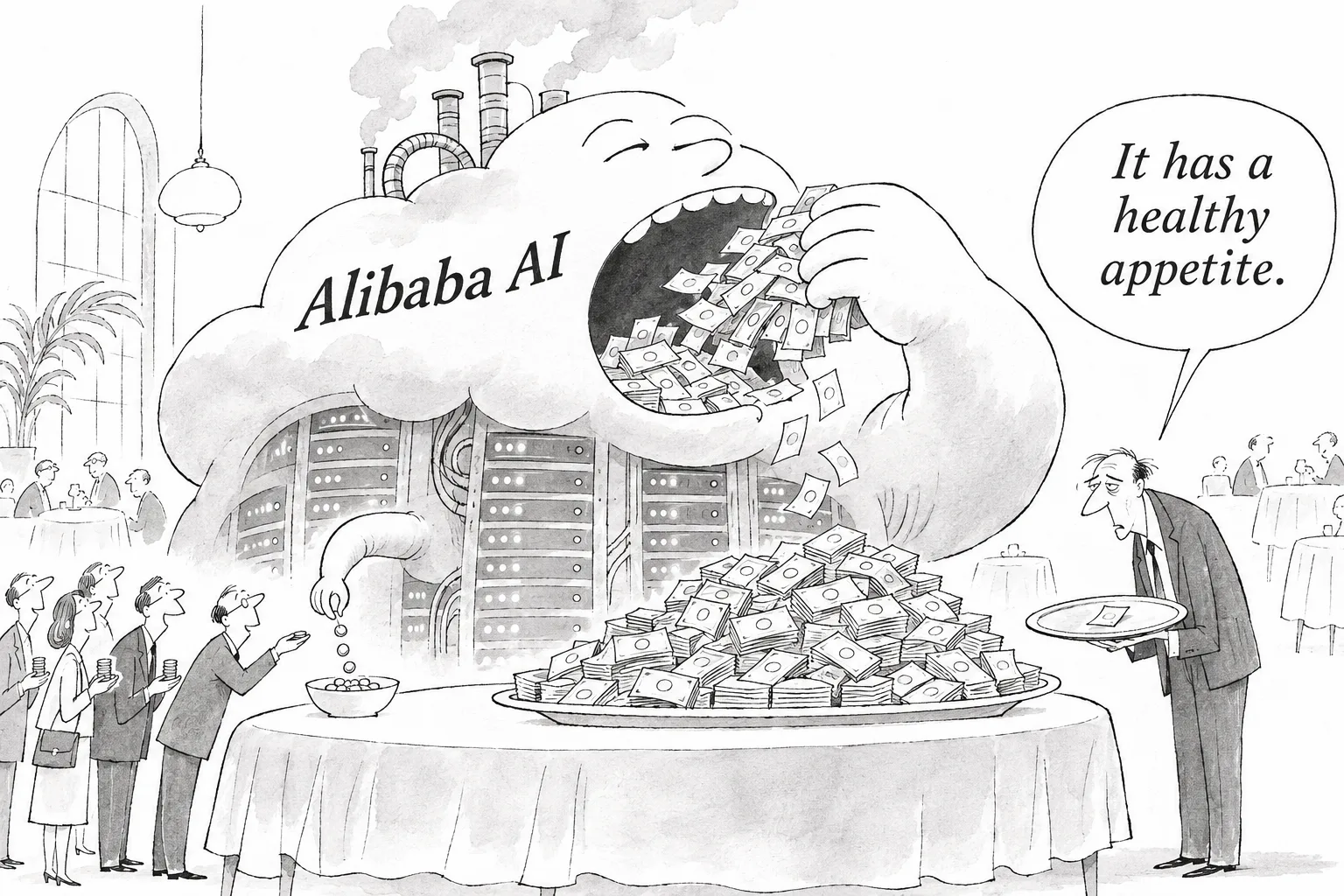
Revenue from outside customers rose 64%, so the demand is real. But capital spending climbed 60% to 50.5 billion yuan, and free cash flow came in at negative 34.5 billion yuan
Seiichi Tanaka · Editor-in-Chief
Key points
- Alibaba's AI cloud revenue rose 53% in the July–September quarter, and revenue from outside customers rose 64%, so outside demand drove the growth rather than business between Alibaba's own units
- Capital expenditure rose 60% to 50.5 billion yuan, and free cash flow was negative 34.5 billion yuan
- Japanese companies that use Alibaba Cloud or Qwen should not budget on the assumption that today's low prices will last, and should check the terms of their contracts
Revenue at Alibaba's AI cloud division rose 53% in the July–September quarter from a year earlier. Revenue from outside customers grew faster, by 64%. Over the same period, Alibaba raised capital spending on data centers and AI computing hardware by 60% to 50.5 billion yuan. As a result, free cash flow (cash generated by the core business minus capital spending) was negative 34.5 billion yuan. The figures come from reports on Alibaba's July–September results. More customers really do want AI cloud services, but Alibaba is paying more for the equipment behind that growth than it is taking in.
For Japanese companies: Most companies are not directly affected. IT and procurement teams at companies that use Alibaba Cloud, or the API for Qwen, Alibaba's AI model (available in the Tokyo region), should check their contracts and the pricing pages before their next renewal to see how long current prices and discounts are guaranteed.
Outside customers drove the growth in Alibaba's AI cloud
Alibaba's AI cloud revenue grew 53% in the July–September quarter. The key detail is that revenue from outside customers grew 64%, faster than the total. Cloud revenue includes payments from Alibaba's own businesses, such as its e-commerce operations. Because outside revenue grew faster than the total, the growth did not come from business between Alibaba's own units. Other companies are spending their own money to buy more AI cloud capacity.
Alibaba's promotion of its own AI models also feeds demand for its cloud. On November 16, the company released Qwen4-Max, a large model, to general customers. It costs $1.50 per million input tokens and $4.50 per million output tokens, less than what major U.S. providers charge. The plan is to win customers with low prices and have them run the models on Alibaba's cloud.
Alibaba's capex reached 50.5 billion yuan, and free cash flow was negative 34.5 billion yuan
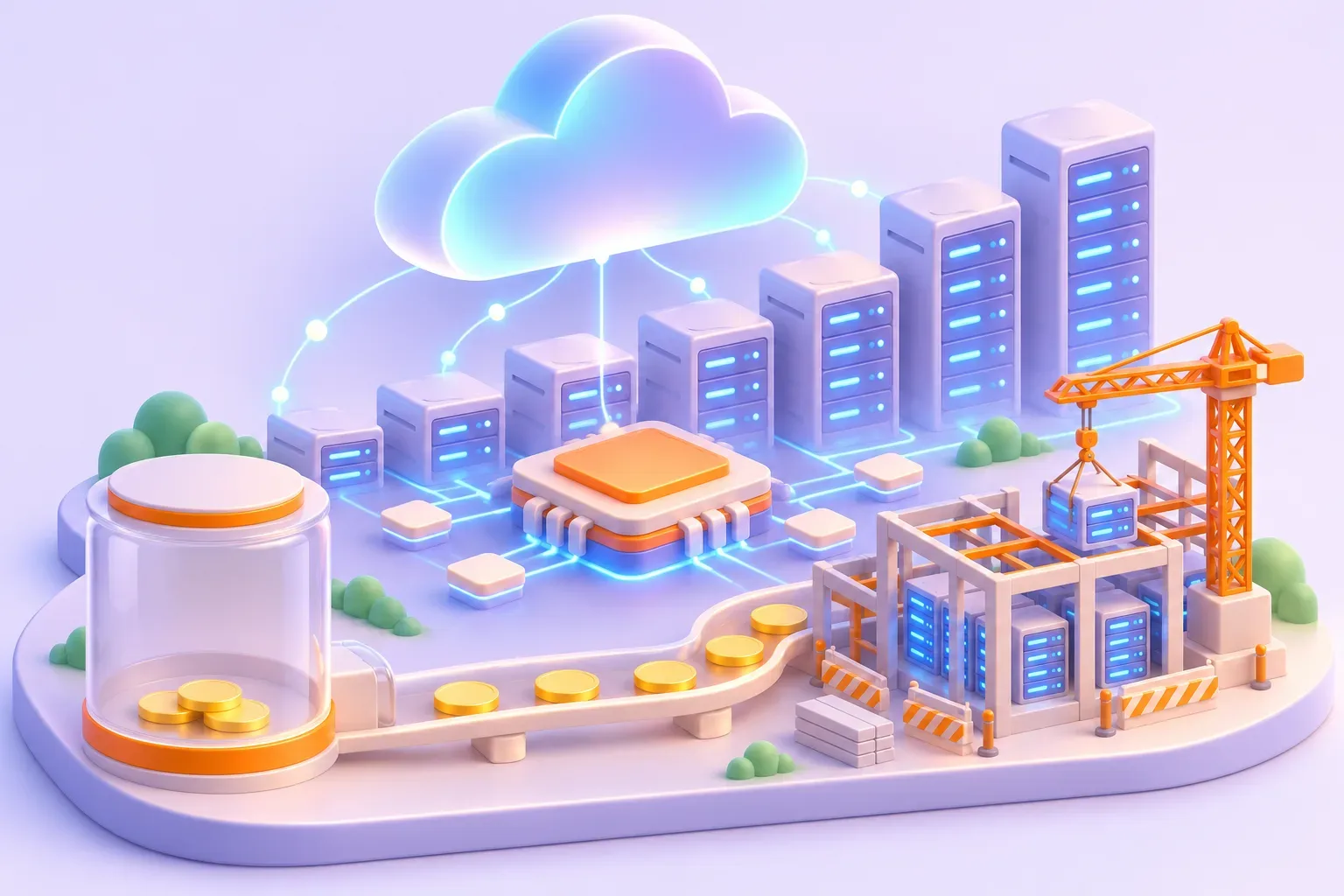
In the July–September quarter, Alibaba raised capital expenditure by 60% from a year earlier to 50.5 billion yuan. To grow AI cloud revenue, a provider has to build the computing hardware and data centers that run the models first. Those costs are rising faster than revenue.
As a result, Alibaba's free cash flow was negative 34.5 billion yuan. Free cash flow roughly measures the money a company has left for dividends, paying down debt or new investment. A deficit this large means cash from the core business is not enough to pay for the AI build-out, so the company has to make up the gap, for example by drawing on its cash reserves.
In AI cloud, the faster a business grows, the more cash it spends up front
Alibaba's results show that in AI cloud, the faster revenue grows, the more cash goes out first. Alibaba is not overbuilding without demand. The 64% growth from outside customers shows the demand is real. Even so, the order cannot change: the hardware has to be bought first, and the revenue comes in gradually afterward.
Alibaba is not the only company in this position. SpaceX's AI division reportedly spent $16.4 billion on AI infrastructure in the July–September quarter, against revenue of $7.56 billion. Every company selling AI cloud services is now paying cash up front to capture growth.
For customers, this means today's low prices depend partly on providers losing money. It is not yet clear how long Alibaba will keep its current prices, or whether it will change prices or service terms once it slows its spending.
What this article does not cover
Of Alibaba's July–September results, this article covers three items: AI cloud revenue growth, capital expenditure and free cash flow. It does not cover the cloud division's revenue in absolute terms, its profit margins, Alibaba's total revenue, future capex plans, or whether the company has enough AI chips. It also does not cover how investors reacted or how the stock moved, because there was no verified information on those points.
Editorial cartoon