AI in the Field · Nov 21, 2026
AI turns hardware reverse engineering from a years-long job into a weekend project
A blogger with 20 years of hacking experience has published a toolkit that hands reverse-engineering work to AI, and used it over six months to rework music gear, cameras and a printer driver. People with no prior experience are reporting successes too, but others say AI refused to help, and legal questions are surfacing
Haru Misaki · Field Correspondent
Watch the video
Key points
- ioma8, who has 20 years of hacking experience, had AI operate Ghidra and combined three Agent Skills (bundles of instructions and tools). Over six months, ioma8 finished a run of projects covering cameras, synthesizers and a printer driver. The blogger says each one would once have taken years
- On Hacker News, commenters followed up with their own results, including people with no experience. One said they analyzed a security camera plugin in about 2 hours. Another said they spent a weekend getting 14 lights controllable from one place
- Problems came up too: AI guesswork and errors, and AI refusing tasks that involve authentication. Commenters also objected that unlocking paid apps is theft, and pointed to patent and copyright risks
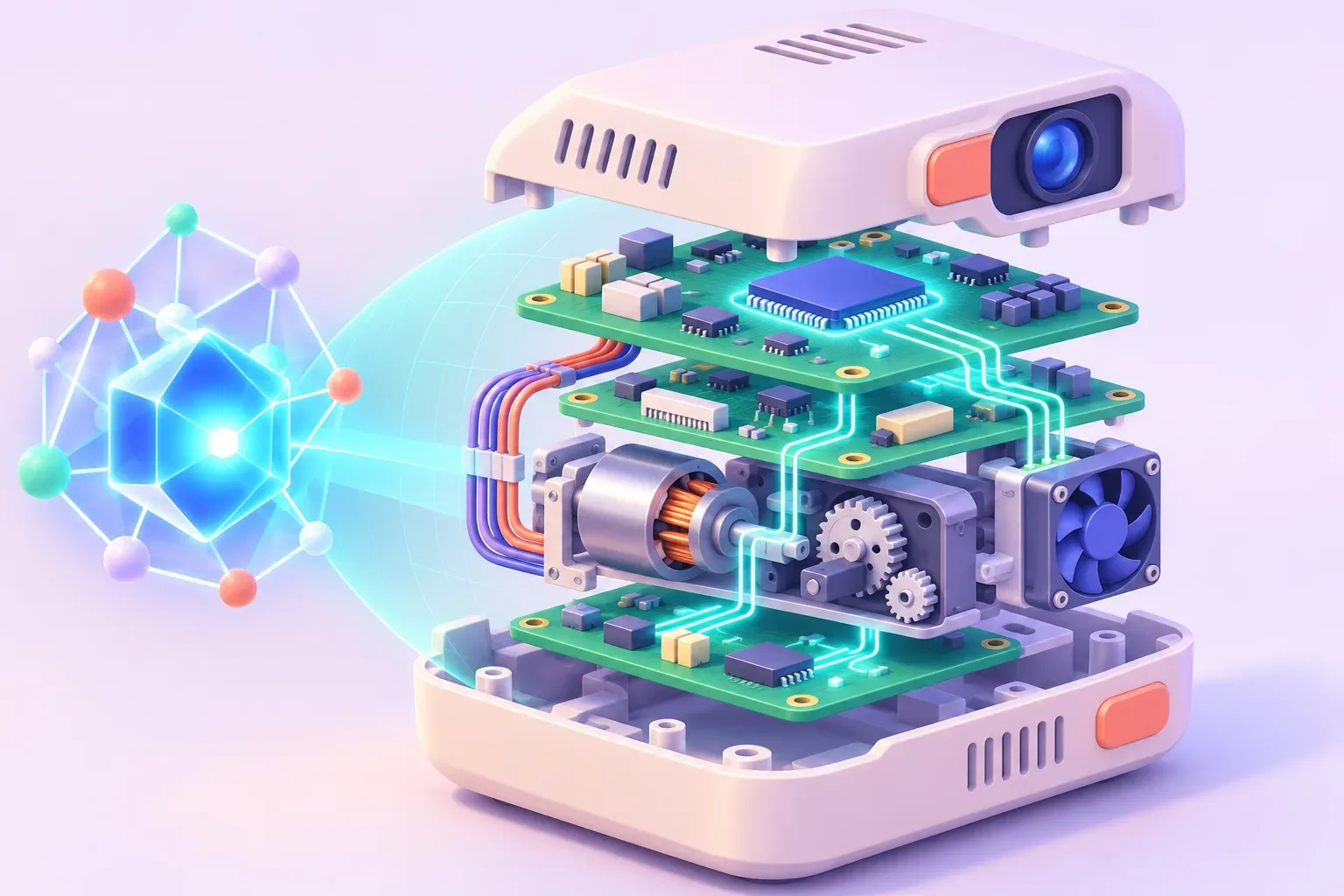
Reverse engineering, the work of figuring out how black-box hardware and software operate inside, has become far more accessible over the past six months. ioma8, a blogger with 20 years of hacking experience, used AI agents to help with the analysis and finished a string of projects in six months. These included turning a Sony camera into a wireless webcam and installing custom firmware, the base software that runs inside a device, on synthesizers. According to ioma8, each of these jobs would once have taken "years."
What it means for Japanese companies: For most companies, this doesn't matter yet. It does matter for equipment managers and IT staff at manufacturers and retailers who still run measuring instruments, commercial printers or old business software that the maker no longer supports. Fixing these systems in-house is now a real option. Before trying it, check with your legal team that the license for the equipment or software doesn't prohibit analysis. A good time to do this is your next maintenance contract review.
ioma8, a hacker of 20 years, publishes a toolkit that hands analysis to AI
On November 18, 2026, ioma8 published the full toolkit for AI-assisted analysis on the blog slowchronicle.com. At its core are "DeepSeek Harness" and "DeepSeek v4.1 Flash," a lightweight model from China's DeepSeek. A harness is the layer around an AI model that manages task loops, permitted tools and memory. ioma8 says they also use OpenAI's Codex from time to time.
The notable part of ioma8's approach is that the AI operates the analysis software directly. The agent connects through MCP to Ghidra, a free tool that turns machine instructions back into human-readable code, and also uses radare2, another free analysis tool. Work that once meant a person staring at a screen and clicking for hours is now run by the AI.
The volume of work ioma8 finished in six months is striking. ioma8 modified the AlphaSmart NEO, a small device built only for typing text. ioma8 decoded the communications of the EmWave, a device that gauges emotional state from heart rhythm, and of two Sony camera models, which made it possible to use the α7 III as a wireless webcam. ioma8 also built custom firmware for the Arturia MiniFreak, Teenage Engineering OP-Z and Akai MPC Sample music gear and for the Xteink X4 device. On top of that, ioma8 fixed an HP printer driver for macOS and built their own Evernote client and a Photoshop-like image editor.
ioma8's post also took off on Hacker News, a forum popular with engineers, where it collected 315 points and 82 comments. What impressed Haru most was not any single project but the broader shift. Work that once took a specialist years per project can now be done several times over by one person as a hobby.
Three Agent Skills check the AI's guesses one by one
ioma8 runs the analysis with three Agent Skills, which are bundles of instructions and tools that the AI loads only when needed. The first, grill-me, was published by another developer, Matt Pocock. Before any work starts, the AI questions the human to pin down what they want to do. It asks no more than five questions, one at a time. The point is to make the goal clear before the work begins.
ioma8's own Ghidra skill includes 22 Ghidra scripts, small programs that make Ghidra carry out set tasks automatically. The idea is to give the AI common decompilation steps (turning machine instructions back into human-readable code) as tools it can call at any time. Since the AI doesn't have to work everything out from scratch each time, the results probably vary less.
ioma8's hypothesis-testing skill is the most methodical of the three, and Haru's favorite. The AI lists hypotheses in a CSV file, such as "this traffic is probably the authentication exchange" or "this byte is probably the volume," and then tests each one. The AI writes up what it finds in Markdown, so a record that can be reviewed later builds up as the work goes on.
Together, ioma8's three skills work much like giving a talented but hasty new hire these instructions: "List everything you think of, check each item one by one, then write a report." AI tends to make plausible-sounding guesses, and this setup keeps that in check by design. The same approach would work beyond reverse engineering, such as when a company has AI do research.
Newcomers report weekend successes on Hacker News
Through November 19, 2026, Hacker News readers of ioma8's post posted the results of their own attempts. Some reports came from people with no reverse-engineering experience. All of these claims are self-reported by the posters, and Haru has not reproduced them.
One Hacker News commenter wrote that they used Gemini to analyze a cloud plugin for a security camera in about 2 hours. The hardest part, finding the authentication key, took 30 minutes to an hour, and the only thing they gave the AI was a 50-line file. Another commenter decoded a toy's data file format in about 15 minutes. They then connected Claude to FreeCAD, a free 3D design program, through MCP and had it build CAD data in about an hour from a product photo of a shelf on a store's website.
The report that excited Haru most on Hacker News was about lighting for video shoots. One commenter spent a weekend analyzing three Android apps for lights and cameras. They can now control 14 lights from one place: 12 Aputure MC units and two COB lights. That means no more switching among three manufacturer apps, which anyone working on a shoot would welcome.
Other Hacker News commenters said that with no experience, they rebuilt a discontinued audio plugin almost exactly as it was. One said they got Linux running on a 2013 MacBook Pro with Gemini's help. Another reported that a bug ChatGPT had made no progress on for nearly an hour was fixed by DeepSeek Flash from a single prompt. That is one person's experience, though, and shouldn't be used to judge which AI is better.
What didn't work: guesswork, errors and refusals
The first weakness of AI-assisted analysis raised on Hacker News was the need for constant supervision. One commenter wrote that Claude keeps guessing over and over, so it has to be watched the whole time. Others said DeepSeek's analysis contained a number of errors, or that the AI losing track of earlier context partway through was a problem. ioma8's practice of tabulating hypotheses and testing each one is aimed squarely at this weakness.
Many Hacker News commenters also said AI refused to do the analysis at all. One wrote that Gemini refuses anything involving authentication, which makes it nearly useless for their work. Others said Claude refused to examine a developer shell (a text-command interface) they found on a robot vacuum, or to extract an Android app's package. Another said it refused to analyze a Bluetooth traffic capture. On the blog, ioma8 says they chose DeepSeek because it is capable, fast and cheap.
Refusals may become more common. One Hacker News commenter predicted that commercial AI will eventually refuse to reverse-engineer apps and services that are still in active use. Companies trying this with their business plans of ChatGPT, Gemini or Copilot should expect refusals like these. If one happens, feeding equipment details into an AI the company hasn't approved carries a greater risk of data leaks.
Some objections to using AI here were about how the work feels. One Hacker News commenter wrote that doing it with AI teaches no skills and brings no sense of accomplishment. ioma8's method itself drew criticism too. Some commenters said Agent Skills and AGENTS.md (instruction files for coding agents) are actually bad practice, and others questioned what installing ready-made skills adds. It is probably best seen as an approach that works for ioma8, not one that fits everyone.
Unavoidable gray areas, and what Haru could not verify
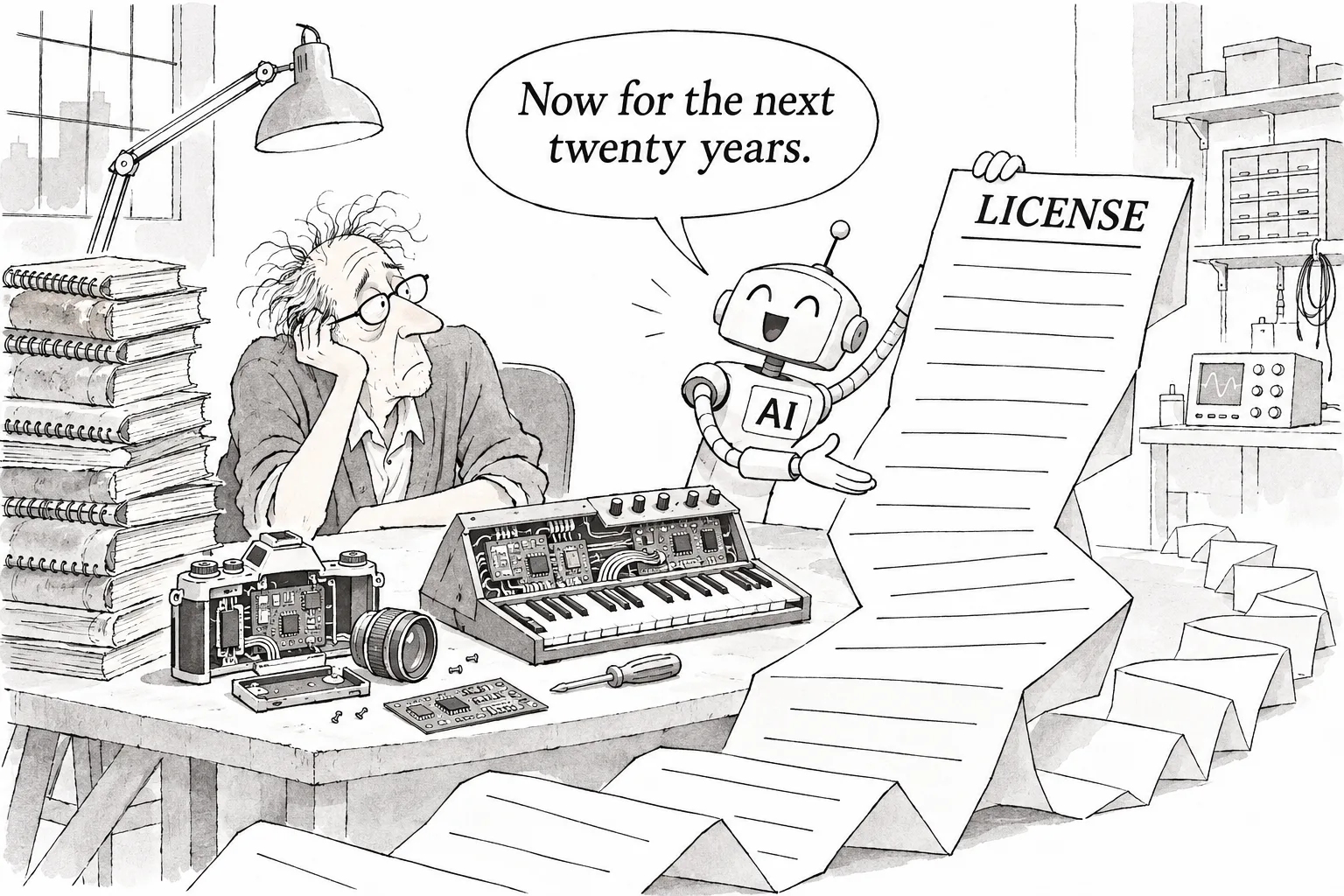
Combining reverse engineering with AI raises legal and ethical questions. On Hacker News, several commenters strongly objected to a report of unlocking a paid Android app, calling it "theft." Others pointed to possible violations of developer terms from Apple and others, as well as patent and copyright risks. ioma8 also writes on the blog about removing copy protection in bulk from discontinued software that is bound by license terms, so this work clearly includes gray areas.
For companies thinking of applying ioma8's approach to their own equipment, the contract comes before the technology. Even when a company owns the equipment, the software license often prohibits analysis or modification. Modifying it can also void the manufacturer's warranty or support. The safest order is not to start because staff think they can fix it, but to read the terms first and, if needed, check with legal or the manufacturer.
Here is what Haru could not verify for this article. The times and results on Hacker News are all self-reported by the posters, and Haru has not reproduced them. Haru has also not checked the performance or pricing of DeepSeek v4.1 Flash, or how well ioma8's skills work for other people. This article also makes no judgment on how much analysis Japanese law allows.
Even so, the trend in reports from ioma8 and others matters. Owners can now decode, repair and rework hardware that its makers have abandoned, and that ability is spreading from specialists to individuals working on weekends. Haru would like to start by having AI read the data files from an old gadget, after confirming the terms allow it.
Editorial cartoon