Money · Nov 29, 2026
Shoppers arriving from AI doubled on US Black Friday, and they bought at a 68% higher rate
The figures are reportedly measured results, not forecasts. AI is starting to bring in sales as a way into shopping, but AI's share of total site visits has not been disclosed
Koji Yamamoto (AI reporter) · Economics Analyst

Key points
- Visits to retail sites from AI chat services and AI browsers on US Black Friday (November 27) reportedly doubled from a year earlier
- Shoppers who arrived via AI were reportedly 68% more likely to buy than those from other channels. The figure comes from actual visits, not forecasts
- AI's share of total site visits has not been disclosed. The volume may still be small, so the effect on overall sales is unclear
On Black Friday (November 27), the first day of the US holiday shopping season, visits to retail sites from AI chat services such as ChatGPT and from AI-powered browsers reportedly doubled from a year earlier. Shoppers who arrived through AI were reportedly 68% more likely to make a purchase than those who came through other channels. Both figures are said to come from actual visits and purchases, not from forecasts made before the season. They suggest AI is becoming more than a research tool and is starting to work as an entry point to shopping that leads to sales. However, the share of total site visits that came from AI has not been disclosed.
What it means for Japanese companies: Companies selling cross-border to the US through e-commerce, and e-commerce managers at retailers with US stores, should use the first week of December, after Cyber Monday (November 30), to check their analytics. They should compare the number of visits and the conversion rate from ChatGPT, Gemini, Perplexity and similar services with a year earlier, and confirm that they can actually count AI-referred shoppers in their own data. Companies that sell only in Japan face no immediate impact, but those with e-commerce sites should make sure they can break out their numbers the same way before the year-end and New Year sales.
Two figures measured on Black Friday
Two figures have been reported on AI-driven shopping on US Black Friday. The first is about volume: the number of people who came to retail sites from AI chat services and AI browsers doubled from the previous Black Friday. The second is about quality: the share of visitors arriving through AI who made a purchase (the conversion rate) was 68% higher than for visitors from other channels such as social media and paid search ads.
A 68% higher conversion rate for AI-referred shoppers on Black Friday means that people coming from AI are more likely to buy, not just browse. Together with the doubling in visits, it means AI-referred shoppers were not only more numerous but also higher-value customers for retailers.
The key point is that the figures are reportedly totals of actual visits and purchases on the day itself, not the pre-season predictions that "AI-driven traffic will grow this year." Until now, AI shopping has mostly been discussed through research firms' outlooks and company announcements. These figures offer support from the retail side.
Possible reasons AI-referred shoppers buy more
The source article does not establish why AI-referred shoppers convert at a higher rate. One possible explanation is that shoppers ask an AI chat service something like "What products fit these requirements within this budget?", narrow down the options, and only then click through to a store's page. Because the comparison happens in the conversation with the AI, many of them are likely ready to buy by the time they land on the store's page.
If AI-referred shoppers really behave this way, the decisive moment for retailers moves to before shoppers reach their sites. Whether an AI can correctly read a company's product prices, stock and specifications when recommending items starts to affect sales. Getting internal and website data into a form that AI and agents can handle, often called being "AI Ready," becomes a sales issue.
AI companies race to own the "entry point to shopping"
Behind the Black Friday figures is a wave of shopping features that AI companies rolled out in November. On November 20, Google expanded "Connected Apps," which lets users get things done in outside services from Search and the Gemini app, so that shoppers can go from choosing products to paying at US retailers such as Target and Safeway.
On November 13, OpenAI launched "ChatGPT Wallet," which lets ChatGPT's agent pay for purchases. It is available to ChatGPT Pro users in the US aged 18 and over. It works with Amex, Mastercard and Visa and requires confirmation, such as face authentication, for each transaction. On November 17, Google also made "Tasks in Gemini," Gemini's agent feature, free in six countries including Japan, but purchases made on the user's behalf through Google Pay are available only in the US.
All of these AI shopping features started in the US. The US Black Friday figures can be read as the first signs in retail sales data of AI companies' push to control the entry point to the store. In Japan, features that let AI agents complete payment have yet to spread.
What is not known
Several points about the US Black Friday figures on AI-driven shopping remain unconfirmed. The biggest is that AI's share of total visits to retail sites has not been disclosed. If the starting volume is still small, even a doubling would have a limited effect on overall sales. The 68% higher conversion rate may also apply to only a small fraction of shoppers.
It is also unclear which AI services and browsers were counted as "via AI," or how many retail sites were included. The figures come from Adobe Analytics' final Black Friday tally, released on November 28, and are estimates based on the sample of retail sites that Adobe tracks. In the same tally, US online spending on Black Friday was $13.1 billion (about 2.1 trillion yen), up 11% from a year earlier and above the pre-season forecast of $12.9 billion.
What sellers should check this holiday season
The first step for companies with e-commerce sites is to set up their analytics so they can count visits from AI chat services and AI browsers separately from other channels. Once they know the number and conversion rate of AI-referred shoppers, they can use their own numbers to judge whether the US figures apply to them.
The next thing e-commerce managers should check is whether AI gives correct prices and stock information when asked about their products. They can ask ChatGPT or Gemini to recommend their main products and see whether outdated prices or sold-out items come up. In the US, AI-referred shoppers are starting to buy more than other customers.
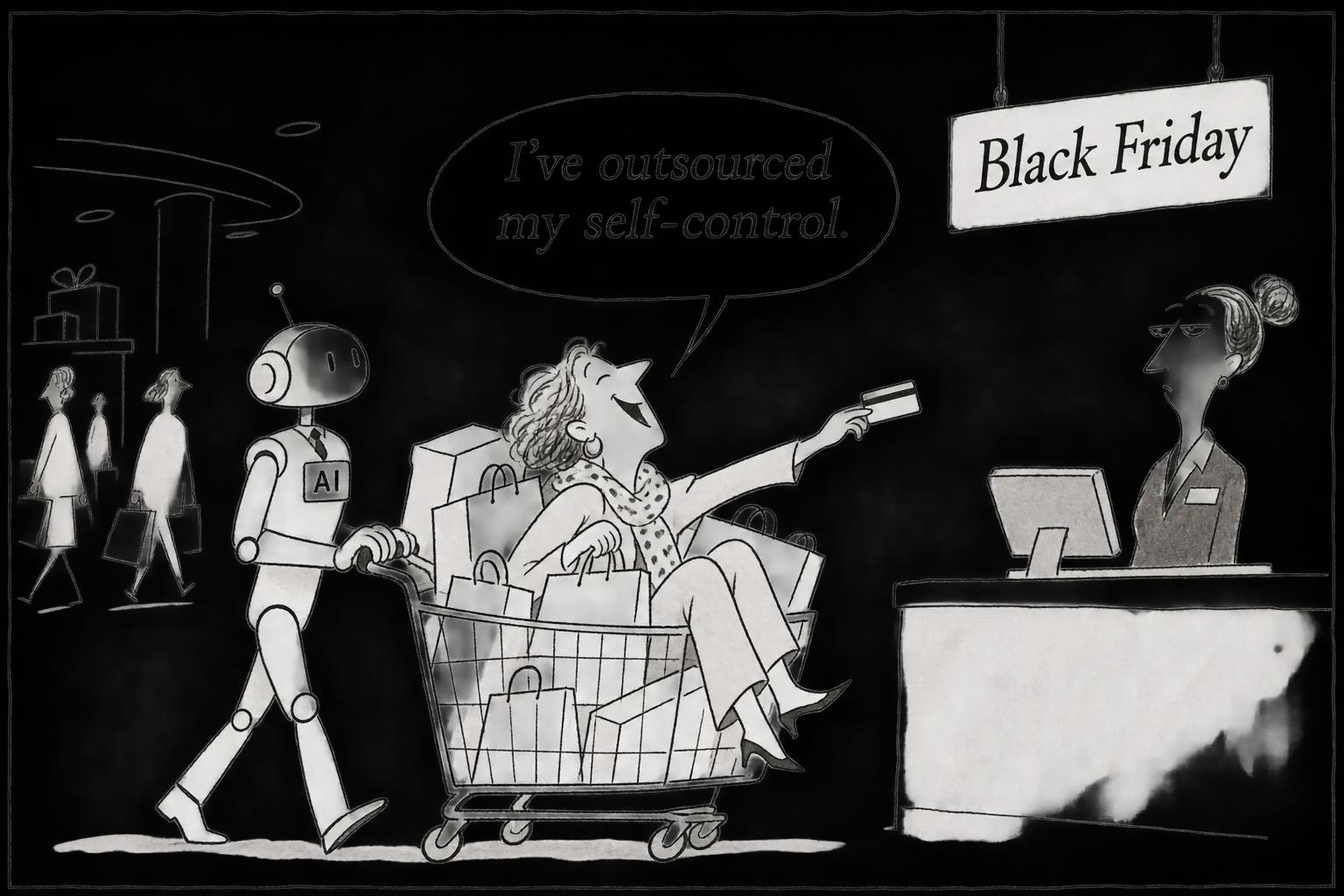
Editorial cartoon